
How to Diagnose SEO Traffic Changes in Google Search Console: 3-Layer Triage & Topical Authority SOP
Original Source: Jeff Lee (@CoderJeffLee) X Article · Published 2026-11-16
 GSC Traffic Drop Debugging Guide Cover
Core insight (refined with Joker): An individual page may have strong on-page competitiveness, yet long-term ranking stability depends on domain-wide Topical Authority and accumulated trust.
Pre-Flight Principle: Scope Before Attribution & DR Tolerance
When GSC organic clicks decline, the biggest mistake is editing copy blindly before isolating the blast radius. First determine whether the dip hits the entire domain, one directory (e.g., /blog/), or a handful of isolated URLs.
Always calibrate against domain authority: an Ahrefs DR 90 site carries massive backlink equity and enjoys far higher Google tolerance for thin or experimental content than a DR 30 site. The workflow below uses a ~DR 50 growth site as our baseline.
| Scope Layer | GSC Triage Symptom | Primary Audit Focus |
|---|---|---|
| 1. Site-Wide Drop | Homepage, product pages & blog drop on the exact same date | Match inflection against Google Search Status Dashboard & recent code releases (e.g., SSR default TDK bug) |
2. Folder (/blog/) Drop | Filter URLs containing "/blog/" — folder drops while product/core pages hold | Broad folder drop -> audit shared blog template (render / canonical / index) -> check shared topic or writing formula |
| 3. Isolated Pages | Domain stable; individual reviews or key articles lose clicks | Audit T1 market SERP rivals / intent / freshness + historical rank peak + domain Topical Authority depth |
Interactive Triage Workbench: Isolate Your GSC Drop Root Cause
Select your drop scope below and toggle observed symptoms to inspect exact tech-vs-content attribution paths:
1. Site-Wide Decline: Align Two Critical Clocks First
When your homepage, product pages, and blog columns drop together within the exact same date window, individual article tweaks are irrelevant. Match the inflection date in GSC against two timelines:
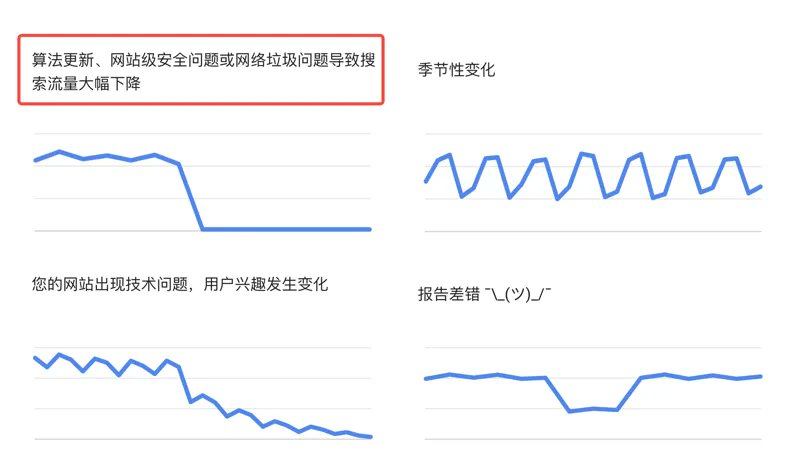 Four canonical Google Search Console traffic drop curve patterns
Clock A: Check Official Google Search Status Rollouts
Open Google’s Search Status Dashboard (status.search.google.com) to inspect exact start and completion timestamps for recent Core Updates, Spam Updates, or indexing disruptions.
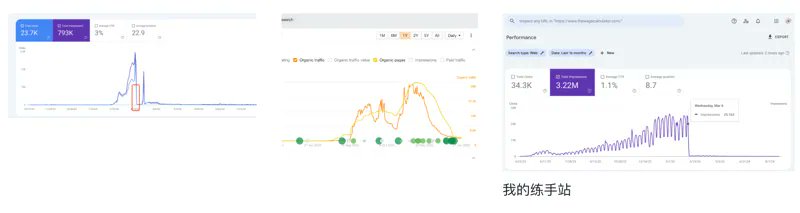 Real-world site traffic cliffs aligned with Google algorithm update rollouts
If your traffic cliff overlaps directly with an official rollout and multiple directories lose primary rankings simultaneously, audit site-wide content quality immediately—starting with any recent high-volume batches of low-value or templated AI posts. Update timestamps shrink your search radius; exact attribution still requires inspecting the losing URLs and queries.
Clock B: Audit Site-Wide Technical Releases (Real SSR Default-TDK Case)
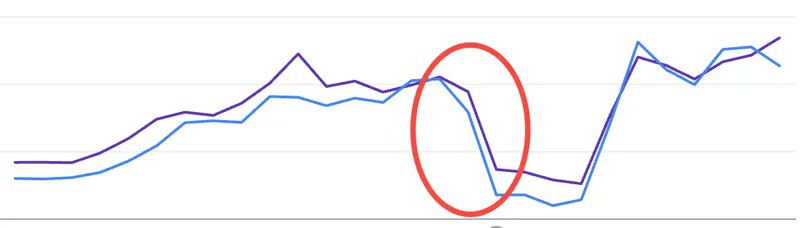 SSR deployment failure causing default TDK duplication drop and post-fix recovery curve
4-Step Technical Recovery Loop
- Identify the Bug: After a deploy, SSR failed silently—causing every route to serve the exact same fallback TDK tags (
Title/Description/Keywords) and hollow skeletons to crawlers. - URL Inspection Live Test: Run
GSC URL Inspection -> Test Live URLon multiple template types (Home, Category, Detail) and verify rendered HTML under More Info -> Rendered HTML contains unique Title, Description, and full body copy. - Deploy Fix + Targeted Reindex: Ship the fix, confirm rendered HTML via Live Test, then manually request indexing (
Reindex) on your highest-click URLs over the past 28 days to overwrite dirty snapshots quickly. - Wait Out Crawl Propagation: Monitor re-crawling until cached snapshots update across Google’s index (propagation speed varies).
2. Only /blog/ Dropped? Hunt for the Shared Denominator
In GSC Performance, add a filter: + New -> Page -> URLs containing "/blog/" while keeping your date comparison active. Immediately evaluate concentration:
- Branch A: Concentrated in 1–2 Top Posts: Skip directory panic and jump directly to Section 3 (Single-Page & Query diagnostics) for those 1–2 hero articles.
- Branch B: Synchronized Multi-Post Decline: Signals a shared root denominator across the subfolder—audit shared template code first, then content batch patterns.
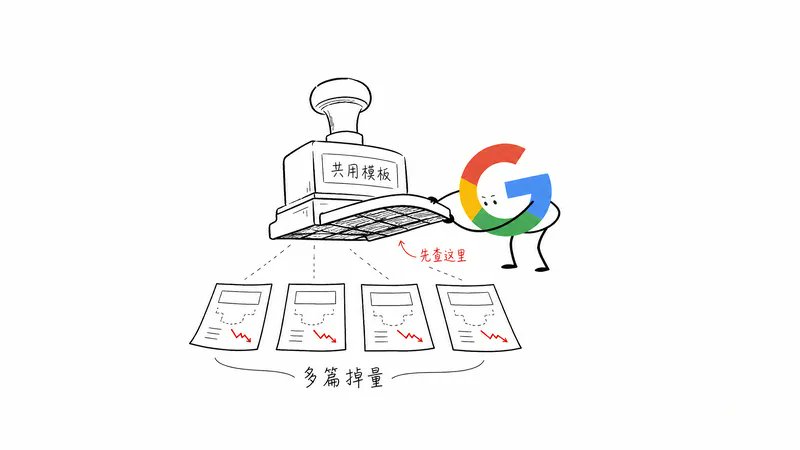 Diagnosing shared subfolder templates first when multiple blog posts lose clicks together
- Tech Side First (Shared Template): If the blog layout template changed recently, inspect 3–5 dropped posts for intact HTML body rendering, accurate
rel="canonical"tags, and clean indexation (ensuring no accidentalnoindex). - Content Side Next (Topic & Format Batching): Once rendering and canonicals pass cleanly, examine whether dropped articles belong to the same keyword batch or identical AI writing skeleton so you know whether to fix code or rewrite that batch.
3. Isolated Article Drops: Query Audit, T1 SERP Rivals & Topical Authority
Click the exact dropping URL under GSC Pages, switch to the Queries tab sorted by clicks difference, and audit the top losing keywords across two parallel fronts:
3.1 External SERP Side: Check 3 Variables in Target Market Results
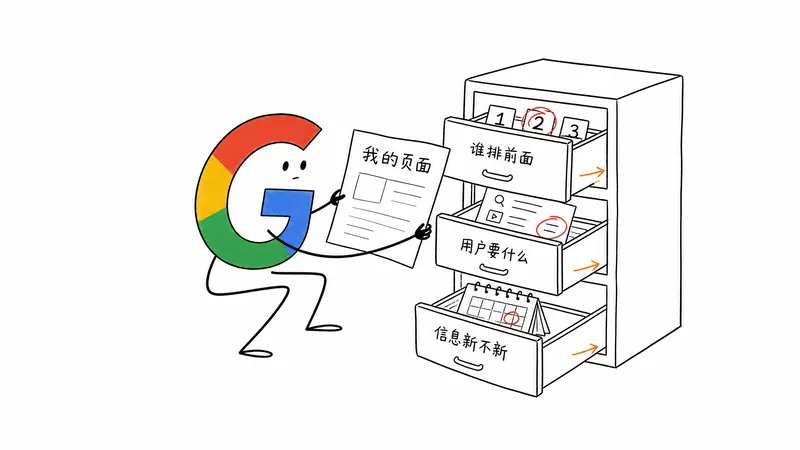 Three SERP competitive drawers: current leaders, shifting intent format, and freshness updates
- New SERP Entrants: Check localized incognito SERPs for new high-authority competitors. Compare against rank history to see exactly which page displaced you.
- Search Intent Shift: What page format now dominates Top 3 (interactive calculators, Reddit threads, concise listicles)? Verify your format still fits dominant intent.
- Freshness & Proof: What fresh details did ranking winners just add—updated pricing tiers, new tools, or recent hands-on screenshots that render your post stale?
3.2 Content & Topical Authority Side: Why Pages Peak Then Slide
Keep the single URL filter active in GSC and slice by core T1 countries (US, UK) before inspecting Queries. Earning meaningful impressions on target commercial queries confirms Google understood your relevance and granted entry into the auction.
Expand the date range to distinguish between "never ranked" vs. "peaked high and slid steadily." If a page once reached top positions, diagnose retention instability—like this real single-page GSC trajectory peaking at 245,195 impressions before decaying:
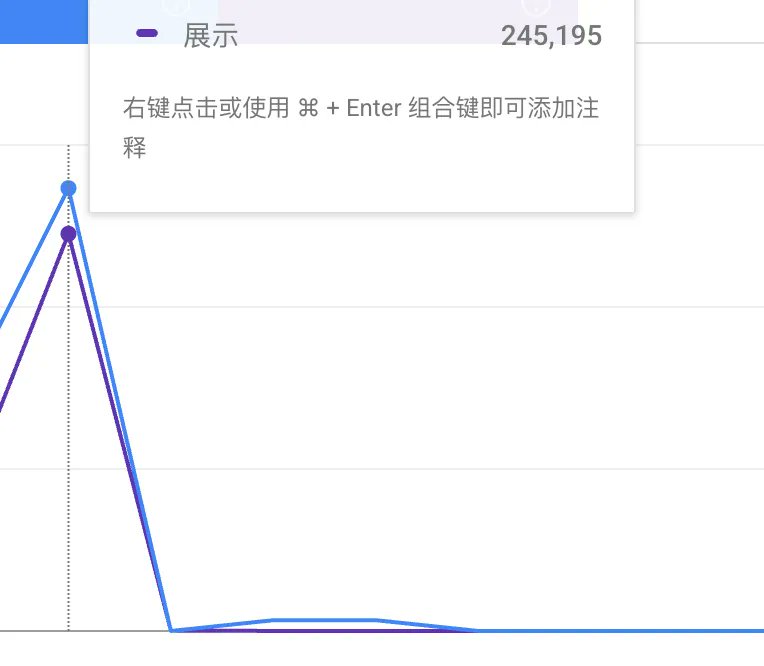 Single-page GSC curve peaking at 245,195 impressions before dropping due to thin topical moat
The Retention Bottleneck on Review / Best / Alternatives Queries: Missing Topical Authority When competitive Review, Best, or Alternatives posts rank briefly in Top 10–20 before drifting downward, auditing that lone URL won’t solve it. Ask three domain-level questions:
- Question 1 · Focused Vertical Depth: Has the domain consistently published within a focused niche, or are you writing one post on AI Coding and the next on AI Music without topical focus?
- Question 2 · Cohesive Topic Cluster: Are single-tool reviews, A-vs-B comparisons, and hands-on tutorials built out and internally linked to anchor the commercial roundup?
- Question 3 · Industry Proof & Trust Signals: Can your domain point to sustained testing logs, brand mentions, and relevant contextual citations across the industry?
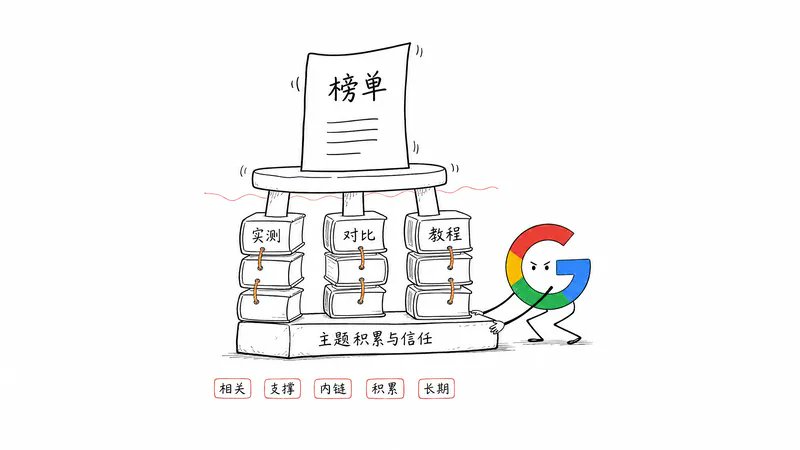 Topical Authority base plus reviews, comparisons & tutorials sustaining commercial listicle rankings
Often the diagnosis boils down to one truth: an isolated page may look solid on paper, yet the domain’s accumulated Topical Authority and trust are not yet strong enough to hold top ranks long term. Compare the oscillating post against your site’s strongest entrenched topic clusters AND inspect the full sub-folder breadth of Top 3 competitors side by side.
4. Summary & Repeatable GSC Debugging Checklist
Next time organic clicks dip in Google Search Console, run this calm 4-step triage protocol instead of panicking:
- Enable Date Comparison to filter out normal weekday/seasonal cycles.
- Switch to Pages to pinpoint the blast radius: entire domain, single directory (
/blog/), or specific URLs. - Audit technology before content: verify
status.search.google.comdates, SSR TDK rendering, and shared templates first. - Slice single pages by T1 country + Query, refreshing SERP alignment while reinforcing site-wide Topic Clusters & domain Topical Authority.
Paired Reading: Full SEO Systems & AI Audit Loop
Turn GSC diagnostic findings into lasting engineering wins:
Found this actionable? Copy standard citation & summary
Formatted with canonical attribution link and executive summary—ready for Slack, Notion, or LLM context.
Put Into Practice: Companion Browser Workbenches
AI Readiness & GEO 5-Stage Checker
Audit 26 atomic signals across 5 GEO stages including llms.txt, Product Schema & MCP readiness.
OpenGraph & Social Card Live Debugger
Audit and preview Open Graph, Twitter Cards, and meta tags across global social platforms.