
Deep Hands-On Review of GPT-6.2 Astra & Sol: Why OpenAI Doubled Down as an Ultra-Specialized Industrial Engine
 Deep Hands-On Review of GPT-6.2 Astra & Sol: Why OpenAI Doubled Down as an Ultra-Specialized Industrial Engine
Editor's Note: Roughly 20 days after community grey-box sightings began around November 1, OpenAI has officially launched its dual next-generation lineup simultaneously across ChatGPT, Codex, and the official API: the frontier flagship
GPT-6.2 Astra(gpt-6.2-astra) and the high-efficiency daily workhorseGPT-6.2 Sol(gpt-6.2-sol).Reviewer's Verdict: After running over a hundred real-world code reviews, multi-round product specs, 2D tribute animations, and long-horizon Three.js 3D game and Ancient Greece world builds, Khazix (
@Khazix0918) arrived at a blunt conclusion: OpenAI is doubling down harder than ever on becoming an "ultra-specialized, To-Elite industrial powerhouse." In non-scientific communication and 2D motion aesthetics, it trails far behind Claude Fable 5.2 and Gemini 4 Carbon; yet in per-task token cost discipline (down to 5% of Claude's spend),xhighbug hunting (84% / 96% catch rate), terminal science (#1 globally on the Vals Science Index), and 3D spatial world-building, it remains an irreplaceable heavy-duty execution machine.
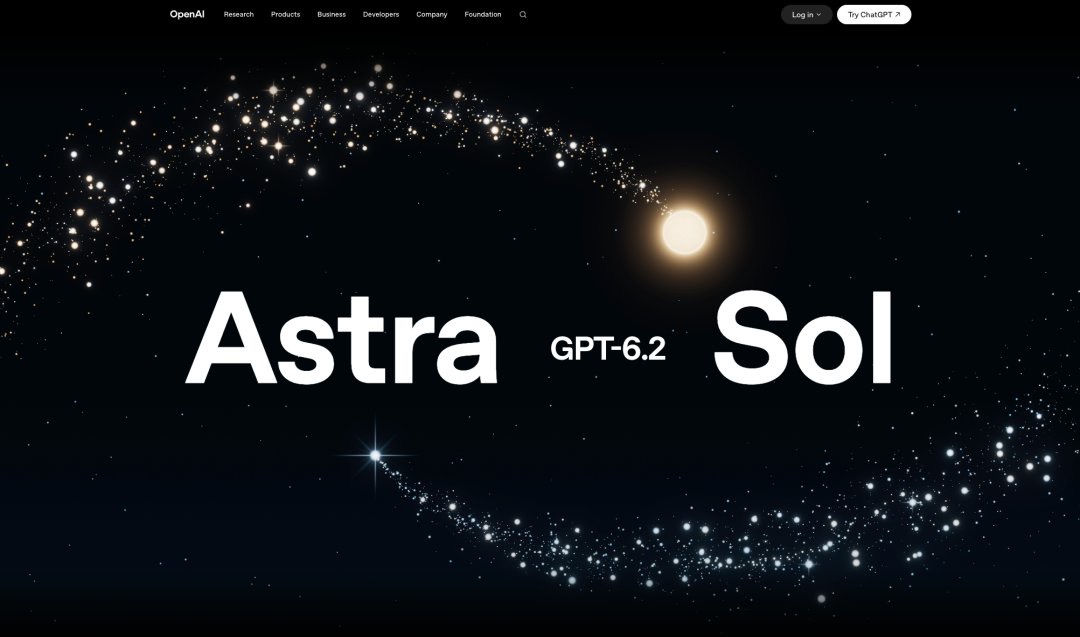 Figure 01: OpenAI launches frontier flagship GPT-6.2 Astra alongside daily workhorse GPT-6.2 Sol
1. GPT-6.2 Dual-Model Basics: Knowledge Cutoffs, Grey-Box Probe & 60% Cached-Read Cut
The two newly released models are cleanly separated in positioning, API identifiers, and knowledge cutoff dates:
GPT-6.2 Astra(API ID:gpt-6.2-astra): Officially positioned as "the frontier flagship saved for your hardest projects," with its knowledge cutoff updated to May 18, 2026 (up from April 30, 2026 in the previousGPT-6 Astra);GPT-6.2 Sol(API ID:gpt-6.2-sol): Officially positioned as "the high-efficiency workhorse for high-frequency daily work," with its knowledge cutoff updated to June 1, 2026 (and post-training effects extend its effective recall slightly further).
During early-November grey-box rollouts, power users relied on a clever blind-test probe pinned directly to that cutoff window—asking "No web search: do you know Fable 5?" Because neither the older GPT-6 Astra nor GPT-6.1 Sol had any awareness of Fable 5, an accurate offline answer immediately confirmed the account had hit the 6.2 weights:
 Figure 02: Using the offline probe "Do you know Fable 5?" to detect GPT-6.2 grey-box routing
1.1 Pricing Aligned with Claude Fable 5.2; Cached Input Slashed 60% from $1.00 to $0.40
Following last week's price cut that brought Claude Fable 5.2 down to $8 / 1M input and $40 / 1M output, GPT-6.2 Astra drops 20% to match at $8 / $40, while slashing its painfully expensive Cached Read rate by 60% from $1.00 / 1M down to $0.40 / 1M. Meanwhile, GPT-6.2 Sol holds steady at $2 / $10 / $0.10 cached.
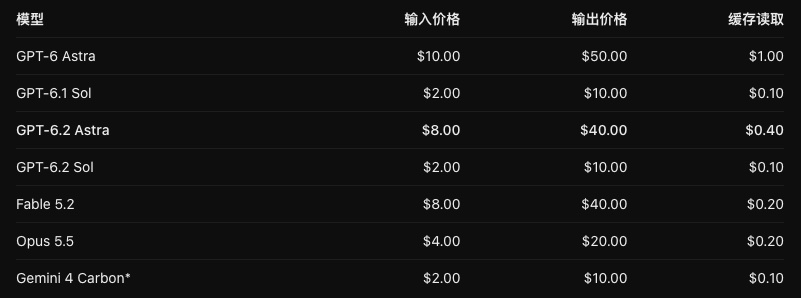 Figure 03: API input, output, and cached-read pricing comparison across frontier models (USD per 1M tokens)
Looking purely at per-million cached-read sticker prices, GPT-6.2 Astra ($0.40) still sits above Claude Fable 5.2 ($0.20) and the promotional half-price Gemini 4 Carbon ($0.10), yet it is a massive relief compared to the early GPT-6 Astra era that could burn through an entire $200 Pro quota in a single day. Even more importantly: what determines your actual bill is never just the per-million token rate—it is the total number of tokens consumed to finish a single task!
2. Core Moat: "Cost per Task" & a Nearly 7x Output-Token Efficiency Advantage
Because OpenAI cannot easily out-spark Claude on open-ended conversational flair and expressive ceiling, every official benchmark chart OpenAI published in this release anchors its horizontal axis on one decisive engineering metric: Cost per task.
2.1 Agents' Last Exam: +5.5 Points Higher at Just 5% of Claude's Cost
On Agents' Last Exam v1.1, which evaluates complex multi-step end-to-end professional workflows:
GPT-6.2 Astra: Scores roughly78%while spending only~$3per task (+5.2 pointshigher thanGPT-6 Astraat less than one-third the cost);Claude Fable 5.2: Scores roughly73%, yet burns an average of~$60per task—meaningGPT-6.2 Astranot only leads by5.5 points, it costs just5%as much per problem!
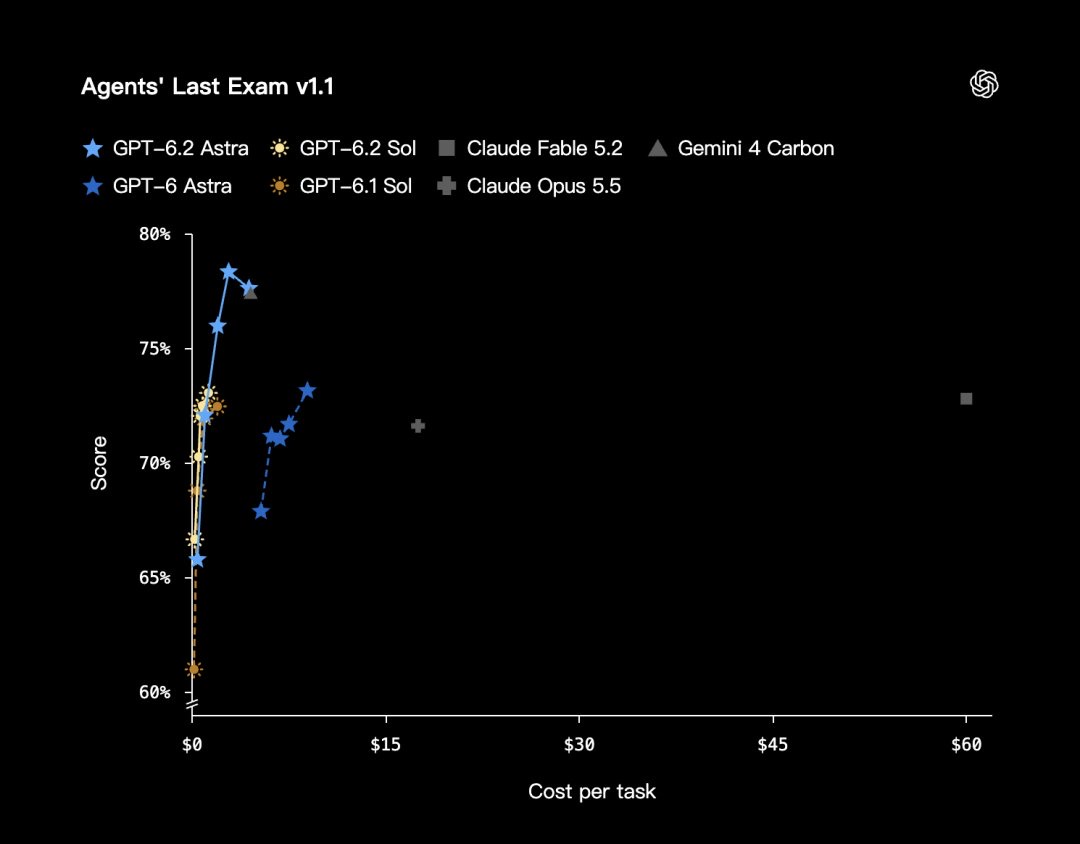 Figure 04: OpenAI Agents' Last Exam v1.1 score vs. Cost per task curve
Why do two models with the exact same $8 / $40 API pricing diverge by 20x on a single task invoice? Artificial Analysis's weighted average output tokens per task exposes the underlying reason: GPT-6.2 Sol emits an average of just 40k output tokens and GPT-6.2 Astra emits only 41k (15k answer + 26k reasoning), whereas Claude Fable 5.2 brute-forces its ceiling by burning 274k output tokens per task—a nearly 7x gap!
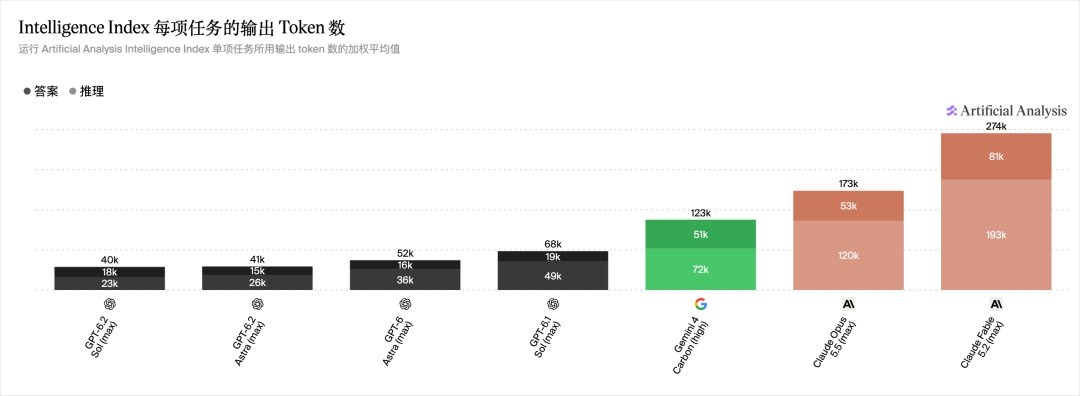 Figure 05: Artificial Analysis Intelligence Index average output tokens per task (GPT 40k/41k vs. Claude Fable 5.2 274k)
Real-world usage on a $200 ChatGPT Pro plan tells the exact same story: running 4 video and 3D builds + 2 full architecture plans + nearly 100 code reviews only moved weekly quota from 12% down to 6% (just 6% weekly quota consumed). By contrast, running 10 Claude Fable 5.2 cases previously burned nearly 30% of weekly quota.
Interactive Simulator: Per-Task Token Economics & 3-Round Code Review ROI
Adjust monthly task volume and PR review frequency in the calculator below to compare output token density across 7 frontier models alongside GPT-6.2 Sol / Astra (xhigh) code review ROI in real time:
2.2 #1 in Terminal Science (Vals Science Index), GDPval v2 & Back to #2 on the AA Intelligence Index
On Terminal-Bench-Science 0.1, GPT-6.2 Astra scores roughly 77% at ~$7 per task (vs. 68% at ~$24 on GPT-6 Astra), holds #1 globally on the third-party Vals Science Index v1—making it the go-to experimental model for frontline science and algorithm teams—and shows the same dramatic token-cost advantage on OpenAI's internal GDPval v2 long-horizon consulting, finance, and design knowledge benchmark:
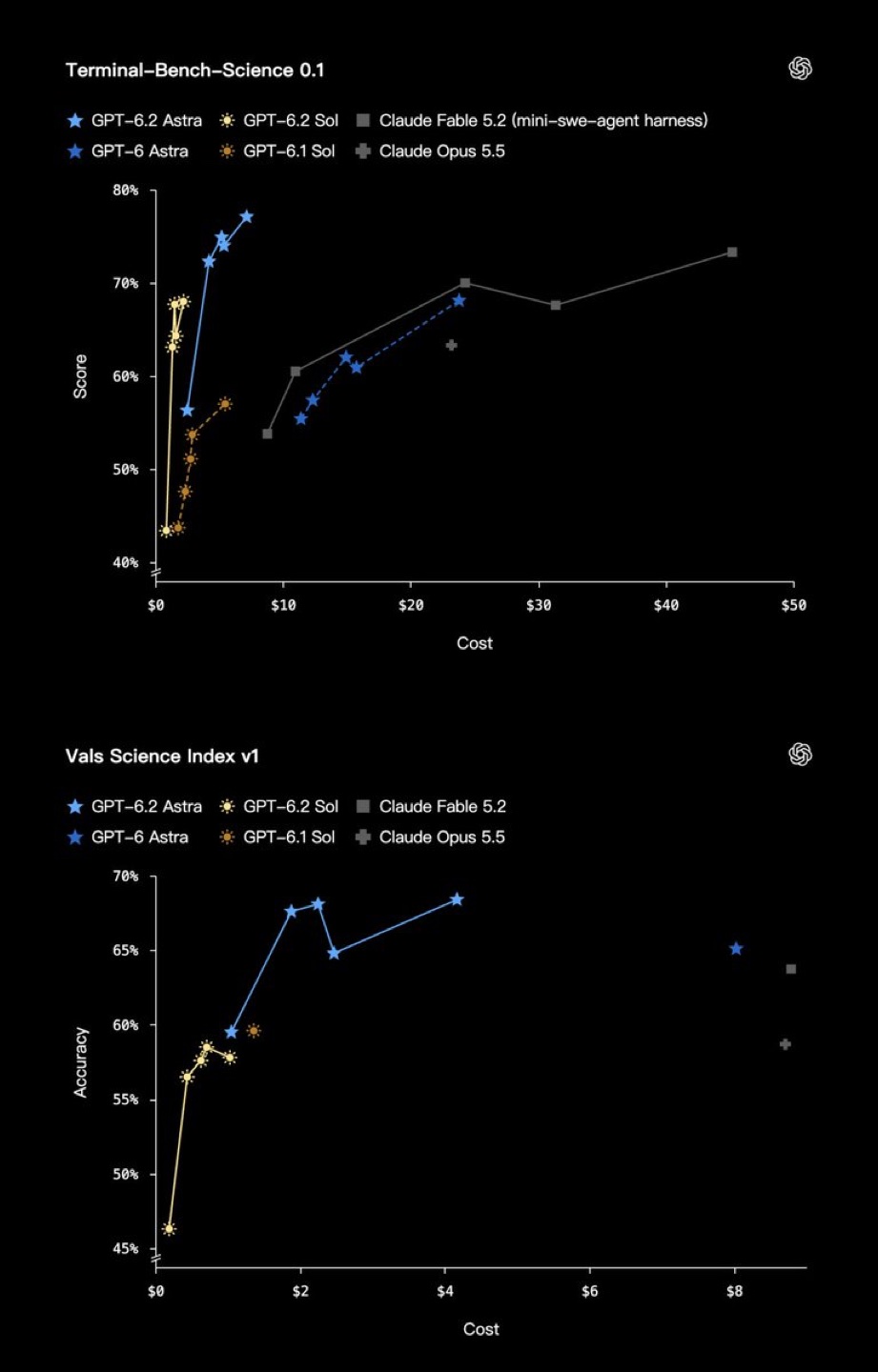 Figure 06: #1 rankings on Terminal-Bench-Science 0.1 (~77% / ~$7) and third-party Vals Science Index v1
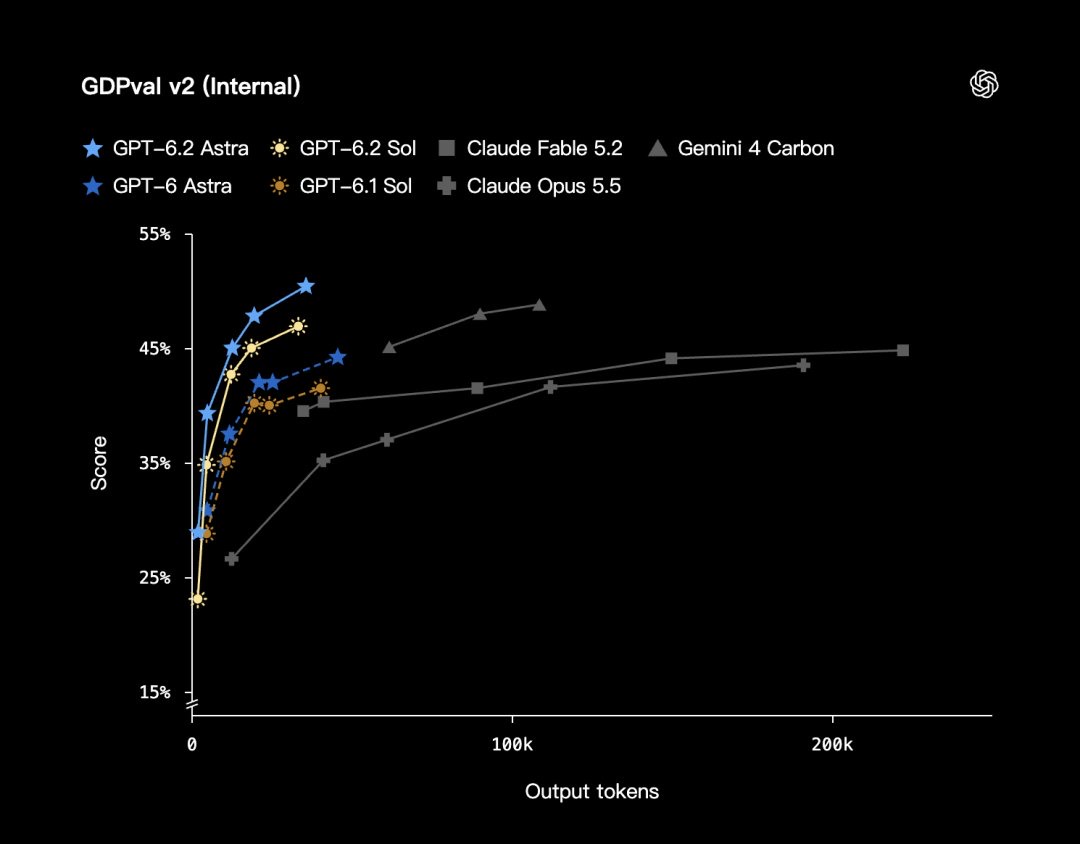 Figure 07: OpenAI internal GDPval v2 long-horizon knowledge work output token efficiency curve
On the independent Artificial Analysis Intelligence Index v5.0.1, GPT-6.2 Astra surges +6 points to 62, reclaiming #2 globally (behind Claude Fable 5.2 at 65 and ahead of Gemini 4 Carbon at 60), while GPT-6.2 Sol climbs +2 points to 57 (tying the previous-generation flagship GPT-6 Astra).
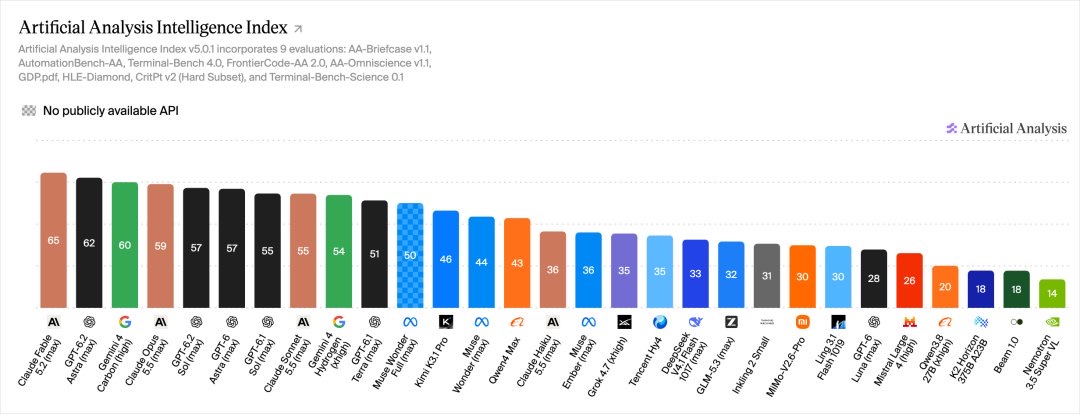 Figure 08: Artificial Analysis Intelligence Index v5.0.1 global rankings overview
3. Four-Dimension Hands-On Benchmarks: Stark Weaknesses vs. Unmatched Industrial Dominance
3.1 Communication & Non-Scientific Product Planning (Major Flaw): GPT-6.2 Astra Spends 24 Minutes Advising "Manual Moderation"
Recently, several readers asked for a lightweight comment and discussion section beneath each news item on Khazix's solo side project, AIHOT:
 Figure 09: Reader feedback requesting a comment section beneath AIHOT news items (1)
 Figure 10: Reader feedback requesting a comment section beneath AIHOT news items (2)
The real bottleneck here has nothing to do with rendering a frontend comment widget—it lies in SMS real-name verification costs and mandatory pre-moderation compliance risk. We ran a head-to-head test using the exact same plain-language prompt:
| 1 | Recently we've received a lot of feedback from users asking to add a simple comment section to AIHOT so people can briefly discuss items. Given that context, can you help evaluate how to design the entire commenting and discussion feature at minimal cost while guaranteeing compliance and safety? |
Gemini 4 Carbon(~5 minutes, passed with flying colors): Its very first sentence nailed the cost and compliance constraints of a solo-maintained project, enumerated every mandatory regulatory boundary, and proposed an inspired minimal-cost architecture—no custom nicknames, no multi-level nested replies, curated featured comments only instead of open firehose commenting, and reusing AIHOT's existing automated Agent news-moderation pipeline for pre-publish screening—closing with a clean decision comparison table:
 Figure 11: Gemini 4 Carbon (5 minutes) immediately pinpoints solo-project constraints in its opening line
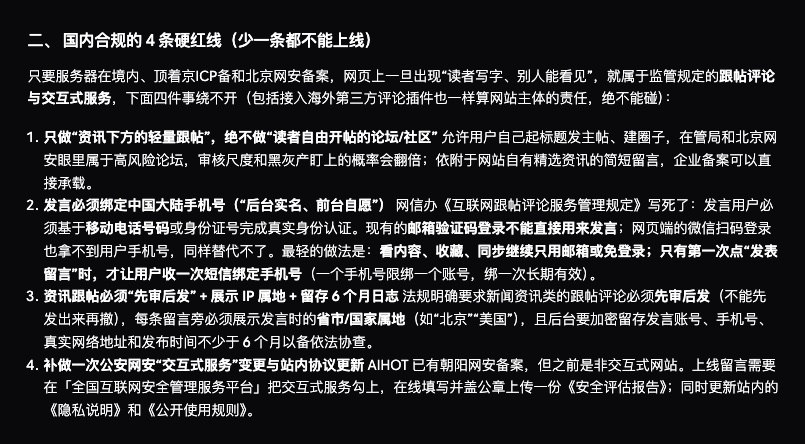 Figure 12: Gemini 4 Carbon breaks down real-name verification and pre-moderation compliance red lines
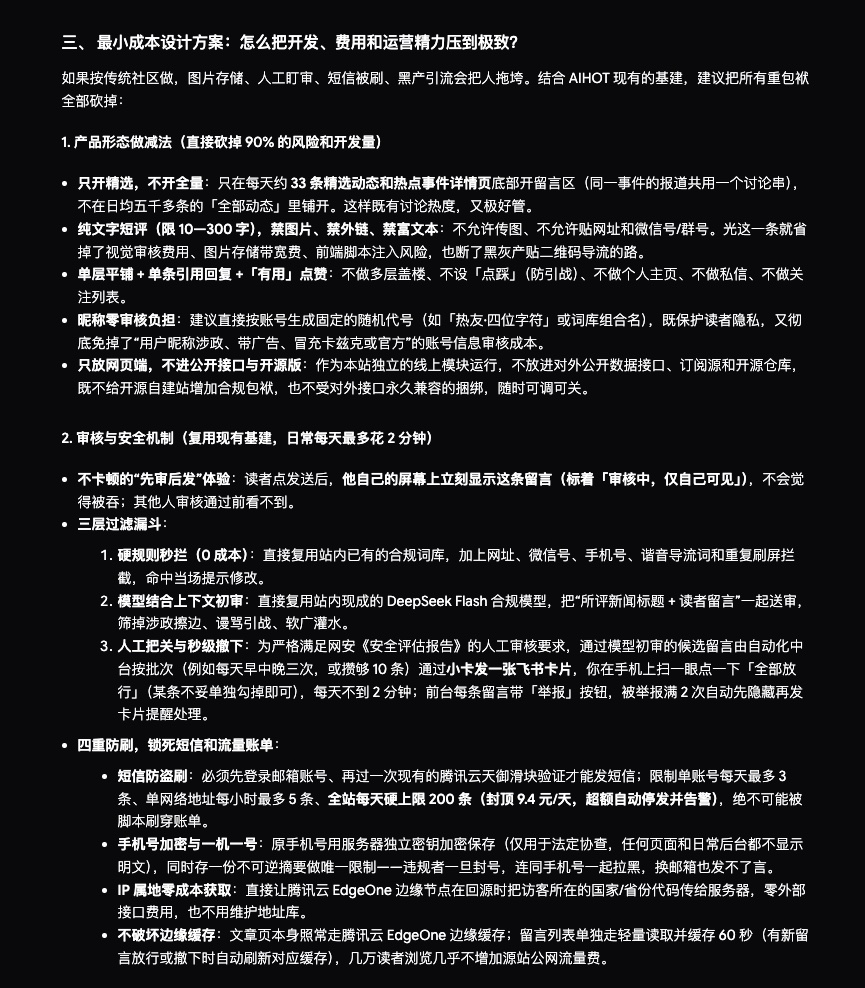 Figure 13: Gemini 4 Carbon proposes a minimal-cost architecture reusing the existing automated Agent moderation flow
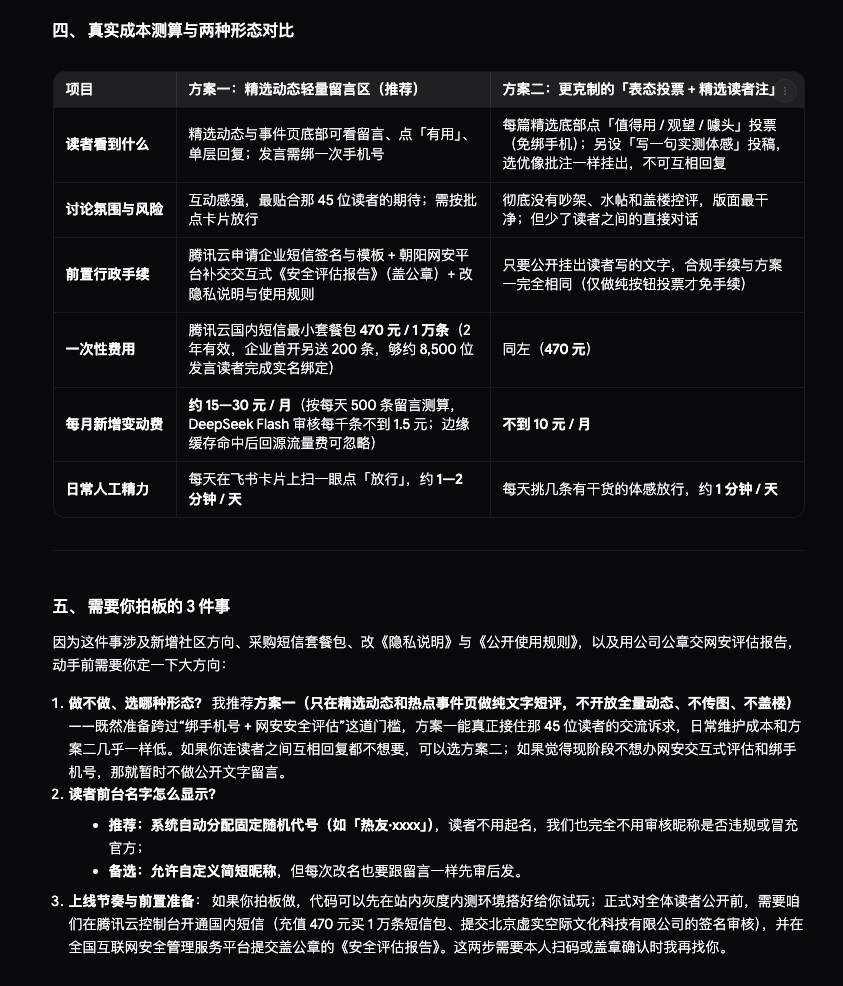 Figure 14: Gemini 4 Carbon closes with a structured option matrix for crisp human sign-off
GPT-6.2 Astra(ground for 24 minutes—nearly 5x slower—and completely face-planted): Despite shorter output, the prose was dense and painful to parse, and despite knowing full well this was a solo hobby project, it absurdly recommended "using manual human moderation in the early stage". A separate leaderboard planning prompt exposed the exact same readability and proactivity deficit:
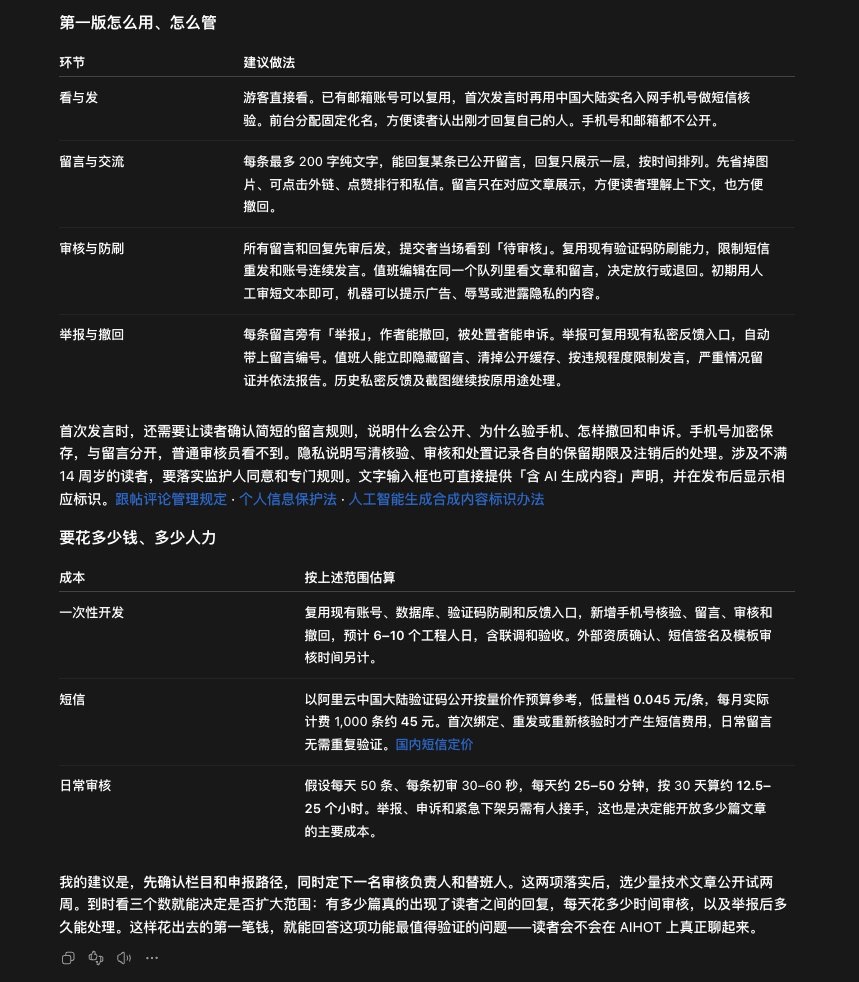 Figure 15: GPT-6.2 Astra's 24-minute comment-section spec—dense prose recommending early-stage manual moderation
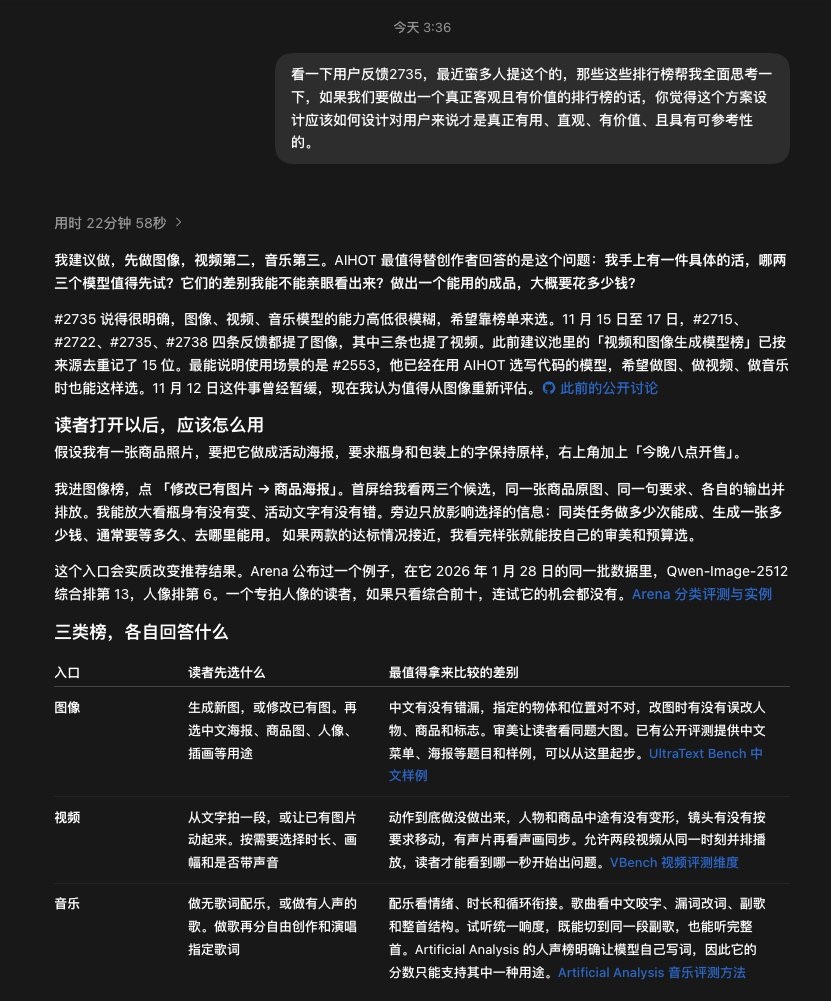 Figure 16: GPT-6.2 Astra shows the same readability and proactive-thinking weakness on a leaderboard planning task
3.2 Automated Code Review (Killer Weapon): 6.2 Sol xhigh Jumps to 84%, Astra Hits 96%!
In stark contrast to its rough conversational planning, GPT-6.2 delivered a generational leap in serious engineering workflows where Claude writes code and a script automatically dispatches GPT for up to 3 rounds of xhigh code review. Across an internal benchmark containing 102 real bugs:
Review Model (xhigh Effort) | Real Bug Catch Rate | Hit / Partial / Miss | Median Time per Review | Cost per Review | Engineering Role |
|---|---|---|---|---|---|
GPT-6.1 Sol | 65% | 61 / 3 / 38 | 5.7 min | $0.31 | Legacy workhorse; high miss rate—upgrade immediately |
GPT-6.2 Sol 🏆 | 84% | 80 / 7 / 15 | 3.9 min | $0.43 | Best-ROI default reviewer (faster and far more accurate) |
GPT-6.2 Astra | 96% | 91 / 1 / 10 | 8.1 min | $1.60 | Near-perfect final gatekeeper (~2x slower, ~4x cost; ideal pre-release) |
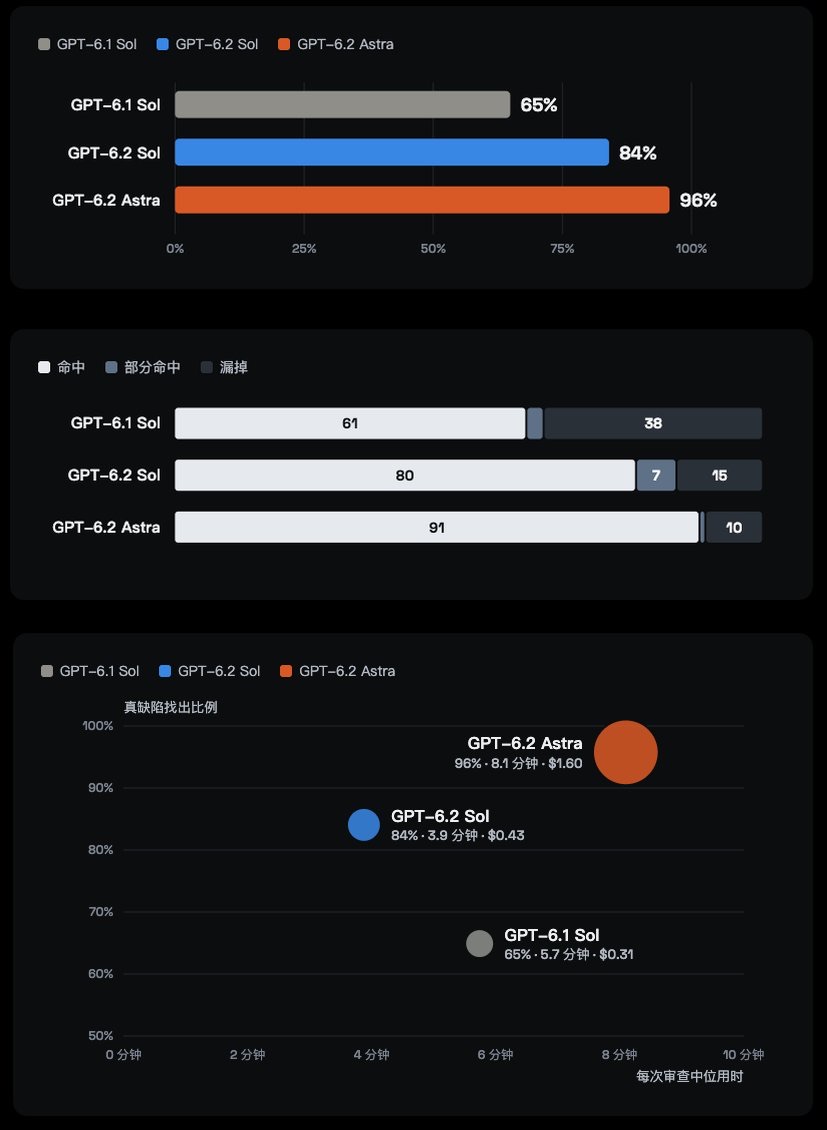 Figure 17: Real bug catch rate, hit breakdown, and latency/cost scatter across three GPT models at xhigh effort
3.3 2D Graphics & Motion Video Aesthetics (Painful Blind Spot): 4th Anniversary Tribute Side-by-Side
In 2D visual design and motion aesthetics, OpenAI still hasn't cracked the code. We benchmarked all three flagships on the classic "40–60s ChatGPT 4th Anniversary Third-Party Tribute Motion Video (2022.11.30–2026.11.30)" prompt:
| 1 | Create a 40-second to 1-minute ChatGPT 4th anniversary tribute motion-graphics video (2022.11.30–2026.11.30), 16:9 landscape, no voiceover, set to original music. Research online yourself to cover key releases, milestones, and numbers from these four years without fabricating anything. Before starting, inspect OpenAI's official site, blog, and recent launch videos to extract their visual style as the aesthetic foundation. Keep the pacing fast, motion-dense, and frame-rich, synced to the beat. Position it strictly as an independent third-party tribute—do not make it look like an official OpenAI release. |
3.4 3D Spatial Vision & Three.js (Breakthrough Surprise): Embodied Spatial Base Powers a 1-Hour Maximalist Ancient Greece World
In dramatic contrast to its flat 2D motion work—thanks to OpenAI's sustained heavy investment in Spatial Vision and embodied intelligence—GPT-6.2 Astra broke out with extraordinary results in 3D game creation and complex Three.js scenes:
- First-Person AAA-Style Temple Run: A single plain prompt generated a remarkably polished title screen, and one round of gameplay tuning delivered smooth first-person running:
| 1 | Make me a first-person "Temple Run" game. Extremely detailed visual fidelity that looks on par with a AAA title. Keep the scope compact, but deliver impressive photorealistic graphics everywhere else. |
 Figure 18: First-person Temple Run launch screen generated by GPT-6.2 Astra
- Three.js Autumn Dusk Country Train Station: Warm lighting gradients and spatial track layout felt remarkably cohesive:
- 1-Hour+ Extreme Endurance Three.js Maximalist Ancient Greece World: After the initial pass, Khazix grabbed a viral screenshot from a famous long-horizon Claude build on X and told GPT to "build up to this visual bar"—expecting very little. Instead,
GPT-6.2 Astraground continuously for over an hour and delivered a breathtaking interactive Ancient Greece Acropolis HTML world:
| 1 | Using Three.js and a maximalist art style, spare no effort to recreate the most realistic, grand, and intricate Ancient Greece world possible—prioritize lifelike detail and deliver a single interactive HTML file. |
 Figure 19: Viral Claude screenshot fed to GPT-6.2 Astra in round 2 as the spatial density and lighting benchmark
4. Final Verdict: The Role Reversal & Optimal "Claude/Gemini Commander + GPT Executor" Workflow
For years, conventional wisdom held that "Claude is for B2B engineering, while GPT is the consumer ToC model." Today, those roles have completely inverted:
Claude Fable 5.2andGemini 4 Carbonare now the true ToC models built for everyday humans: conversational, proactive, lucid in prose, and empowering non-specialists to reach far beyond their native skill boundaries;- The
GPT-6.2lineup has evolved into an uncompromising "To-Elite" industrial precision instrument: relentlessly literal, obedient, and dense with experimental throughput—deadly in the hands of scientists and algorithm veterans, yet frustrating for casual users pitching open-ended product ideas.
Field Orchestration Console: Switching Commander + Executor Pairings & Dispatch Contracts
The Ultimate Playbook for Every Builder:
Hand requirement discovery, product planning, 2D visual craft, and primary feature coding to Claude Fable 5.2 or Gemini 4 Carbon, then have those "Commanders" emit crisp, unambiguous specs to dispatch GPT-6.2 Sol xhigh (default 3-round PR review at 84% catch / $0.43) and GPT-6.2 Astra (scientific terminals, Three.js 3D spatial worlds, and 96% pre-release final code gates)—letting each model play to its strengths for peak quality and unbeatable unit economics.
Attribution: Benchmark data, all 19 original comparison figures, and the 6 hands-on demo videos in this review are compiled from Khazix (@Khazix0918)'s deep-dive review and cross-archived in the Evaoo AI Agent Playbook.
Found this actionable? Copy standard citation & summary
Formatted with canonical attribution link and executive summary—ready for Slack, Notion, or LLM context.
Put Into Practice: Companion Browser Workbenches
UTM Builder Pro Matrix Workspace
Reverse URL parser, GA4 channel group diagnostics, and dynamic ad macro batch CSV export.
Shopify GTM & GA4 Web Pixel Generator
Generate production-ready Shopify Customer Events Web Pixel code for GA4, Meta, and TikTok.