
Deep Hands-On Review of GPT-6.2 Astra & Sol: Why OpenAI Doubled Down as an Ultra-Specialized Industrial Engine
Hands-on deep review by Khazix (@Khazix0918) · All 19 screenshots + 6 live videos included
After nearly 20 days of grey-box testing since November 1, OpenAI has finally rolled out its twin release across ChatGPT, Codex, and the API: the frontier flagship GPT-6.2 Astra (gpt-6.2-astra) and the daily workhorse GPT-6.2 Sol (gpt-6.2-sol). Here is the one-sentence verdict: OpenAI is doubling down harder than ever on building a hyper-specialized, elite industrial engine. It gets completely outclassed by Claude Fable 5.2 and Gemini 4 Carbon on open-ended product communication and 2D motion aesthetics, yet exhibits terrifying dominance in ultra-low per-task token cost ($3 vs. $60 per task on Agents' Last Exam), automated bug-hunting code review (84% / 96% catch rates), terminal scientific research (#1 on Vals Science Index), and Three.js 3D spatial world-building.
API Pricing & Cache Cut
$8 / $40 · Cached $0.40
Astra down 20%; cached reads slashed 60%
Agents' Last Exam
~78% · Just $3 / task
+5.5 pts over Fable 5.2 at 5% of the cost
AA Intelligence Index
62 Pts (Global #2)
Astra jumps +6 pts; Sol reaches 57 pts
xhigh Code Review Catch Rate
Sol 84% · Astra 96%
6.2 Sol xhigh wins #1 daily value crown
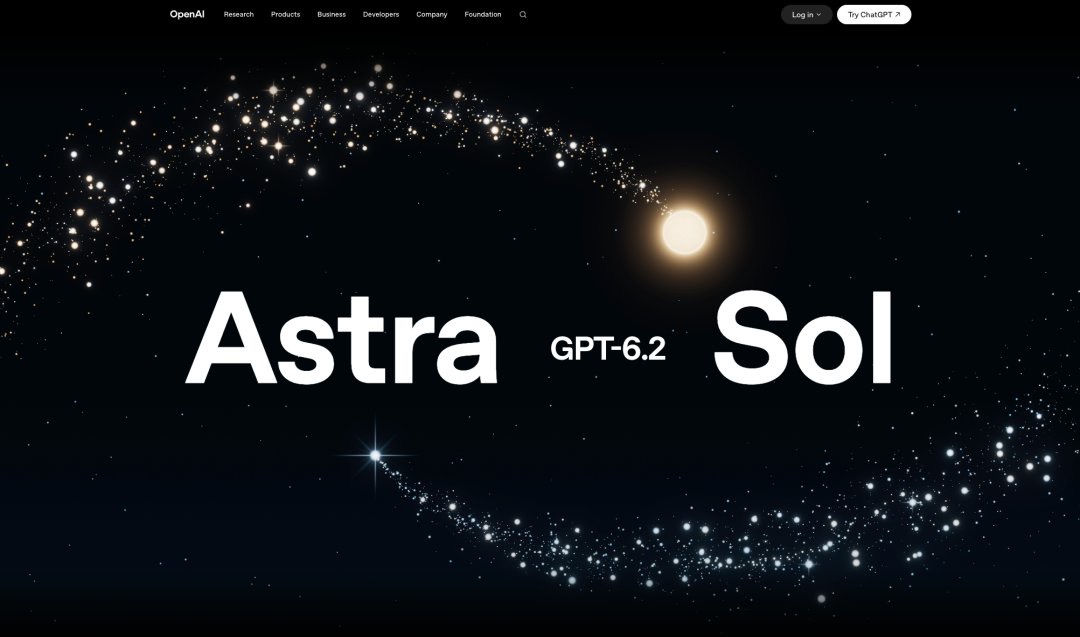 Figure 01: After nearly 20 days of waiting, OpenAI simultaneously launched frontier flagship GPT-6.2 Astra and daily workhorse GPT-6.2 Sol across ChatGPT, Codex, and the API
1. GPT-6.2 Dual-Model Basics: Knowledge Cutoffs, Grey-Box Test Phrase & 60% Cached-Read Price Cut
This release introduces two clearly positioned models with identical core personalities, now rolled out across ChatGPT, Codex, and the official API:
- GPT-6.2 Astra (API ID:
gpt-6.2-astra): Officially positioned as "the frontier model for your hardest projects," with an updated knowledge cutoff of May 18, 2026 (up from April 30 on GPT-6 Astra). - GPT-6.2 Sol (API ID:
gpt-6.2-sol): Officially positioned as "the efficient model for everyday work," with a knowledge cutoff updated to June 1, 2026 (plus post-training recency extending effective recall slightly further).
A fun geek easter egg from early November: when testers wanted to check whether their accounts had silently received the GPT-6.2 grey-box rollout, they used a blind knowledge-cutoff probe—asking "With web search disabled, do you know Fable5?" Because legacy GPT-6 Astra and GPT-6.1 Sol predated Fable 5, answering accurately offline proved the account had been routed to the new checkpoint:
 Figure 02: Grey-box verification log using the offline prompt "With web search disabled, do you know Fable5?" to confirm the May–June 2026 knowledge cutoff
1.1 Pricing Fully Matches Claude Fable 5.2, Cached Input Slashed from $1.00 to $0.40
On API pricing, OpenAI matched Anthropic dollar for dollar: following Claude Fable 5.2's cut to $8 / 1M input and $40 / 1M output, GPT-6.2 Astra also drops 20% to $8 / $40. Even more importantly, the notoriously punitive Cached Input price plunges 60% from $1.00 down to $0.40. Meanwhile, GPT-6.2 Sol holds steady at $2 / $10 / $0.10 cached.
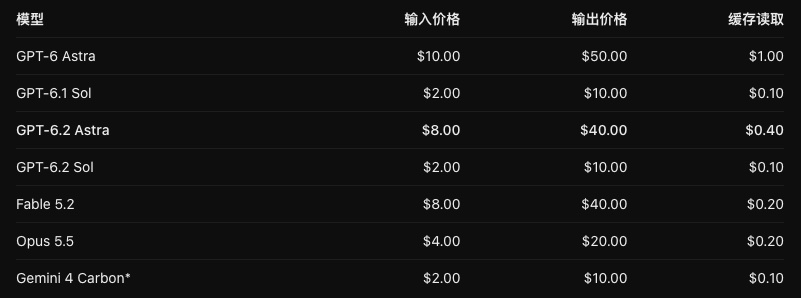 Figure 03: Flagship API pricing comparison chart per million tokens—cached-read rates and per-task output volume determine the real bill
Even after the cut, GPT-6.2 Astra's cached-read rate ($0.40) remains higher than Claude Fable 5.2 ($0.20) and Gemini 4 Carbon's limited-time half-price promo ($0.10). Still, it is vastly tamer than the original GPT-6 Astra ($1.00 cached reads), which could burn through an entire $200 Pro quota in a single day. More crucially, you cannot evaluate Agent cost solely on per-token sticker price—you must multiply it by how many tokens the model actually emits to finish a task.
2. The Core Moat: Cost per Task & Nearly 7x Reasoning Token Efficiency Gap
Because OpenAI cannot easily out-muscle Claude on raw general intelligence and creative intuition right now, almost every official OpenAI chart in this launch pins its horizontal axis to a single metric: Cost per task.
2.1 Agents' Last Exam: +5.5 Points Higher at Just 5% of Claude's Cost
On Agents' Last Exam v1.1, which tests multi-step autonomous professional workflows, the cost-efficiency gap is staggering:
- GPT-6.2 Astra: Scores ~78% at an average cost of only ~$3 per task (+5.2 pts higher than GPT-6 Astra at less than one-third the cost).
- Claude Fable 5.2: Scores ~73% while averaging ~$60 per task—GPT-6.2 Astra scores 5.5 points higher at just 5% of the cost.
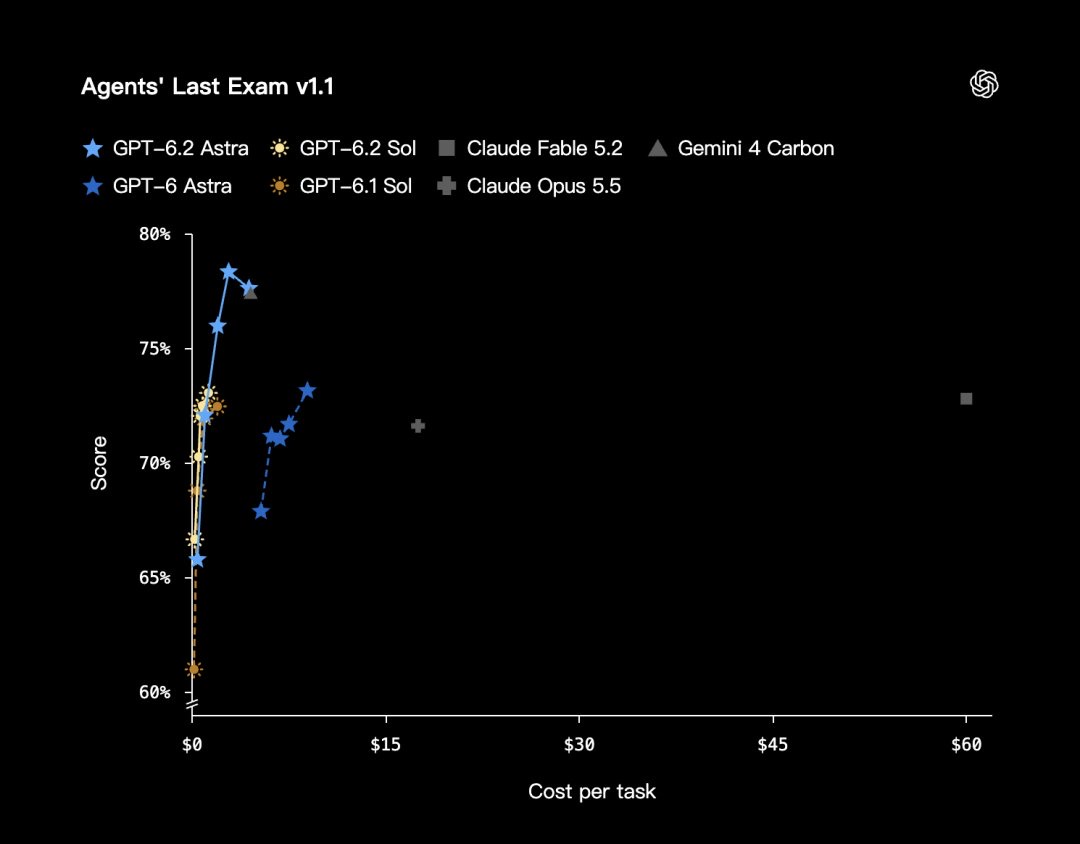 Figure 04: OpenAI Agents' Last Exam v1.1 score vs. cost per task—GPT-6.2 Astra climbs to ~78% on the far-left low-cost axis while Claude Fable 5.2 sits at $60 on the far right
Why does the per-task bill diverge by 20x when both models share the exact same $8/$40 list price (and Claude even has cheaper cache reads)? Artificial Analysis's weighted average output tokens per task tells the story: GPT-6.2 Sol averages 40k tokens and GPT-6.2 Astra averages 41k tokens, whereas Claude Fable 5.2 brute-forces its way to 274k output tokens per task—a nearly 7x gap.
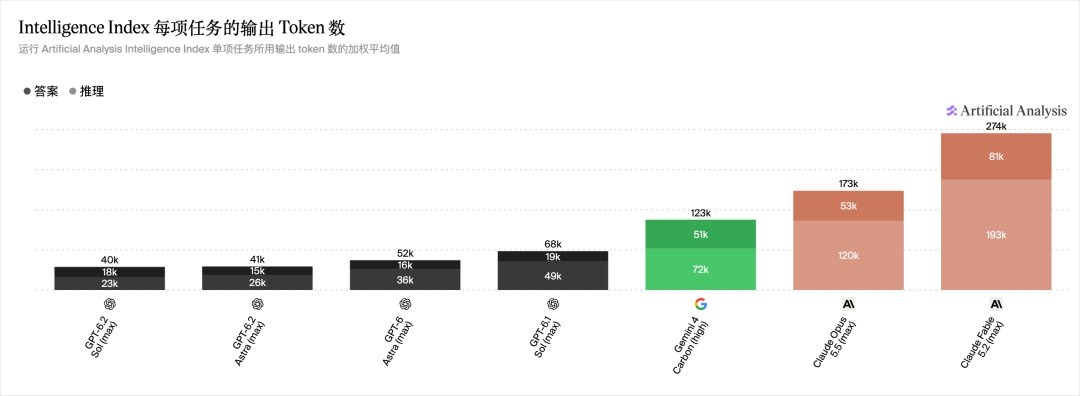 Figure 05: Artificial Analysis Intelligence Index output tokens per task (answer + reasoning)—GPT-6.2 Sol/Astra emit 40k/41k tokens vs. 274k on Claude Fable 5.2
My own $200 ChatGPT Pro weekly quota confirmed this contrast in practice. After completing 4 heavy video and 3D cases + 2 full architecture plans + nearly 100 code reviews, my remaining weekly quota moved from 12% to 6%—consuming just 6% total. Last week, running just 10 cases on Claude Fable 5.2 burned through nearly 30% of my weekly quota.
2.2 Terminal Science #1 (Vals Science Index), GDPval v2 & Returning to #2 on AA Intelligence Index
On Terminal-Bench-Science 0.1, the terminal research benchmark prized by scientists, GPT-6.2 Astra scores ~77% at ~$7 per task (compared with 68% / ~$24 on GPT-6 Astra) and takes #1 globally on the third-party Vals Science Index v1, giving OpenAI solid backing for calling it "the best model in the world for scientists." The same high-score, low-cost curve holds on GDPval v2, OpenAI's internal benchmark for long-horizon consulting, finance, and design knowledge work:
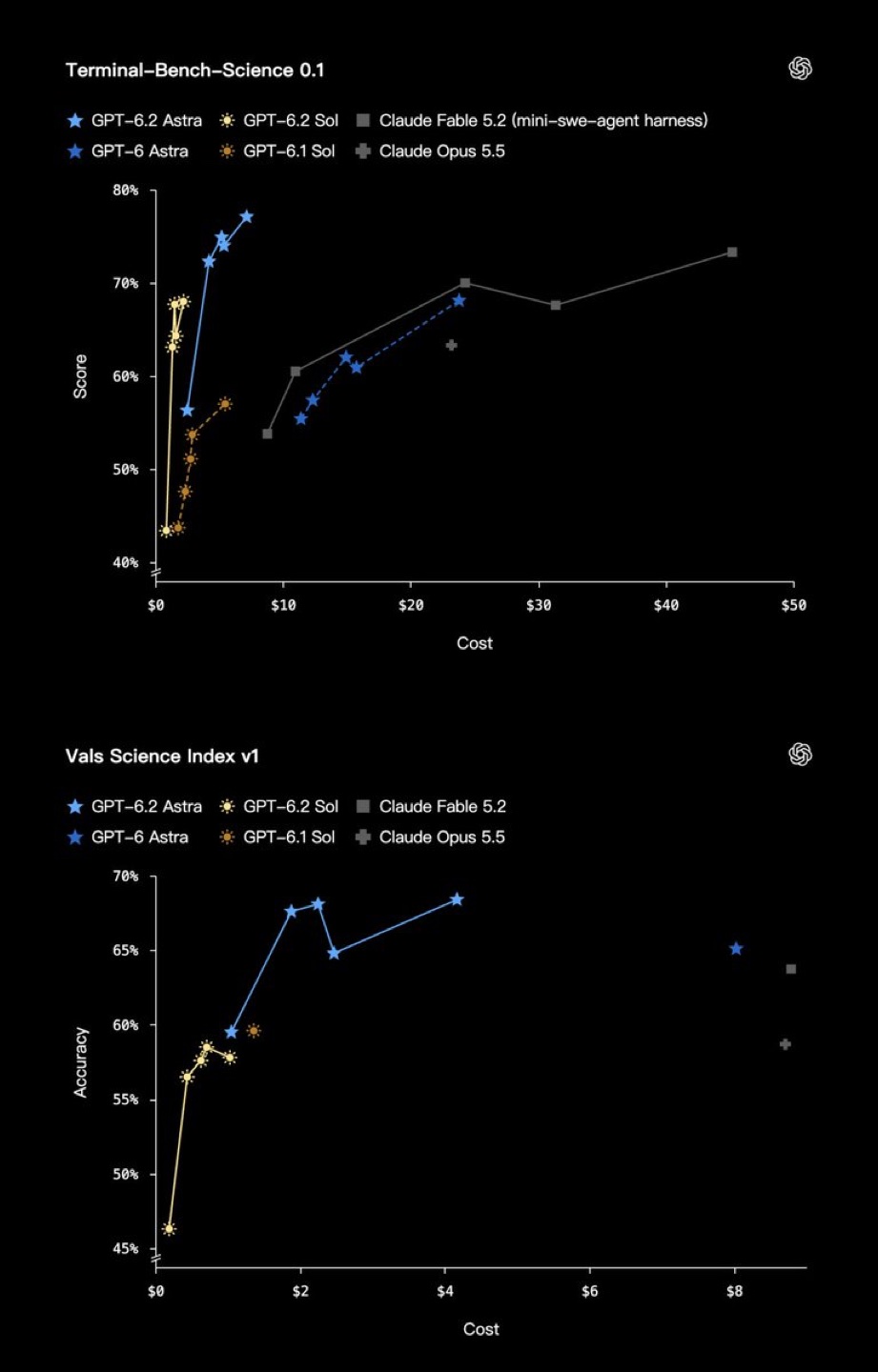 Figure 06: #1 on both Terminal-Bench-Science 0.1 (~77% / ~$7) and the third-party Vals Science Index v1—a powerhouse for scientific terminal workflows
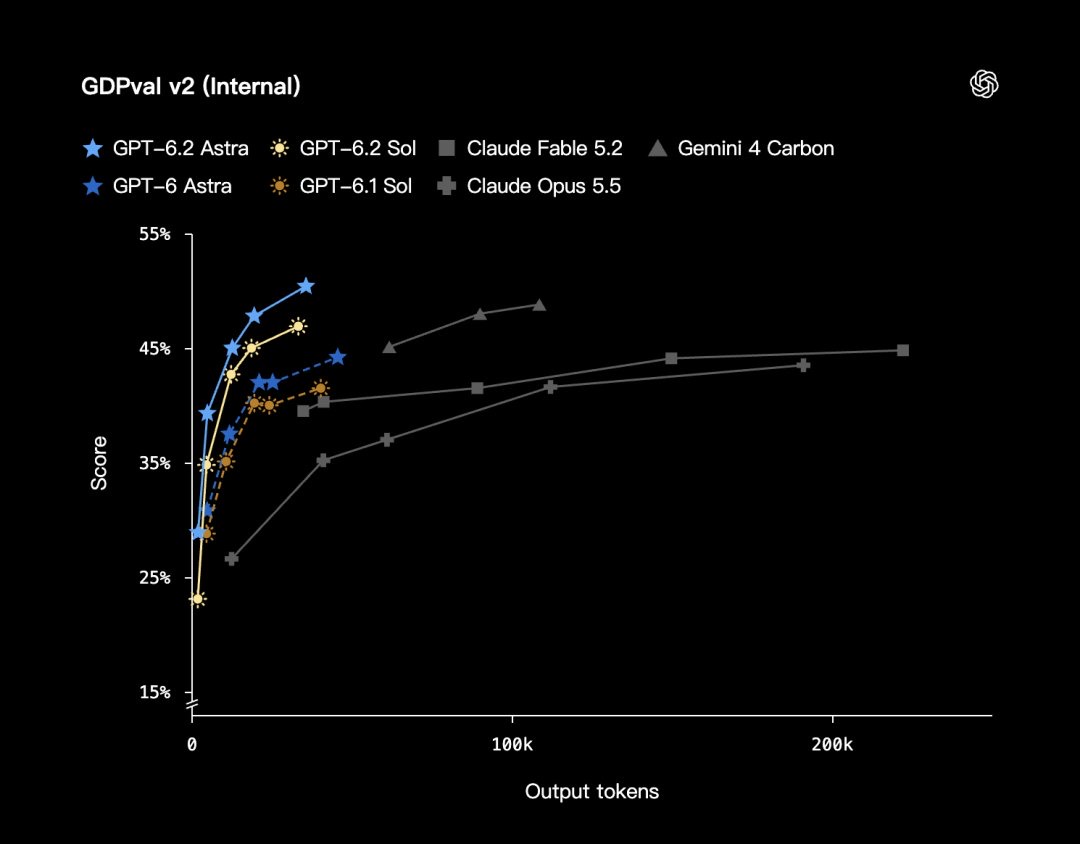 Figure 07: OpenAI internal GDPval v2 output-token efficiency curve across consulting, finance, and design tasks
On the Artificial Analysis Intelligence Index v5.0.1, GPT-6.2 Astra surges +6 points to 62, reclaiming #2 globally (trailing only Claude Fable 5.2 at 65, and ahead of Gemini 4 Carbon at 60 and Claude Opus 5.5 at 59). GPT-6.2 Sol edges up +2 points to 57 (matching the previous flagship GPT-6 Astra). Note: because the AIHOT leaderboard uses an ELO system, new models appear roughly one day after launch once over half of tracked evaluators post scores, avoiding early sparse-sample swings.
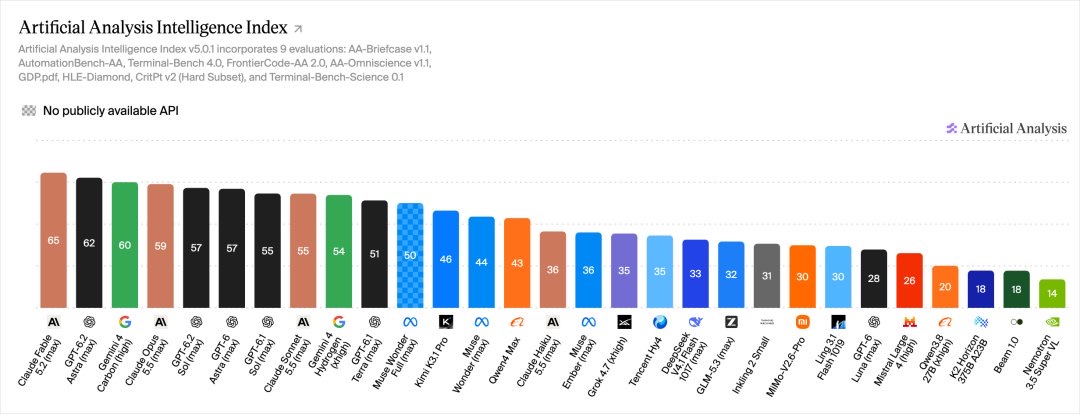 Figure 08: Artificial Analysis Intelligence Index v5.0.1 global standings—Claude Fable 5.2 (65) #1, GPT-6.2 Astra (62) #2, Gemini 4 Carbon (60) #3, GPT-6.2 Sol (57) #5
3. Hands-On Stress Tests Across Four Dimensions: Extreme Weaknesses vs. Extreme Dominance
3.1 Communication & Product Planning (Major Weakness): AIHOT Compliant Comments Test Outputs "Manual Review" in 24 Minutes
Over the past two months, many readers asked for a simple comment section under each news item on AIHOT, the news aggregator I maintain in my spare time:
 Figure 09: Reader feedback (1) requesting a lightweight comment section beneath each AIHOT news item
 Figure 10: Reader feedback (2) noting that coding the widget takes minutes, while real-name SMS verification costs and mandatory pre-moderation are the true bottlenecks
For a solo non-commercial hobby project, coding a comment box is trivial; the real blocker is domestic compliance and cost: mandatory phone-number real-name verification (expensive SMS OTPs) plus strict pre-publication moderation ("review before publish"). I gave the exact same plain-English prompt to both Gemini 4 Carbon and GPT-6.2 Astra, and the gap could not be starker:
Test Prompt 1: AIHOT Minimal-Cost Compliant Comment Architecture — Product Planning & Readability
| 1 | I've recently received a lot of user feedback asking to add a simple comment section inside AIHOT so readers can briefly discuss news items. Based on this context, help me evaluate how to design the entire commenting and discussion feature at minimal cost while ensuring full regulatory compliance and safety. |
Look at Gemini 4 Carbon (~5 minutes): its very first sentence nailed the exact pain point of a solo-maintained project, clearly laid out every mandatory compliance red line, and then proposed an immediately actionable minimal-cost design—disable custom nicknames, ban nested reply threads, open curated featured comments rather than firehose feeds, and reuse AIHOT's existing automated news-review Agent pipeline for pre-moderation—wrapping up with a clean options table ready for a final human decision (just cross-check once with Claude for hallucinations and ship):
 Figure 11: Gemini 4 Carbon opening (~5 minutes)—immediately empathizing with solo-maintainer compliance exposure and SMS/moderation costs
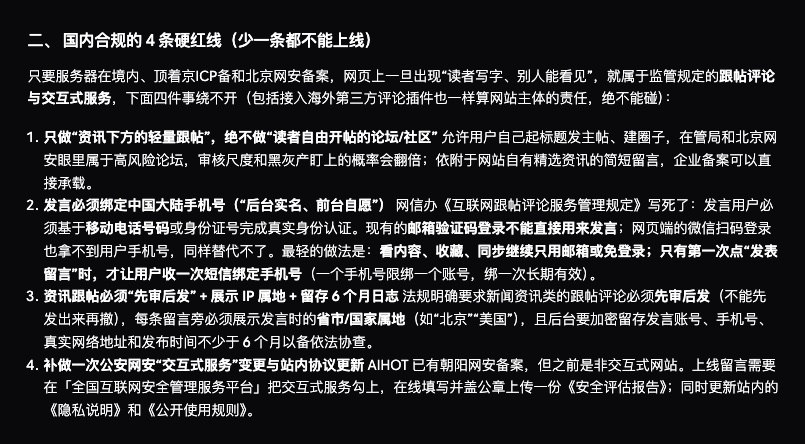 Figure 12: Gemini 4 Carbon breaking down mandatory Chinese community comment compliance requirements (real-name checks, pre-moderation, audit logging)
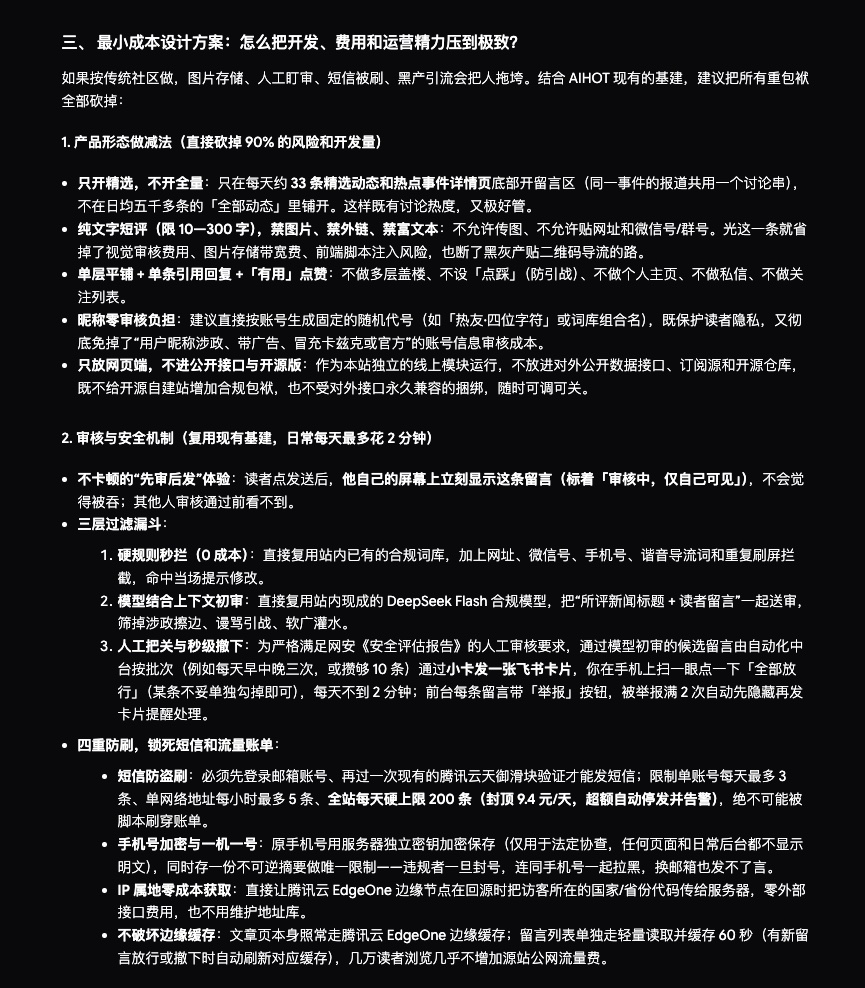 Figure 13: Gemini 4 Carbon proposing a minimal-cost design—no custom nicknames, no nested threads, curated comments only, reusing the existing Agent auto-moderation pipeline
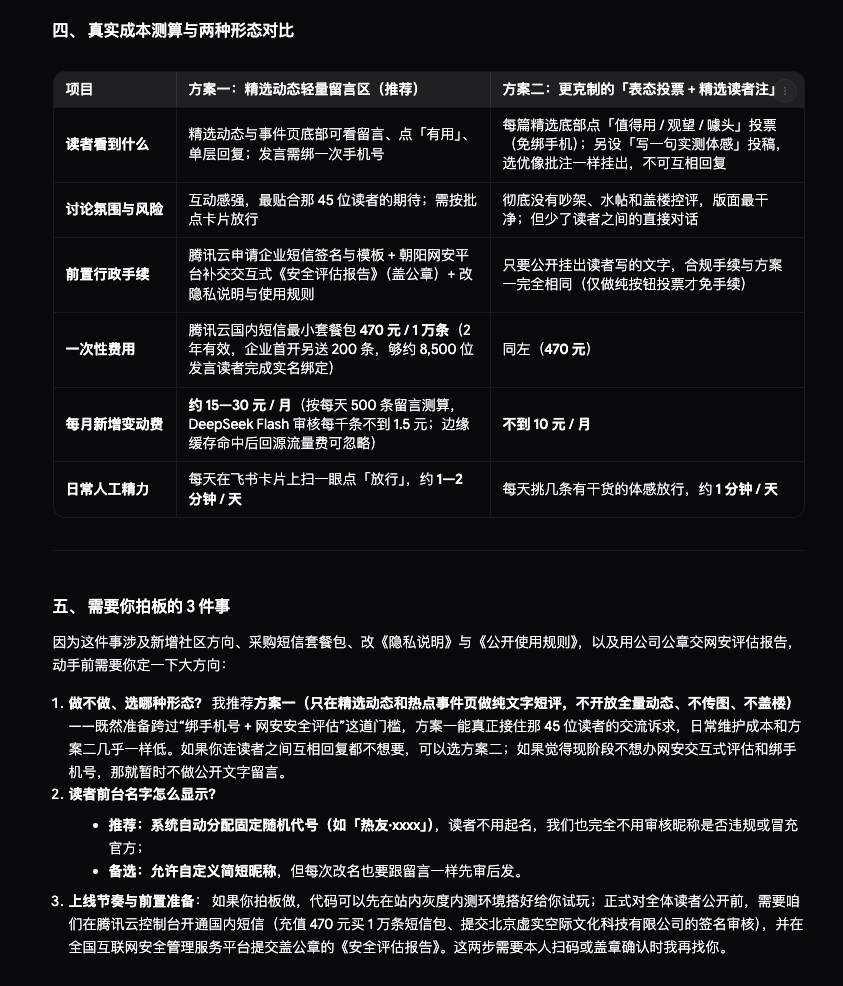 Figure 14: Gemini 4 Carbon closing with a structured trade-off comparison and crisp, highly readable formatting
Now look at GPT-6.2 Astra (which ground on for 24 minutes—nearly 5x slower!): despite producing a short response, the prose reads like an impenetrable wall of jargon, awkwardly structured, and absurdly suggests "manual human moderation in the early stage" for a solo hobby project (expecting the developer to sit in front of a screen 24/7 approving comments by hand?). Another leaderboard planning task suffered the exact same readability issue:
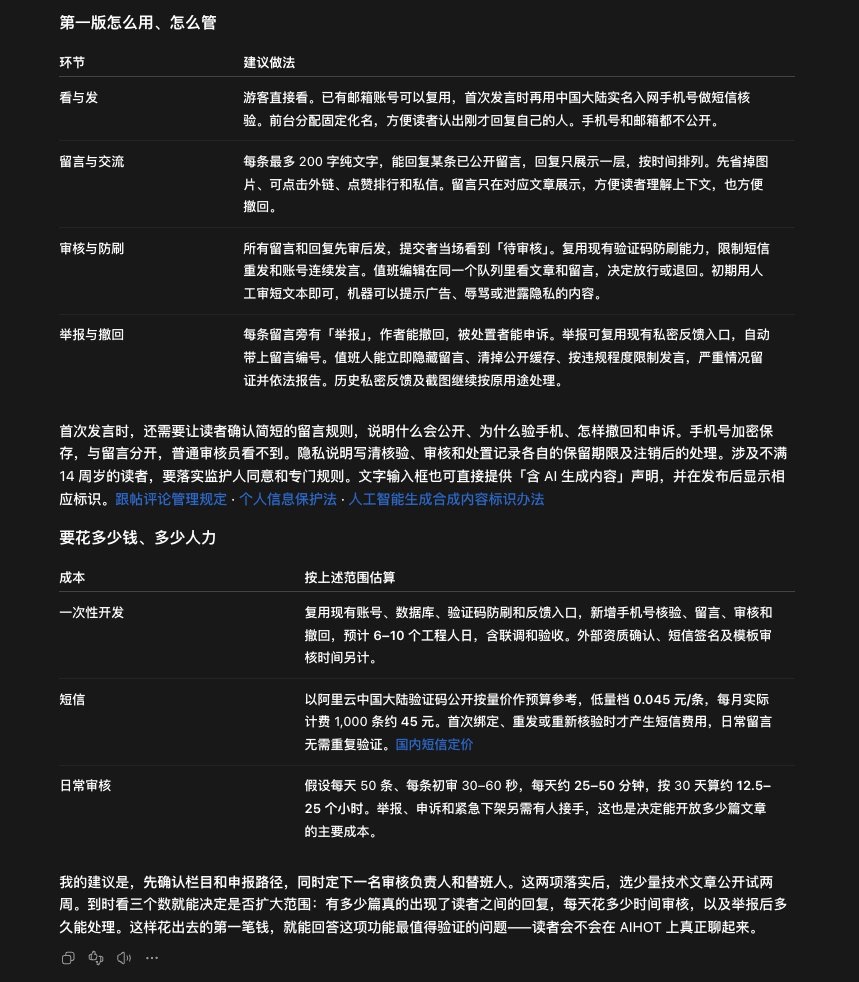 Figure 15: GPT-6.2 Astra's 24-minute comment system proposal—dense, exhausting prose absurdly recommending "manual human moderation in the early stage"
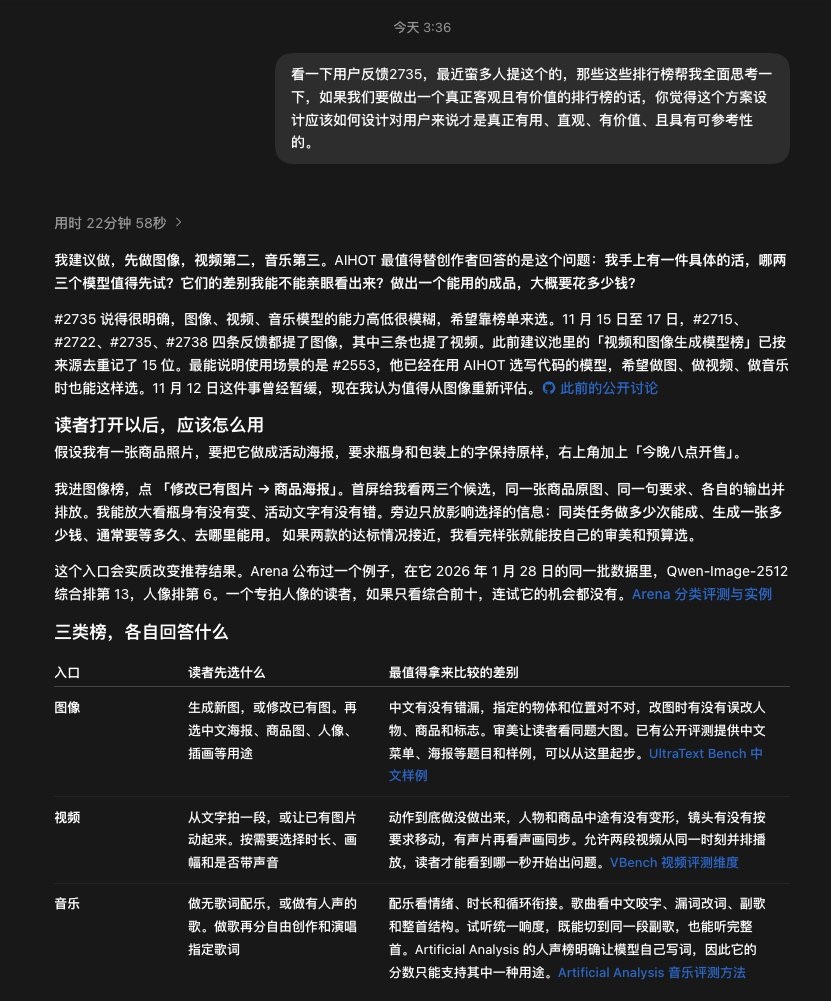 Figure 16: GPT-6.2 Astra exhibiting the same low proactivity and poor human readability on a leaderboard architecture planning task
3.2 Automated Code Review (Killer Trump Card): GPT-6.2 Sol xhigh Jumps to 84%, Astra Surges to 96%
In my engineering pipeline, the #1 high-frequency production job I send to GPT is Automated Code Review: whenever Claude finishes writing feature code, an automated script runs up to 3 rounds of xhigh reasoning code review with GPT to catch subtle defects before deployment.
On my internal benchmark built from 102 real-world repository bugs, all three models running at xhigh delivered a decisive scorecard:
- GPT-6.1 Sol (xhigh): Caught only 65% (61 full hits, 3 partial, 38 missed), median time 5.7 min, $0.31 per run.
- GPT-6.2 Sol (xhigh): Catch rate jumped to 84% (80 full hits, 7 partial, only 15 missed), median time actually dropped to 3.9 min, at just $0.43 per run.
- GPT-6.2 Astra (xhigh): Hit a nearly spotless 96% (91 full hits, 1 partial, only 10 missed), median time 8.1 min (~2x slower), $1.60 per run (~4x costlier in exchange for catching a dozen extra deep bugs).
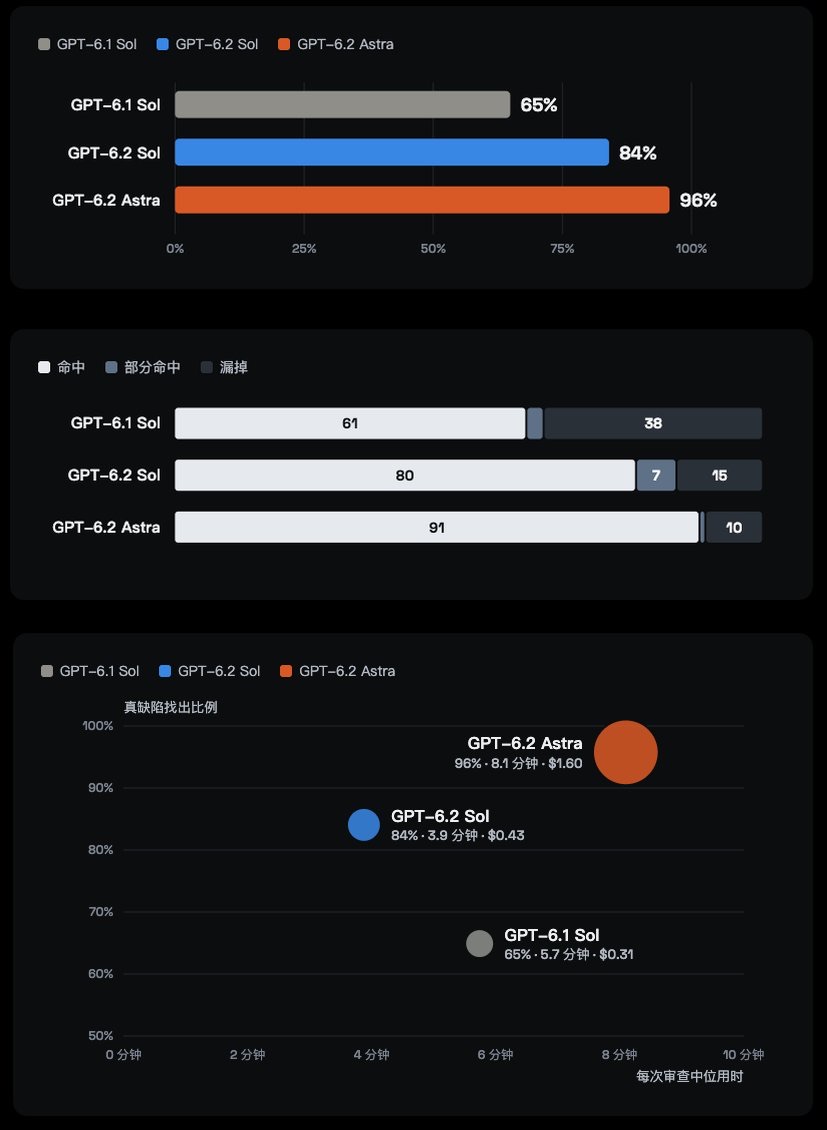 Figure 17: Automated code review bug-catch rates, hit breakdown, and latency/cost scatter at xhigh effort—GPT-6.2 Sol xhigh (84%, 3.9 min, $0.43) takes the #1 daily value crown
3.3 2D Graphics & Motion Video Aesthetics (Painful to Watch): Three-Model Showdown on ChatGPT's 4th Anniversary Tribute
Outside of 3D space, OpenAI has made zero visible progress on flat graphic design and 2D motion aesthetics. Using the same 40–60 second "ChatGPT 4th Anniversary Tribute Motion Video (2022.11.30–2026.11.30)" prompt side by side across all three flagships, hit play below to see the gap firsthand:
Test Prompt 2: ChatGPT 4th Anniversary Third-Party Tribute Motion Video (40–60s) — 2D Motion & Visual Taste
| 1 | Make a 40-to-60-second ChatGPT 4th Anniversary tribute motion-graphics video (2022.11.30–2026.11.30), 16:9 landscape, no voiceover, with original background music. Verify all content online yourself—cover the key versions, milestones, and metrics across these four years with zero fabrication. Before starting, inspect OpenAI's official website, blog, and recent launch videos to distill their visual style as the aesthetic baseline for this piece. Keep the pacing fast, motion dense, and frames rich, cut tightly on the music beats. Position the piece as a third-party tribute rather than an official OpenAI production. |
Comparison Video 01: ChatGPT 4th Anniversary Tribute Motion Video Generated by Claude Fable 5.2 (58s)
Aesthetic Benchmark · Claude Fable 5.2
Comparison Video 02: ChatGPT 4th Anniversary Tribute Motion Video Generated by Gemini 4 Carbon (52s)
Strong Pacing · Gemini 4 Carbon
Comparison Video 03: ChatGPT 4th Anniversary Motion Video Generated by GPT-6.2 Astra (52s · Speechless Output)
2D Aesthetic Cautionary Tale · GPT-6.2 Astra
3.4 3D Spatial Vision & Three.js (Surprise Win): Built on Embodied AI Foundations — 1-Hour Maximalist Ancient Greece World
In stark contrast to its dreadful 2D graphics, because OpenAI has been pouring investment into Spatial Vision for embodied AI and robotics, GPT-6.2 Astra delivers an explosive leap in 3D games and large Three.js scenes.
Case A: First-Person AAA Photorealistic "Temple Run" (Exceeded Expectations After 1 Tweak Round)
Test Prompt 3: Playable First-Person Photorealistic "Temple Run" — 3D Game Construction
| 1 | Build me a first-person "Temple Run" game with extraordinarily detailed graphics that visually rival a AAA title. Keep the map scope compact, but deliver impressive photorealistic lighting and visual fidelity everywhere else. |
 Figure 18: Opening frame of GPT-6.2 Astra's first-person Temple Run build showing atmospheric lighting depth and carved stone textures
Live Demo 04: GPT-6.2 Astra First-Person "Temple Run" Gameplay After 1 Tuning Round (41s)
3D Game Fidelity Leap · GPT-6.2 Astra
Case B: Three.js "Autumn Dusk Country Train Station" Cozy Spatial Sandbox
Live Demo 05: GPT-6.2 Astra Three.js "Autumn Dusk Country Train Station" Walkthrough (31s)
Warm Three.js Atmosphere · GPT-6.2 Astra
Case C: Fed One Reference Screenshot, Ran 1+ Hour to Deliver a Maximalist "Ancient Greece World"
Even on a bare one-sentence "Ancient Greece World" prompt, GPT-6.2 Astra's first pass looked solid. I then fed it a viral long-horizon Claude screenshot from X and told it to "build to match this bar"—not expecting much—yet GPT-6.2 Astra ground through more than an hour continuously and shipped a breathtaking, maximalist interactive 3D Ancient Greek acropolis in a single HTML file:
Test Prompt 4: Maximalist Three.js "Ancient Greece World" Interactive HTML — Long-Horizon 3D Build
| 1 | Using Three.js in a maximalist artistic style, spare no effort in reconstructing the most authentic, grand, and intricate Ancient Greece world possible with fine realistic detail, and deliver a single interactive HTML file. |
 Figure 19: Viral Claude Ancient Greece scene screenshot fed to GPT-6.2 Astra as a round-two visual benchmark anchor
Live Demo 06: Maximalist Three.js "Ancient Greece World" Delivered by GPT-6.2 Astra in 1+ Hour With Reference Anchor (29s)
1hr+ Long-Horizon Build · GPT-6.2 Astra
4. Final Takeaway: Claude & Gemini Are True ToC — GPT Has Become an Ultra-Specialized Industrial Engine
There used to be an industry stereotype: "Claude is for ToB, GPT is for ToC." By generation 6.2, reality has completely flipped:
- Claude and Gemini 4 Carbon are now the true consumer-friendly (ToC) models: they communicate naturally, show real empathy, write with crisp readability, and proactively help decompose fuzzy ideas into capabilities you could not reach alone.
- The GPT line has evolved into a pure "To-Elite" high-density industrial instrument: it is relentlessly rigorous, hyper-obedient, and extraordinarily token-efficient—deadly accurate in the hands of top scientists and algorithm engineers, yet frustratingly stiff and inefficient when everyday builders try to brainstorm open-ended product specs with it directly.
Ultimate Practical Rule: Let Claude or Gemini Command Your GPT Fleet
Stop forcing yourself to hash out vague product ideas directly with GPT. Hand discovery, product breakdown, frontend aesthetics, and primary feature implementation to Claude Fable 5.2 + Gemini 4 Carbon, then let them emit tight engineering contracts to dispatch GPT-6.2 Sol xhigh (daily 3-round code review at 84% catch / $0.43) and GPT-6.2 Astra (terminal science, 1-hour 3D spatial builds, and 96% pre-release final audits)—that is today's highest-leverage setup for both developer experience and token economics.
Found this actionable? Copy standard citation & summary
Formatted with canonical attribution link and executive summary—ready for Slack, Notion, or LLM context.
Put Into Practice: Companion Browser Workbenches
Side-by-Side Document & Prompt Diff Tool
Compare PDF reports, system prompts, and localized copy side by side with zero uploads.
One IP · Purity & AI Node Telemetry
Inspect residential vs. datacenter ASN, fraud risk score, and AI service routing reachability.