
Inside the $112B Shift: Why Brands Are Turning Creators into Their Paid Ad Creative Supply Chain (Digiday Breakdown)
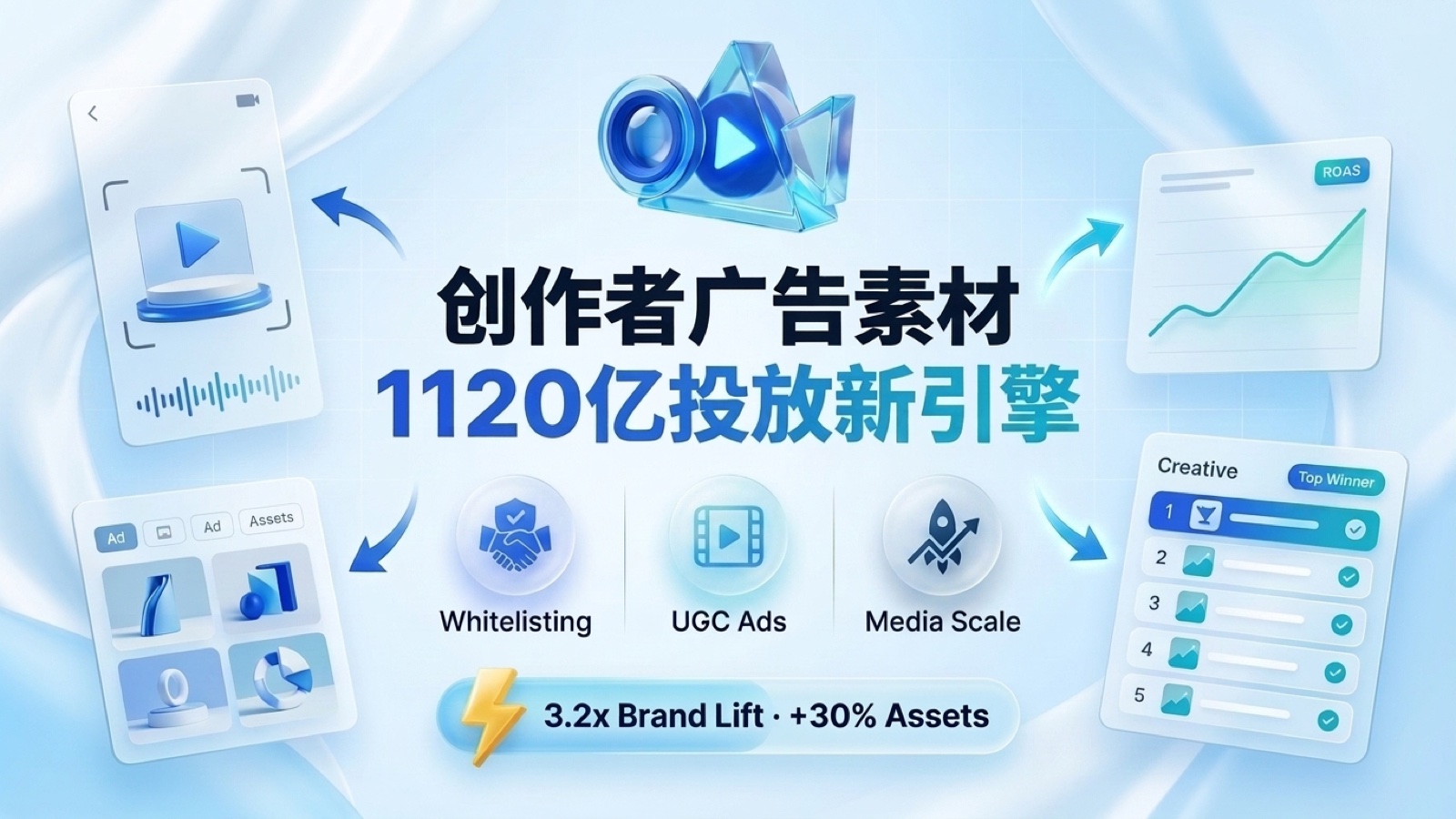 Inside the $112B Shift: Creators Embedded into the Paid Ad Creative Supply Chain
In the past, the math behind brand-influencer partnerships was simple: "pay to rent your followers' eyeballs." Today, that one-off sponsored-post playbook is being rewritten at speed.
According to an in-depth industry breakdown by Digiday reporter Sam Bradley (EVAOO News Intelligence Brief), a growing wave of cross-border DTC brands and major consumer companies are plugging creators directly into their "Paid Ad Creative Supply Chain." Instead of spending heavily in closed studio shoots to produce polished commercials that users scroll straight past, brands are commissioning creators to build native ad assets engineered for Meta and TikTok performance media.
Below, we turned the report's core benchmarks into an interactive budget planner and English contract-clause generator so DTC media buyers and creator-outreach leads can model parameters as they read through the full breakdown.
1. Three Hard Industry Benchmarks: Why Creators Became the Lifeline for Ad Creative
As media budgets pour into paid social—especially short-form video feeds—the first bottleneck in the ad account is rarely bidding strategy. It is creative fatigue. Digiday cites three major research datasets that pinpoint why brands are shifting production toward creators:
| Research Firm | Sample & Baseline | Key Finding | Practical Takeaway for DTC / Advertisers |
|---|---|---|---|
| CreativeX | 115,990 ad campaigns (spanning $11B in ad spend) | Creative asset volume required per campaign rose +30% over the past 5 years, yet spend stays hyper-concentrated—88% of media budgets go to just 5 core creatives | Stop gambling on one expensive influencer shoot for a single hero video; run high-velocity tests to isolate the top 5 scaling winners |
| Madison & Wall | Total global creator economy spend ($112B) | 12% of total creator spend now goes specifically toward paying creators to produce ads for brands; this segment is projected to grow +16% annually through 2030 | Creators are no longer siloed in lightweight PR lines; they are drawing directly from media production, social experimentation, and paid acquisition budgets |
| System1 × WPP Media × Goat | Top-brand ad effectiveness study (June report) | Among leading brands, creator-made ads generate 3.2x higher brand awareness lift than traditional ad creative | Native platform pacing, gestures, and authentic framing outperform expensive studio polish in retention and reach |
Katy Ball, Head of Social at M&C Saatchi Sport & Entertainment, describes the model as double leverage: "You get authentic content that looks native to the feed and drives engagement, while also tapping into massive social reach."
Jared Kozel, Co-Founder and Chief Creative Officer at creative agency Super Nice, highlights the underlying shift: paying for a feed placement no longer guarantees attention. Great creators live inside these platforms daily—they know which pain points resonate with viewers and how to stop a thumb in the first three seconds. Even Nike, long renowned for grand, closed-set studio productions, has had to confront the reality that traditional commercial spots dropped into TikTok or Instagram Reels often feel jarring and out of place in the native feed.
2. Three Mainstream Operating Models for "Creator-Made Ads"
At the execution layer, commissioning creators for ad creative has split into three tightly connected models that teams mix and match depending on campaign goals:
1. Direct Asset Production Buyout
The brand pays a creator a production fee plus commercial usage rights. The creator does not necessarily need to post on their own public handle (or may only include a secondary post). The priority is delivering high-converting vertical videos, modular 3-second hook variations, and clean, subtitle-free raw footage (Clean Feed) straight to the brand's media buyers for rapid A/B testing inside Meta and TikTok Ads Manager.
2. Whitelisting (Also Known as Dark Advertising)
Currently recognized by growth-stage brands as the highest-ROI execution model:
- Permission Handoff: The creator generates temporary authorization codes (such as TikTok Spark Ads Codes or Meta Partnership Ads permissions) granting the brand or its agency paid access to their handle;
- Precision Amplification: Advertisers retain the high-CTR outer shell of appearing under a real creator's avatar and authentic voice, while layering the brand's own high-intent pixel audiences, cart-abandoner pools, and Lookalike targeting in the ad backend;
- Budget Reallocation: According to Olivia Wedderburn, Head of Influencer Marketing at social creative agency Born Social, brands are actively carving out traditional media budgets specifically to fund Whitelisting amplification. Madison & Wall's data confirms this migration of capital: creator ad production is no longer pulled solely from traditional media or video-production lines, but increasingly from PR, everyday social, and innovation budgets.
3. Everyday Buyer & Organic UGC Commercial Licensing
Beyond established influencers, Andy Ryan, Co-Founder of Komodo, notes that brands are aggressively diversifying their creative supply pipelines—purchasing commercial ad rights to genuine unboxing and review posts shared organically by everyday customers. This provides a low-cost stream of fresh variations to feed the high-churn testing engine where "5 winning assets absorb 88% of spend."
3. Two Unavoidable Hurdles: Licensing Complexity and +10%–20% Rate Increases
Shifting from "buying a single sponsored feed post" to "procuring multi-format, editable, whitelistable ad assets" remains substantially cheaper than hiring traditional production houses that start in the hundreds of thousands of dollars—but procurement complexity is rising sharply:
- Usage Rights and Exclusivity Clauses Have Grown Far More Complex: Olivia Wedderburn notes that "negotiating usage rights and competitor exclusivity has never been more complex than it is today." Can a video run in paid ads for 3 months or 12 months? Is the brand allowed to splice new 3-second hooks onto the footage? Is the creator barred from shooting paid ads for competing brands during the same window? Every detail must be codified in legal terms.
- Creator Rates Are Rising Across the Board: With brands competing for paid-ad licensing and exclusivity, agencies report that additional usage-rights demands pushed overall creator rates up by 10% to 20% over the past year.
- Tooling Infrastructure Is Racing to Catch Up: Established influencer agencies such as Billion Dollar Boy recently upgraded their internal platform Companion with dedicated workflows for creator-led ad production and standardized licensing negotiations. Co-Founder Thomas Walters argues that an intensely competitive creator market is forcing brands to benchmark fair market pricing and contract boundaries with far greater rigor.
Meanwhile, Nicholas Spiro, Chief Commercial Officer at Viral Nation, summarizes the core advantage: with the right internal workflow in place, creators can produce higher volumes of diverse, cost-efficient ad creative in a fraction of traditional production timelines. Brands no longer treat creator collaborations as an isolated annual PR line item—they plan them directly inside the core paid-media engine.
4. Five Actionable Moves for Cross-Border DTC & Paid Social Teams
- Carve Out a Dedicated "Creative Testing Sandbox Budget": Following CreativeX's benchmark (+30% asset volume growth, with 88% of spend concentrating in 5 winners), prepare at least 12–20 distinct 3-second visual hooks for every product launch or peak season promo—separate testing budgets from scaling budgets.
- Use "Granular Tiered Rights" at Contracting to Avoid Overpaying: When facing the standard +10%–20% usage premium, never open negotiations demanding "global, all-platform perpetual buyout + 12-month category-wide exclusivity." Instead, negotiate "60–90 day paid social usage rights + exclusivity restricted to 3 named direct competitors," which routinely saves nearly a third of licensing overhead.
- Mandate "Modular Remixable Deliverables" in Every Brief: Specify in the contract that creators must submit a Raw Clean Feed (9:16 vertical HD clips split by scene, with zero stickers or native platform captions) so media buyers can swap only the opening 3 seconds to spin out three new test variants.
- Promote High-Engagement Organic Posts Immediately via Whitelisting: When a micro or mid-tier creator's organic unboxing draws unusually strong engagement or comment click intent, do not let it decay after 48 hours—secure 90-day Spark Ads / Meta Partnership Ads permissions right away and push it into paid scaling campaigns.
- Anchor Creator Scripts in Real Buyer Friction and Community Language: Pair the Reddit Zero-to-One Pitch-Free Communication Framework with real customer pain-point phrases to write grounded, relatable hooks for creators—ditching stiff brand copy to capture the 3.2x awareness and mindshare advantage of native creator ads.
References & Further Reading
- Primary News Source: EVAOO News Intelligence Brief: Why Brands Are Paying Creators to Produce Ad Creative (Digiday / Sam Bradley)
- Related Growth Playbooks: Creator & Social Growth Hub · High-Converting Social Copywriting Guide
Found this actionable? Copy standard citation & summary
Formatted with canonical attribution link and executive summary—ready for Slack, Notion, or LLM context.
Put Into Practice: Companion Browser Workbenches
UTM Builder Pro Matrix Workspace
Reverse URL parser, GA4 channel group diagnostics, and dynamic ad macro batch CSV export.
Shopify GTM & GA4 Web Pixel Generator
Generate production-ready Shopify Customer Events Web Pixel code for GA4, Meta, and TikTok.