
Vibe Marketing: How to Become a Marketing Engineer — From Hand-Written Prompts to Autonomous AI Marketing Systems
 Vibe Marketing: How to Become a Marketing Engineer
Editor's Note: Hand-writing one-off prompts and manual channel execution are hitting diminishing returns. A Marketing Engineer combines brand taste and positioning with connected knowledge, live data, and AI Agents—building automated systems that run research, campaign planning, creative production, and attribution reviews end to end.
Originally written by growth practitioner Shann³ (@shannholmberg) and translated into Chinese by Su (@Sukiea1008). This guide walks through how to build an AI marketing engineering stack starting from everyday marketing workflows.
01 | From Hand-Written Prompts to Marketing Engineering
Original Author: Shann³ (@shannholmberg)
Original Post: How to Become a Marketing Engineer
Translator: Su (@Sukiea1008)
A Marketing Engineer builds the automation systems behind marketing execution. Instead of treating AI as a chat box for isolated copywriting tasks, you connect scattered knowledge, multi-source data, and agents into continuous workflows that execute market research, campaign planning, and production delivery end to end.
In day-to-day growth operations, core marketing projects are steadily moving inside agent workspaces:
- Market and competitor research
- Multi-channel campaign planning
- Multimodal copywriting and creative asset production
- High-converting landing page development
All of these projects depend on the exact same business context: who the target audience is, what the product offer and differentiators are, which experiments have already run, and what historical performance data proved.
Connecting knowledge and data into task-specific workflows—while explicitly defining where human review is required—forms the foundation of Marketing Engineering. Research feeds briefs, briefs drive production, production data feeds attribution, and attribution informs the next iteration.
02 | Core Responsibilities and Skill Stack of a Marketing Engineer
A Marketing Engineer orchestrates AI Agents, Connected Data, and Business Context to build engineering systems that execute marketing workflows autonomously.
A mature content workflow runs through five stages:
- Scan the web for high-potential topics and industry shifts;
- Propose differentiated editorial angles;
- Generate visual and copy assets grounded in customer research, product positioning, and brand voice guidelines;
- Route outputs through human approval before publishing;
- Track post-launch performance data and write learnings back into the knowledge base for the next campaign.
Core Principle: Your marketing taste and domain knowledge determine the quality ceiling of the entire automated system.
You decide which inputs an agent reads, which sources it trusts, how outputs are validated, and which gates require human sign-off.
Take a product launch as an example—suppose the goal is to study 20 comparable launches in your niche and design your own launch plan:
- Research workflow: Scrape competitor launch posts, landing pages, and engagement/conversion metrics. You define the filtering criteria and extraction schema, and instruct the agent to separate objective evidence from subjective inference.
- Context synthesis: Merge external research with internal context (target audience, product scope, pricing, budget, and past test outcomes).
- Angle generation: Have the agent propose 3 creative angles backed by cited evidence.
- Human approval & production: Once you sign off on a direction, downstream workflows generate the full batch of supporting assets.
When generated plans feel generic or hollow, the root cause almost always lies in system inputs—overly broad research scope, missing customer pain points, or omitted prompt constraints. Refining those inputs and guardrails is itself core engineering work.
Six Skill Pillars Behind a Marketing Engineer
| Capability Pillar | Role in Building the System |
|---|---|
| Product Marketing (PMM) | Supplies customer personas, market positioning, and differentiated product offers |
| Content & Creative | Defines brand tone of voice, curates reference examples, and reviews creative assets |
| Growth & Performance | Designs workflows around hypothesis testing, A/B experiments, and measurable ROI |
| Marketing Ops & Automation | Connects SaaS tools and defines how data and tasks move between pipeline stages |
| Data Analytics | Provides cleaned, reliable data sources and verifies agent-derived analytical claims |
| Engineering | Connects APIs, writes automation scripts alongside agents, and debugs end-to-end pipelines |
You do not need to master all six pillars simultaneously. Start with the function you already know best. If your background is content, build your content workflow first—your domain judgment lets you spot immediately which signals matter and where an early draft falls short.
03 | Working Directly with Agents: Models, Harnesses, and ADEs
In practice, roughly 70% of marketing engineering work happens inside an Agent Development Environment (ADE), such as Orca or Cursor.
Market research, campaign planning, asset creation, spawning subagents in parallel, and reviewing final outputs all take place inside the ADE.
 Model, Harness, and ADE Collaboration Architecture
The Three Collaboration Components
| Component | Definition and Role |
|---|---|
| Model | The underlying LLM chosen per subtask—such as Claude 3.5 Sonnet for writing and planning, or GPT-4o for multimodal inspection |
| Harness | The engineering software layer wrapping the model that handles file I/O, tool calls, code sandbox execution, and permission guardrails |
| Agent Development Environment (ADE) | The workspace UI where humans collaborate with agents to issue tasks, monitor subagents, and review deliverables |
Task Setup and Execution Flow
For a specific campaign, the standard four-step execution loop works as follows:
- The agent reads local project context files;
- It calls external tools to gather required research;
- It writes findings into a designated working folder and pauses for human review;
- Alongside human refinement of the brief and Campaign Book, sub-tasks are dispatched to specialized agents for execution.
The objective is shipping production-ready assets directly. For open-ended tasks requiring multi-step reasoning, defining an explicit /goal and clear exit conditions prevents autonomous agents from burning tokens indefinitely.
04 | Structuring Your Marketing Agent Workspace
Every marketing engineering project needs a clean folder hierarchy to store context, execute workflows, and archive approved deliverables.
Organize workspaces by marketing function while keeping team-wide Shared Knowledge at the root sibling level so every functional agent reads from the same source of truth:
| 1 | marketing/ |
| 2 | ├── shared-knowledge/ # Global shared business knowledge base |
| 3 | │ ├── audience.md # Target audience and ICP personas |
| 4 | │ ├── product-and-offer.md # Core product offer and pricing |
| 5 | │ └── positioning.md # Brand positioning and value proposition |
| 6 | ├── content/ # Dedicated content marketing workspace |
| 7 | │ ├── knowledge/ # Function-specific context (tone guide, winning examples) |
| 8 | │ ├── work/ # Active campaign drafts and intermediate artifacts |
| 9 | │ ├── workflows/ # Standardized workflow definitions |
| 10 | │ ├── skills/ # Reusable skills and prompt suites |
| 11 | │ ├── agents/ # Specialized subagent configurations |
| 12 | │ ├── scripts-and-code/ # Batch automation and scraping scripts |
| 13 | │ ├── outputs/ # Final human-approved production deliverables |
| 14 | │ └── results-and-learnings/# Performance data, post-mortems, and learnings |
| 15 | ├── seo-aeo/ # SEO & Generative Engine Optimization workspace |
| 16 | ├── outbound/ # Automated outbound sales and prospecting |
| 17 | ├── paid-and-creative/ # Paid acquisition and creative production factory |
| 18 | └── lifecycle-and-cro/ # Lifecycle journeys and conversion rate optimization |
Workspace Directory Responsibilities
| Directory | Contents and Ownership Boundary |
|---|---|
| Shared Knowledge | Company-wide truths: product capabilities, target audience, commercial positioning, and compliance red lines |
| Functional Knowledge | Domain-specific reference docs such as editorial tone guides, SEO keyword vaults, and objection playbooks |
| Work Area | Active campaign directories, draft briefs, and intermediate reasoning logs |
| Workflows | Step-by-step pipeline definitions and handoff rules from raw inputs to finished outputs |
| Skills, Agents & Scripts | Cross-project reusable prompt kits, specialized agent profiles, and API/scraping scripts |
| Outputs | Human-reviewed, signed-off digital assets ready for production launch |
| Learnings | Post-launch performance reports, ROI attribution analyses, and pitfalls to avoid next cycle |
Practical Tip: Creating folders alone is not enough. Place a concise Markdown guide in the root directory specifying where agents should look up context, which data sources take precedence, and exactly where finished outputs must be saved.
| 1 | Shared Knowledge Campaign Context |
| 2 | Audience + Product Offer Brief + Research |
| 3 | │ │ |
| 4 | └───────────┬───────────┘ |
| 5 | ↓ |
| 6 | Workflow Run |
| 7 | ↓ |
| 8 | Draft + Review |
| 9 | ↓ |
| 10 | Approved Deliverables |
| 11 | ↓ |
| 12 | Campaign Results |
| 13 | ↓ |
| 14 | Findings + Your Feedback |
| 15 | ↓ |
| 16 | Context for Next Campaign |
05 | Connecting External Tools and Your Marketing Data Ecosystem
For workflows to do real operational work, agents must connect directly to external SaaS platforms and APIs.
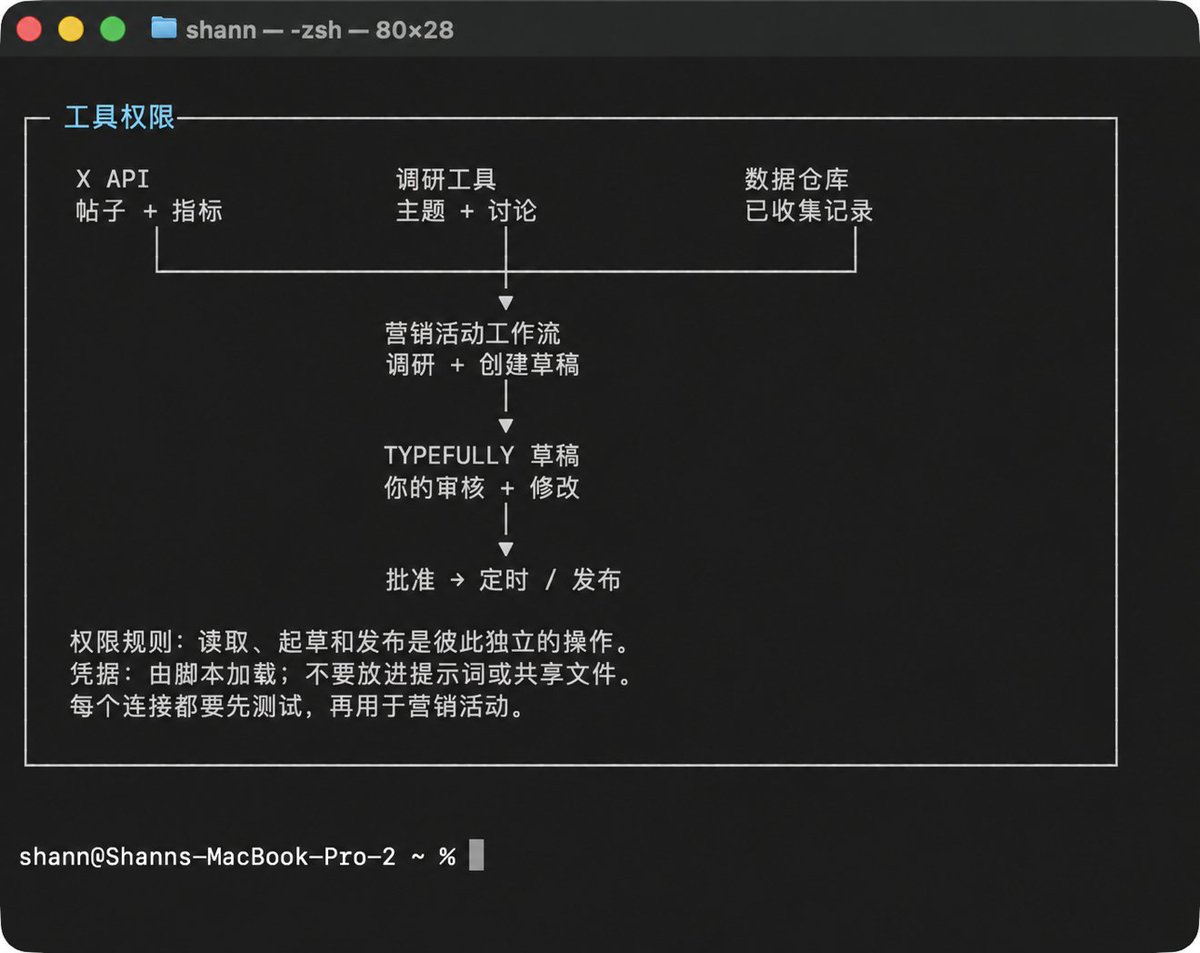 API Connections and Data Flow
Common API Integration Stack
| External Connection | Practical Use Case |
|---|---|
| Social Platform APIs (X / LinkedIn) | Pull trending posts, monitor competitor activity, and extract real engagement metrics |
| Scheduling Tools (Typefully / Buffer) | Generate scheduled post drafts and publish across channels after human approval |
Public Sentiment Skills (e.g. /last30days) | Scan X, Reddit, and YouTube over the trailing 30 days for recurring discussions and buyer pain points |
| Enterprise Data Warehouses (BigQuery / Snowflake) | Query ad spend, conversion funnels, LTV, and multi-channel attribution metrics |
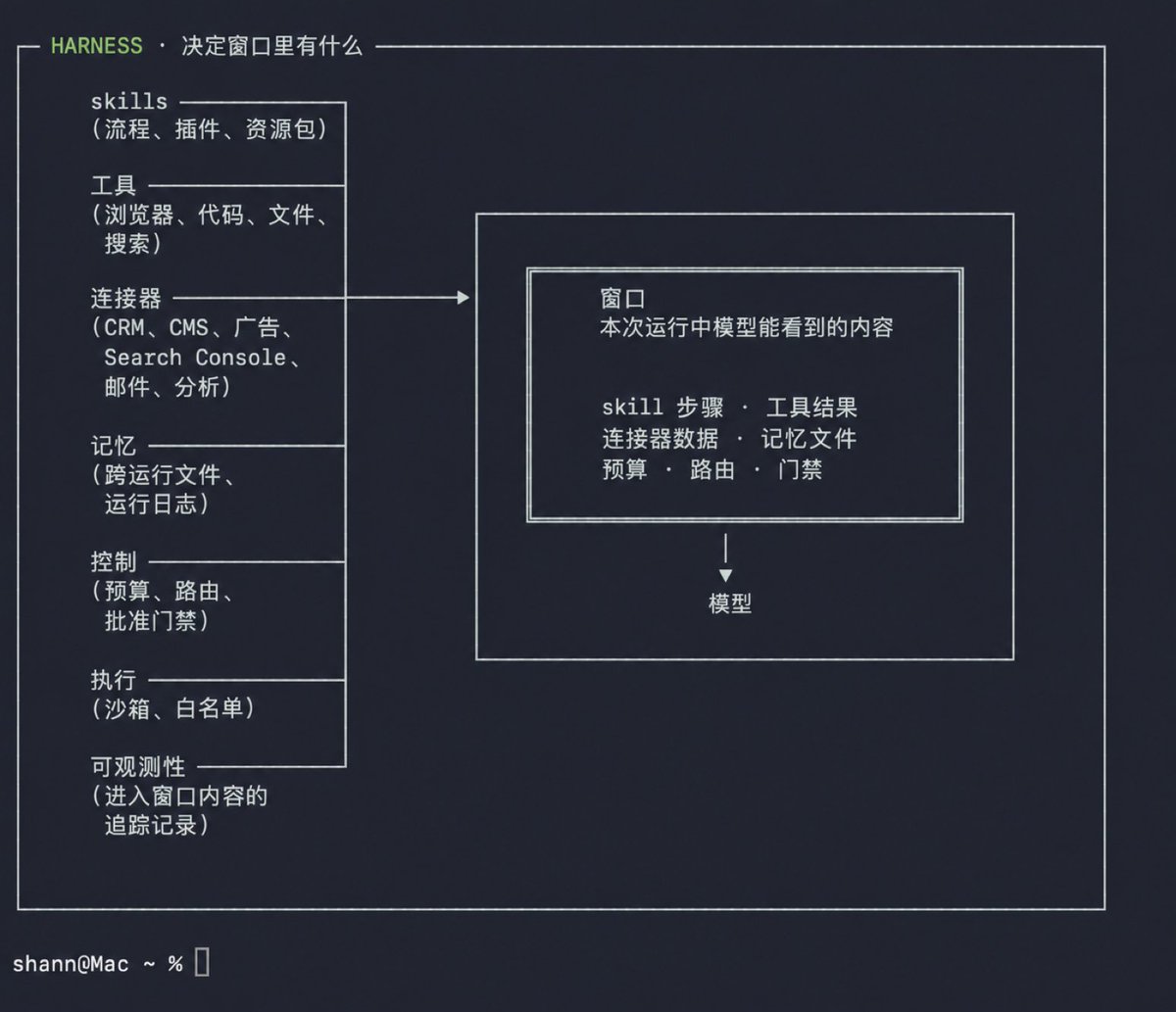 SaaS API Architecture Integration
Gathering External Sentiment with Purpose-Built Skills
Using an open-source skill like /last30days, an agent aggregates public community discussions to surface the exact questions, points of confusion, and competitor complaints your target audience raised over the past 30 days:
 /last30days Research Skill Execution Snapshot
Credential Security and Permission Isolation Rules
- Never hardcode API keys: Store all sensitive credentials in a local
.envfile added to.gitignore. Never paste keys into prompts, knowledge docs, or campaign briefs. - Enforce least-privilege access:
- Grant Read-Only permissions to research workflows;
- Grant Create Draft permissions only to scheduling workflows;
- Keep final Publish / Send actions behind a mandatory human approval toggle or strict automated validation gates.
06 | Building a Two-Tier Knowledge Base: Blending Internal Context and External Signals
High-converting workflows require three simultaneous inputs: current audience objections, core product claims, and the latest shifts in external competition.
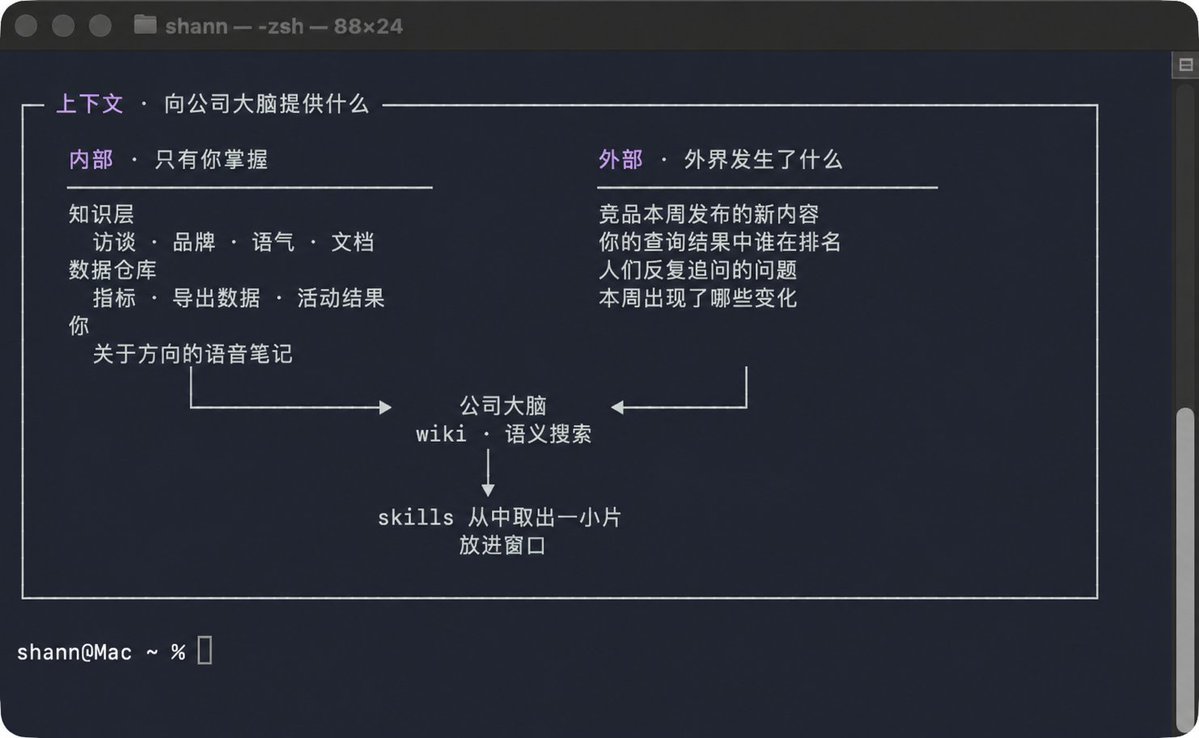 Knowledge Layer Architecture and Data Flow Diagram
Internal vs. External Context Comparison
| Internal Context | External Context |
|---|---|
| Product capabilities, features, pricing, and differentiated selling points | Recent competitor ad creatives, landing page redesigns, and promotions |
| Customer interview transcripts, CRM win/loss notes, and top support tickets | Candid user discussions and feedback across Reddit, X, and niche forums |
| Operator judgment, historical mistakes, and compliance restrictions | Industry research reports, macro shifts, and seasonal demand trends |
| Historical ad creative vault, CTR, conversion rates, and CAC benchmarks | Evolving search intent and long-tail query shifts across Google and Bing |
Documenting Operator Experience
Senior marketers carry high-leverage judgment that rarely lives in spreadsheets. Spend five minutes recording a voice memo debrief—for instance, "Conversion dipped last week because the landing page promised a feature we haven't shipped yet"—then turn that transcript into two living docs:
knowledge/customer-objections.md: Captures verified buyer hesitations and proven responses;knowledge/approved-claims.md: Lists claims cleared by legal and product teams so agents never hallucinate features or overpromise.
| 1 | ┌───────────────────────────────────────────────┐ |
| 2 | │ Live External Research │ |
| 3 | │ Log findings, source URLs, and timestamps. │ |
| 4 | │ Explicitly flag unverified inferences. │ |
| 5 | └───────────────────────┬───────────────────────┘ |
| 6 | │ |
| 7 | ▼ |
| 8 | ┌───────────────────────────────────────────────┐ |
| 9 | │ Human-in-the-Loop Gate │ |
| 10 | │ Verify evidence quality and cut noise. │ |
| 11 | │ Annotate final decisions and rejection notes. │ |
| 12 | └───────────────────────┬───────────────────────┘ |
| 13 | │ |
| 14 | ┌───────────┴─────────────┐ |
| 15 | ▼ ▼ |
| 16 | ┌───────────────────────┐ ┌───────────────────────┐ |
| 17 | │ Campaign-Specific │ │ Global Reusable │ |
| 18 | │ Context │ │ Knowledge Base │ |
| 19 | │ Scoped to current run │ │ Saved to shared- │ |
| 20 | │ only. │ │ knowledge for all │ |
| 21 | └───────────────────────┘ └───────────────────────┘ |
07 | Building the Marketing Data Layer
Agents need direct access to real outcomes from the previous test cycle—identifying which ads drove qualified visits, which visits converted into leads, and which leads actually closed into revenue.
Multi-Channel Data Consolidation
- Ad platforms: Spend, impressions, CPC, and CTR;
- Analytics tools: Bounce rate, time on page, scroll depth, and micro-conversions;
- CRM & billing systems: Lead qualification scores (MQL / SQL), close rates, and realized ARR.
Set up a scheduled Cron Job that pulls metrics from every channel overnight, normalizes them, and writes them into a local SQLite database or cloud BigQuery table.
When drafting the next campaign brief, the agent reads three inputs together:
Creative Angle + Asset Performance Data + Operator QA Review
Every new marketing strategy is therefore anchored in real attribution data rather than copywriting guesswork.
08 | Building Your First Workflow from Scratch
Start with a recurring task you know inside out—one where you can judge output quality at a glance. A practical first target is turning customer research notes and last week's ad telemetry into 3 structured Creative Briefs.
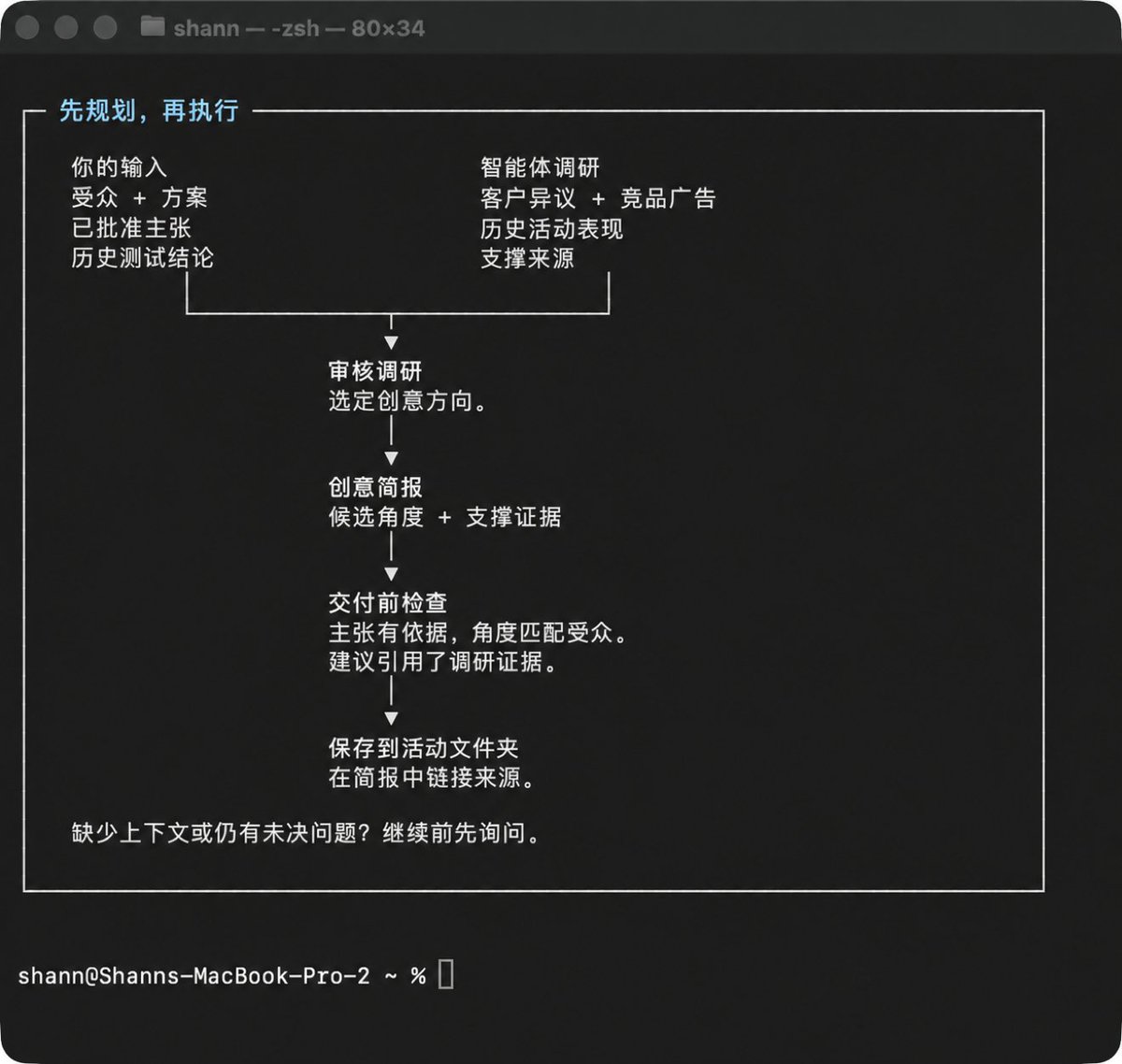 Building and Planning Your First Marketing Workflow
Execution Sequence: Plan First, Then Run
- Talk through the objective: Spend 5 minutes dictating the campaign goal, budget cap, and known constraints;
- Refine the plan interactively: Use a planning skill (such as Matt Pocock's planning framework) so the agent asks clarifying questions until edge cases and constraints are locked;
- Write a goal-driven prompt (
/goal):
| 1 | /goal Prepare creative briefs for the next round of paid ads. |
| 2 | - Must ground all recommendations in audience.md, approved-claims.md, and previous-test-results.md. |
| 3 | - Conduct deep research and propose 3 differentiated creative angles. |
| 4 | - Specify target segment, supporting evidence, and how each angle differs from prior tests. |
| 5 | - Cross-check every claim strictly against approved-claims.md; never invent product features. |
| 6 | - Write the final output to campaign/creative-brief.md. |
| 7 | - Stop as soon as the deliverable reaches human-review quality. Never publish ads directly. |
| 8 | - Ask me proactively if critical information is missing. |
- Human acceptance & iteration: Review the delivered creative brief. If an angle misses the mark, tighten the prompt or enrich the context file; once reliable, save the workflow as a reusable template.
09 | Multi-Channel Orchestration: Scaling Workflows Across an Entire Campaign
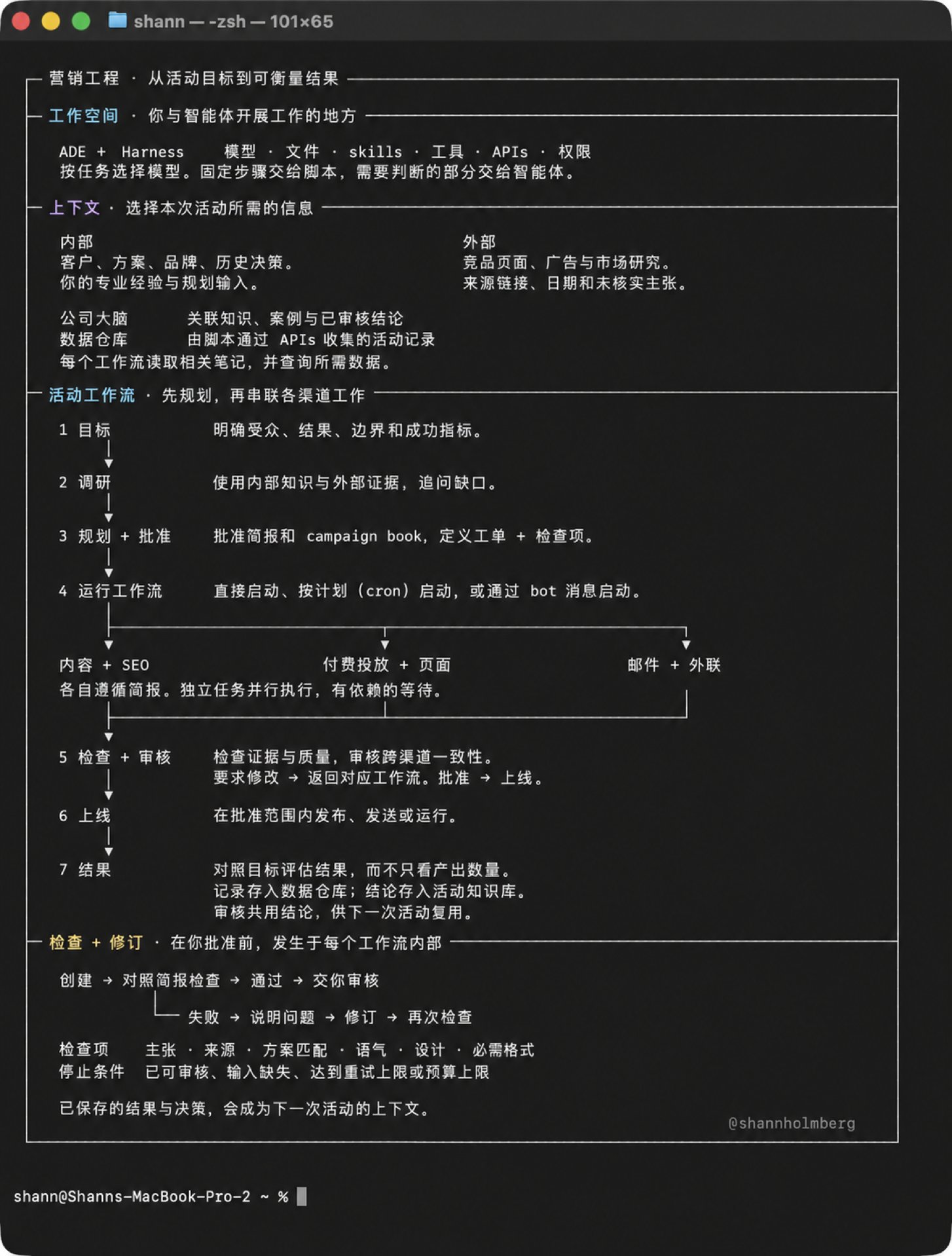
For major product launches, a single agent cannot carry every deliverable alone. Multiple channel workflows need to coordinate off shared campaign context:
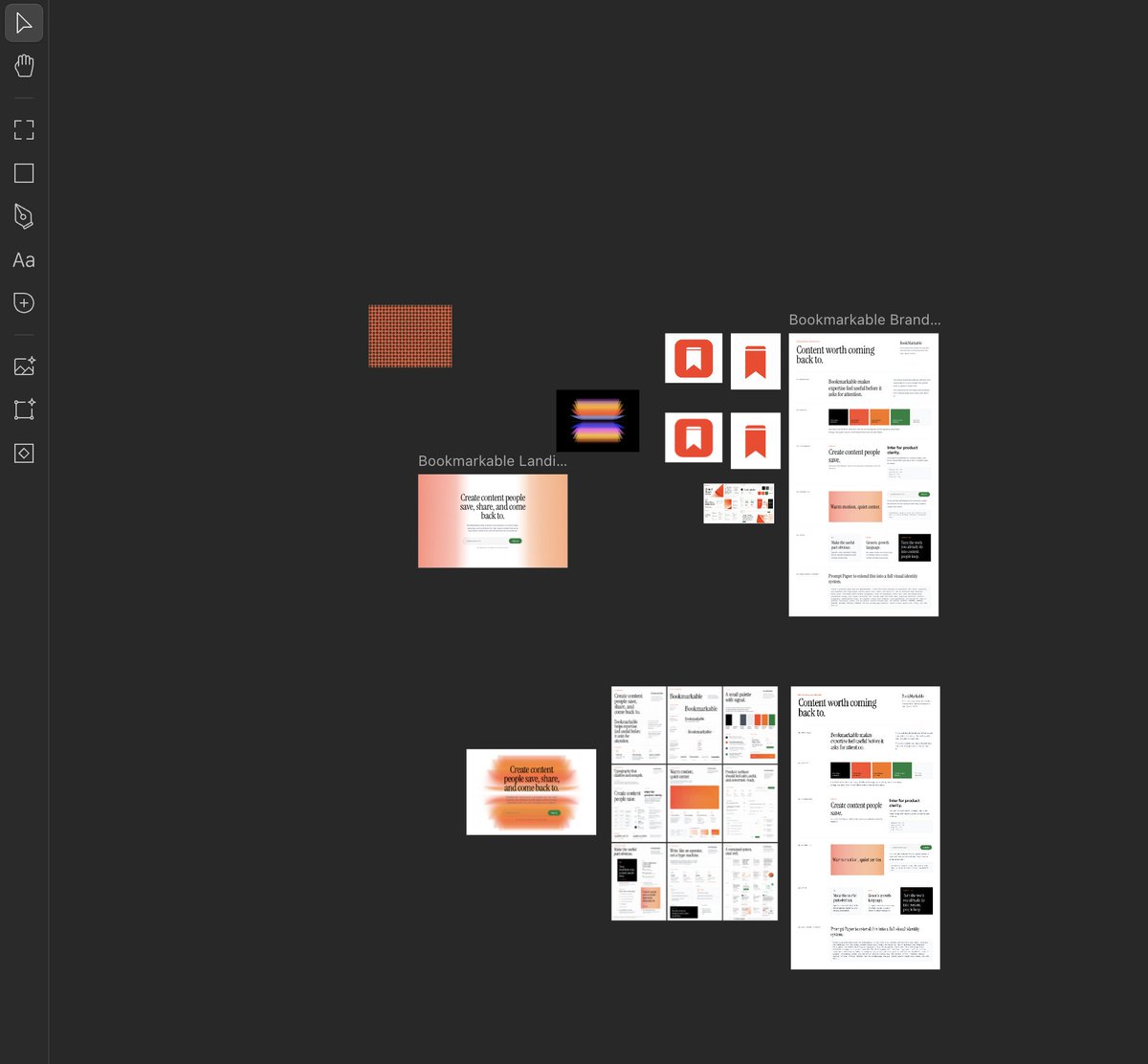 Multi-Channel Campaign Orchestration Matrix and Campaign Book
Multi-Channel Coordination Matrix
| Marketing Workstream | Deliverables | Required Context |
|---|---|---|
| Landing Pages / CRO | Wireframe copy, Tailwind / React code, and event tracking setup | Product offer, target audience, approved claims, and conversion goal |
| Paid Acquisition & Creative | Ad concepts, multi-aspect static and video assets, and test matrix | Budget tier, historical winning creatives, and landing page hero claims |
| Social & Content | Short-form social posts, long-form threads, and supporting graphics | Campaign angle, product screenshots, and platform formatting rules |
| Lifecycle Email | Onboarding activation flows, cart recovery emails, and launch announcements | Segment rules, send triggers, and signup context events |
| Outbound Sales | High-intent account research and personalized outbound email drafts | Ideal Customer Profile (ICP), buying signals, and winning sales scripts |
Unified Visual Baseline: The Campaign Book
Your team first locks down a moodboard and visual style guide (Campaign Book) in Figma or Paper. Agents then read that visual baseline to generate consistent frontend layout code and image-generation prompts across every channel.
| 1 | APPROVED CAMPAIGN BOOK |
| 2 | References + Layouts + Product Imagery |
| 3 | │ |
| 4 | ┌───────┴────────┐ |
| 5 | ↓ ↓ |
| 6 | Code Layouts Image Generation |
| 7 | LP / Ads / Email Product Angles / Scenes |
| 8 | │ │ |
| 9 | └───────┬────────┘ |
| 10 | ↓ |
| 11 | Assemble Campaign Design Assets |
| 12 | ↓ |
| 13 | Operator Visual Review |
| 14 | ↓ |
| 15 | Final Approval & Launch |
10 | Controlling Output Quality with Evaluation Loops
Production-ready deliverables rarely arrive on the first pass. High-reliability systems run through a structured loop of Generate -> Automated Checks -> Diagnose -> Revise:
| 1 | Task Ready |
| 2 | ↓ |
| 3 | Generate / Edit ◄──────────────────────┐ |
| 4 | ↓ │ |
| 5 | Run Automated Checks │ |
| 6 | ├── Failed → Extract error details ─┘ |
| 7 | │ (within retry budget) |
| 8 | ├── Retry cap hit / Ambiguous blocker → Request human input |
| 9 | │ |
| 10 | └── All checks passed → Hand off for final operator sign-off |
| 11 | │ |
| 12 | ┌────────┴────────┐ |
| 13 | ↓ ↓ |
| 14 | Request Edits Approve Launch |
| 15 | → Re-enter loop → Trigger next pipeline stage |
Automated Checks vs. Human Taste Checks
- Automated checks: Verify 16:9 image aspect ratios, character/word limits, zero 404 broken links, and exact price parity against the product database.
- Human taste checks: Judge whether the copy persuades, whether visuals match brand tone, and whether the emotional framing hits the intended nerve.
11 | Scheduled Jobs and Background Automation Bots
Once a pipeline runs reliably end to end, remove manual triggers and schedule it to operate continuously in the background:
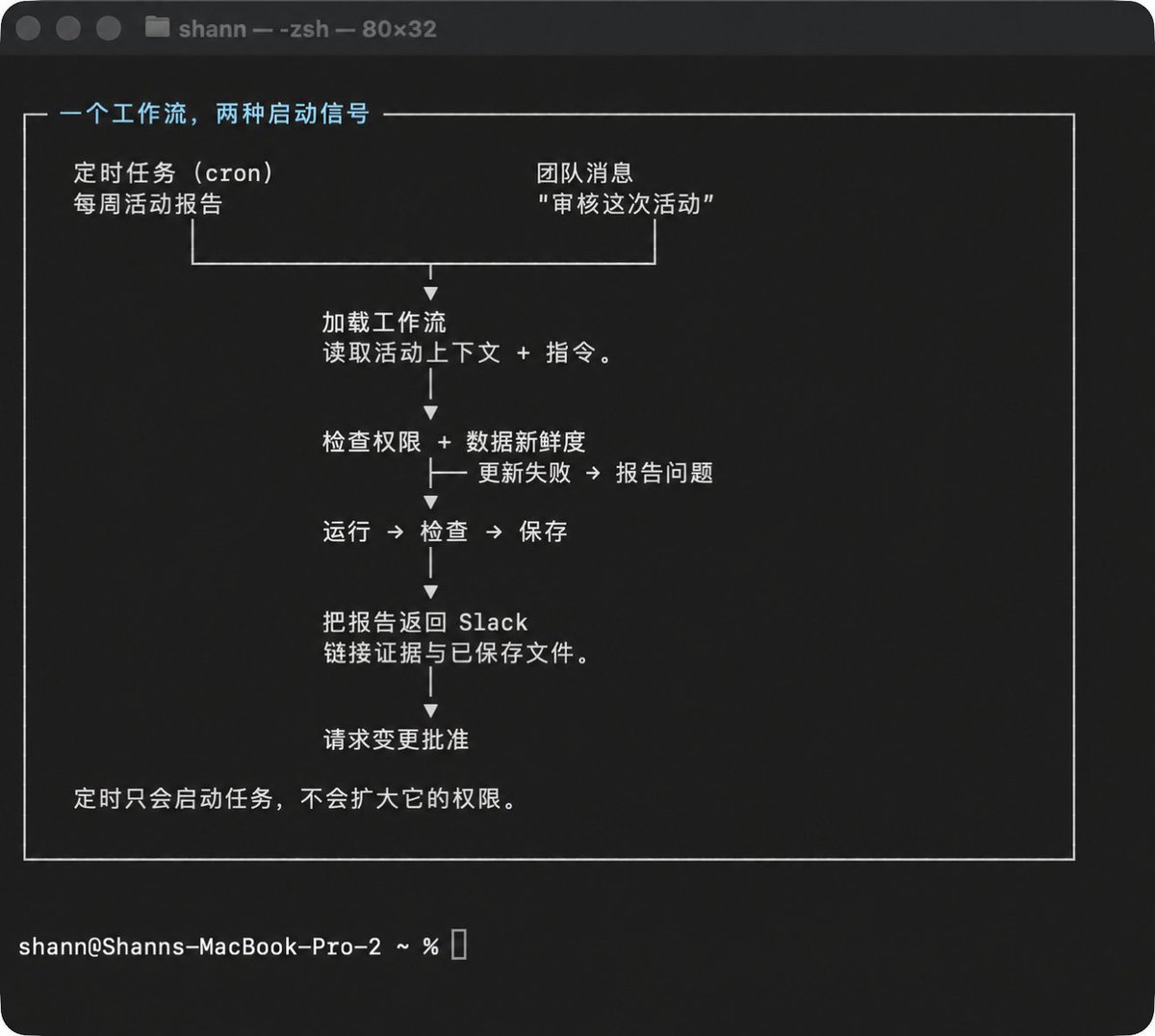 Intelligent Marketing Bot Architecture in Slack
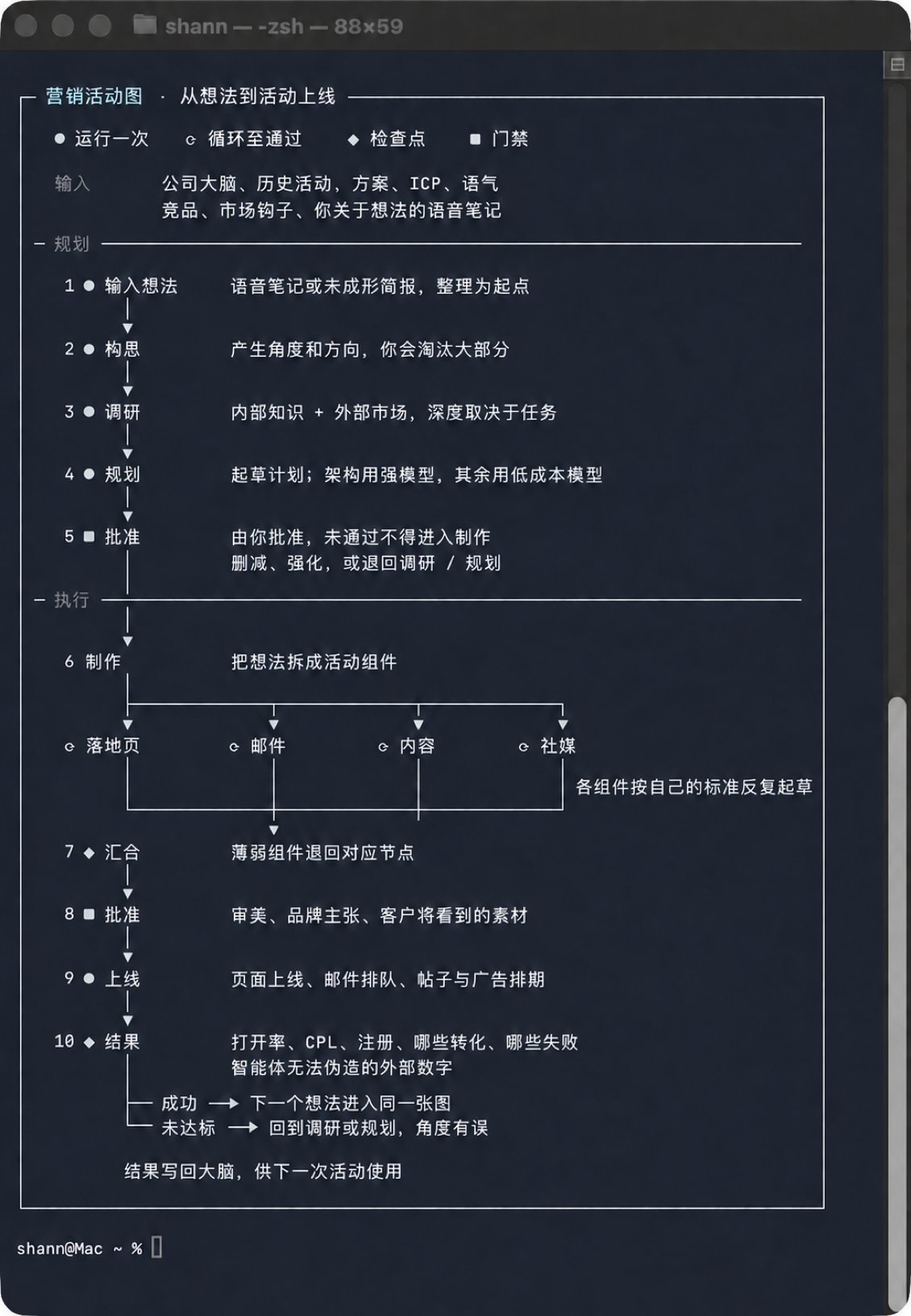 Scheduled Cron Jobs Monitoring and Autonomous Automation
Four Common Scheduled Jobs
| Scheduled Job | Cadence & Scope | Output Destination |
|---|---|---|
| Daily Data Sync | Pulls ad platform and analytics metrics overnight, cleans schemas, and loads records | Local SQLite or cloud data warehouse |
| Weekly Competitor Radar | Scrapes competitor homepage changes, pricing shifts, and newly launched ads every Monday | Writes to research/competitor-radar.md and posts to Slack |
| Weekly Campaign Digest | Compares campaign targets vs. realized ROI and flags anomalous channel drops | Delivers weekly brief to Lark or Slack channels |
| Pre-Launch Compliance Gate | Audits outbound links, promo codes, and claim compliance 2 hours before launch | Outputs automated QA pass/fail report |
12 | Six Marketing Engineering Workflows You Can Build Today
| # | Workflow Name | End-to-End Execution Pipeline |
|---|---|---|
| 1 | Competitor Website Monitor | Scheduled scrape of competitor landing pages → DOM diff detection → LLM strategy summary → Digest brief |
| 2 | High-Converting Creative Vault | Collect top niche ads → Whisper video transcription → OCR on-screen copy extraction → Structured reference DB |
| 3 | Podcast-to-Social Engine | Ingest industry podcast audio → Extract core theses → Apply team member voice profiles → Draft X threads & LinkedIn posts |
| 4 | Objection Mining & Messaging Sync | Aggregate Zendesk tickets and forum threads → Semantic clustering of top objections → Update customer-objections.md → Trigger ad copy refresh |
| 5 | SEO / AEO Search Intent Pipeline | Monitor rising Search Console queries & AI citation questions → Draft structured article outlines → Score ranking opportunity |
| 6 | Pre-Launch QA & Compliance Gate | Cross-check ad copy, landing page, email sequence, UTM tags, and claim guardrails → Generate launch sign-off report |
13 | Your Next Action Checklist
Transitioning into a Marketing Engineer does not require writing C++ from scratch or architecting complex microservices. It starts with engineering discipline applied to your daily workflows:
- Document your SOPs: Turn tribal intuition into explicit, step-by-step operating procedures;
- Establish a unified context baseline: Put business context, customer personas, and compliance guardrails into Markdown files any agent can read;
- Automate with workflows, eval loops, and cron jobs: Offload repetitive execution and QA checks to deterministic pipelines;
- Protect human review gates: Keep strategic direction, positioning judgment, and creative taste in human hands.
Pick one concrete marketing task on your plate tomorrow, create your first shared-knowledge/ folder, and start building from there.
Found this actionable? Copy standard citation & summary
Formatted with canonical attribution link and executive summary—ready for Slack, Notion, or LLM context.
Put Into Practice: Companion Browser Workbenches
UTM Builder Pro Matrix Workspace
Reverse URL parser, GA4 channel group diagnostics, and dynamic ad macro batch CSV export.
Shopify GTM & GA4 Web Pixel Generator
Generate production-ready Shopify Customer Events Web Pixel code for GA4, Meta, and TikTok.