
ByteDance Seedream 5.5 Hands-On Review: Zero Degradation Across 100 Edit Rounds While GPT Image 2.6 Artifacts
ByteDance Seedream 5.5 Hands-On Review: Zero Degradation Across 100 Edit Rounds While GPT Image 2.6 Artifacts
SOTA multi-round editing consistency (100-round watch ticking & multi-outfit swaps), LLM-driven world knowledge (Beijing/Tianjin snow & Tianjin Eye), native transparent layer splitting for Capwise icons, historical portrait-to-real conversion, and 0.4% low-error text rendering.
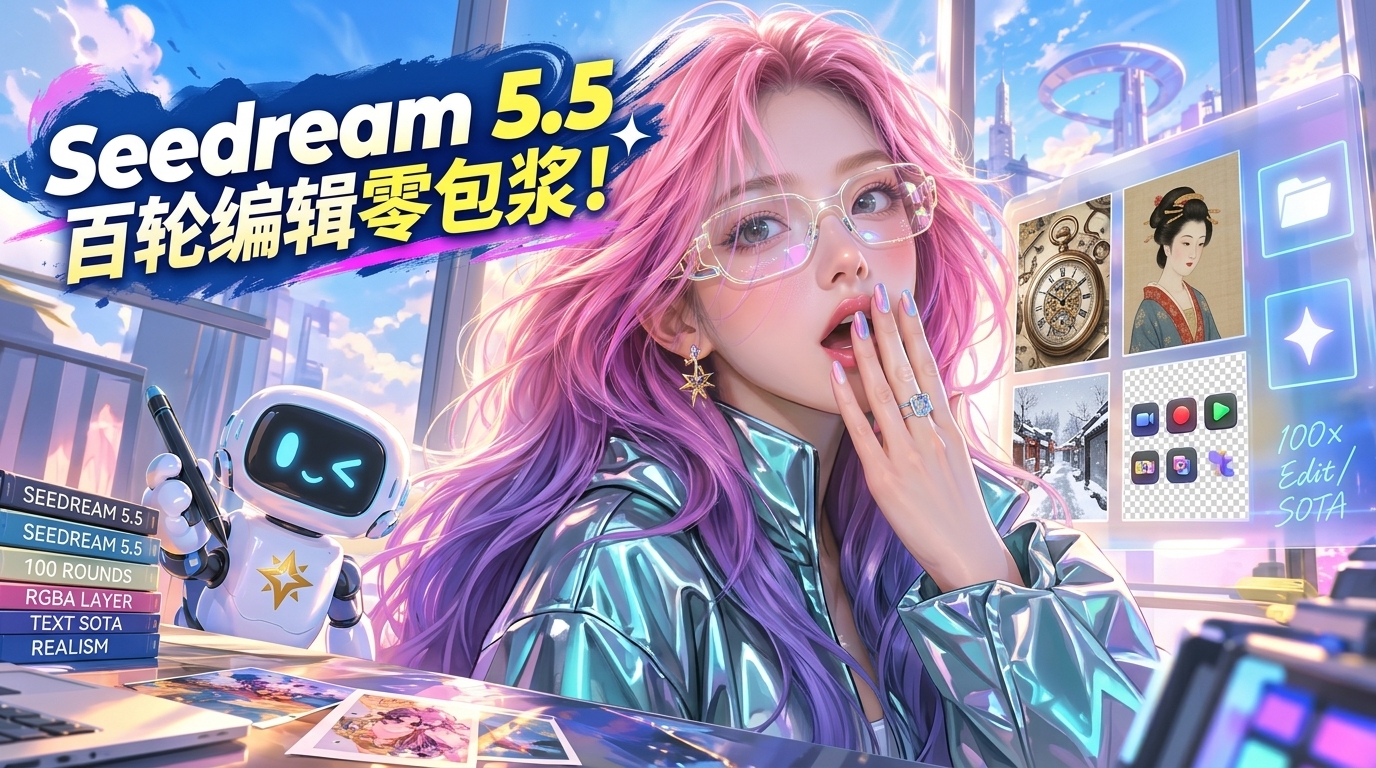
1. SOTA 100-Round Iterative Editing Consistency & Jimeng Canvas
In a 100-round sequential editing stress test ("predict the next second based on the previous image"), GPT Image 2.5 and 2.6 begin showing severe visual degradation ("patina/artifacting") shortly after round 10. In contrast, ByteDance Seedream 5.5 advances only the watch second hand while keeping the watch dial and background completely untouched across all 100 iterations.
Using Jimeng Canvas mode (Jimeng Web -> Create -> Canvas), multi-round outfit swaps on a Beijing rock girl elevator selfie and NVIDIA CEO Jensen Huang maintain facial identity, hand gestures, and background geometry with surgical precision.
- Prompt (Beijing Rock Girl Selfie): "A young pretty Beijing indie-rock girl with long black hair taking a mirror selfie in an elevator. Wearing a black skull-print off-shoulder cropped top showing her navel and slim waist, paired with low-rise ripped jeans and Dr. Martens boots, super cool expression. Right hand holding phone covering half her face. Fair natural skin, casual phone snapshot, vertical framing, portrait mode, ultra-realistic."
- Iterative Canvas Edit Prompts: "Keep pose unchanged, change into another outfit" and "Keep subject unchanged, swap into a drastically different outfit."
2. Photorealism, World Knowledge, Layer Splitting & 0.4% Text Error Rate
Photorealism & World Knowledge: Simple prompts like "Casual phone snapshot, ultra-realistic, Tianjin Haihe River bank, snowing" automatically synthesize the iconic Tianjin Eye Ferris wheel with structural accuracy matching Wikipedia photography, proving strong underlying LLM Prompt Engineering (PE) and world knowledge.
Transparent Icon Layer Splitting & High-Density Infographics: When designing 10 icon styles for the open-source screen recorder Capwise (an alternative to $108/yr Screen Studio), Seedream 5.5 supports both direct transparent background generation and one-click Layer Separation to extract individual icons as transparent PNGs. In high-density Chinese and English infographics introducing Song Dynasty poet Li Qingzhao, Seedream 5.5 reduces severe text error rates from 2.8% to 0.4%, outperforming Google Nano Banana 2.1 and matching/exceeding GPT Image 2.6 Sunburst in information density.
# 1. High-Density Infographic Prompt
Generate a high-information-density Chinese/English infographic introducing the Song Dynasty poet Li Qingzhao (including life timeline, representative ci poems, and literary achievements).

# 2. 10-Style App Icon Matrix Prompt (with Layer Splitting)
Design 10 different styles of icons for a screen recording app named Capwise, flat style, top-tier quality.
Engineering Comparison Matrix: Anti-Patterns vs. Production Best Practices
| Dimension | Common Anti-Pattern | 2026 Production Standard |
|---|---|---|
| 100-Round Sequential Editing | GPT Image 2.5 / 2.6: Severe color/texture degradation and face drift after ~10 rounds | Seedream 5.5: SOTA local surgical modification with zero background/facial drift across 100 rounds |
| High-Density Chinese/English Text | Google Nano Banana 2.1: Stroke merging and garbled characters on dense Chinese text | Seedream 5.5: Severe text error rate reduced from 2.8% to 0.4%; clean editorial layout |
Pre-Flight Production Verification Checklist
- 01Use Jimeng Canvas mode for multi-round character outfit swaps and local surgical edits.
- 02Enable "Transparent Background" or use "Layer Separation" to split 10-in-1 icon sheets into individual transparent assets.
- 03Click "Switch to Original Chinese Full-Text & 25 Media Showcases" above to watch all 7 videos/GIFs and inspect all 18 high-res images.
Found this actionable? Copy standard citation & summary
Formatted with canonical attribution link and executive summary—ready for Slack, Notion, or LLM context.
Put Into Practice: Companion Browser Workbenches
AI Media Provenance Clue Inspector & SynthID Portal
Client-side heuristic inspection for C2PA/XMP metadata markers and prompt text clues, with direct handoff to the official SynthID Portal.
EVA Studio Visual Poster Workspace
Social ad canvas presets, client-side AI background removal, and watermark-free vector export.
Explore More Image Guides
Back to Hub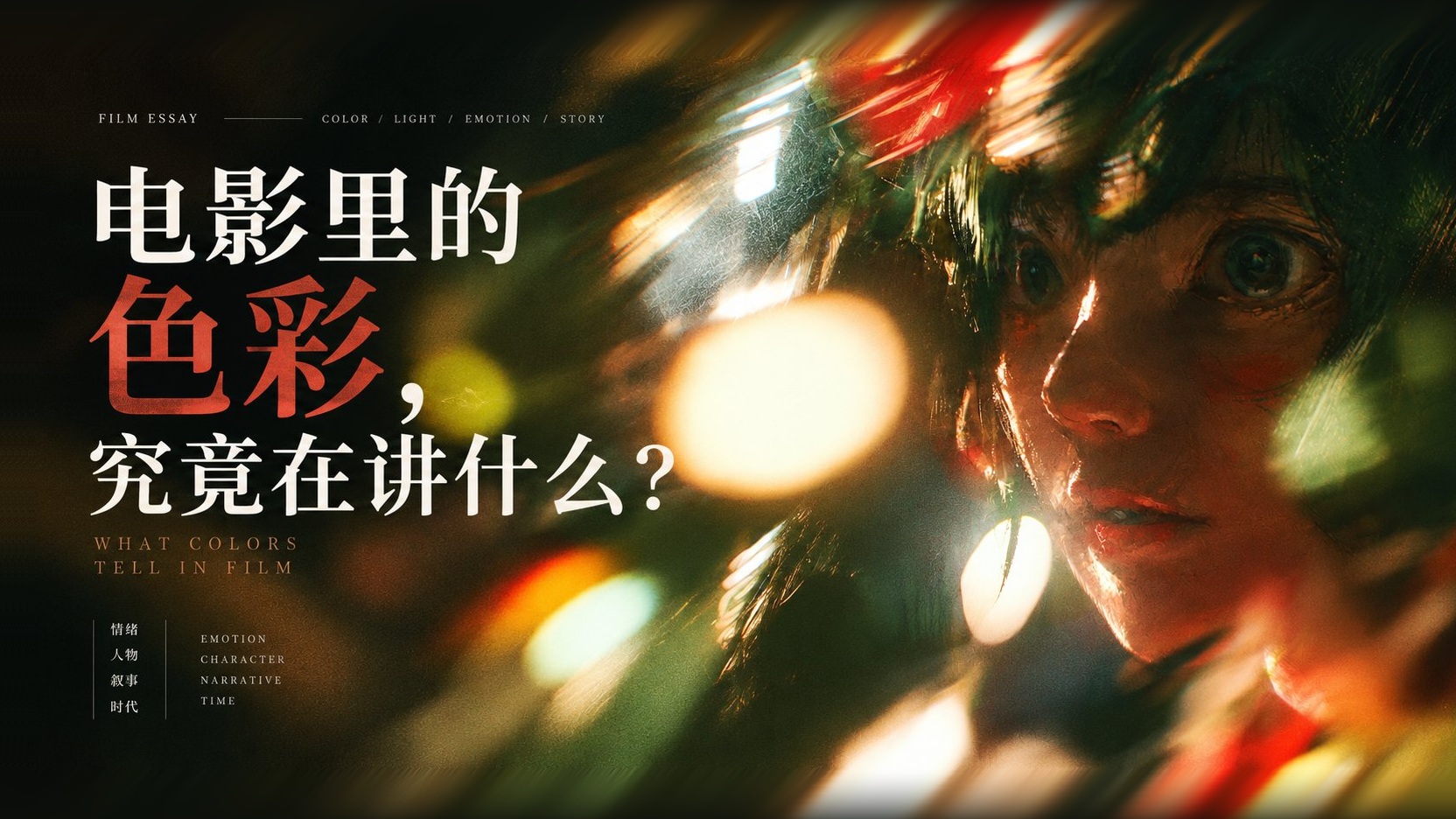
What Colors Tell in Film: Decoding Cinematic Color Storytelling from In the Mood for Love to The Grand Budapest Hotel
Black bars and teal-orange filters do not automatically create a cinematic feel. Through 10 high-resolution frame comparisons across In the Mood for Love, Moonlight, Raise the Red Lantern, Blade Runner 2049, and The Grand Budapest Hotel, learn how Hue, Value, Saturation, and Dominant/Secondary/Accent color hierarchy work with light, character placement, and spatial scale to tell a story.
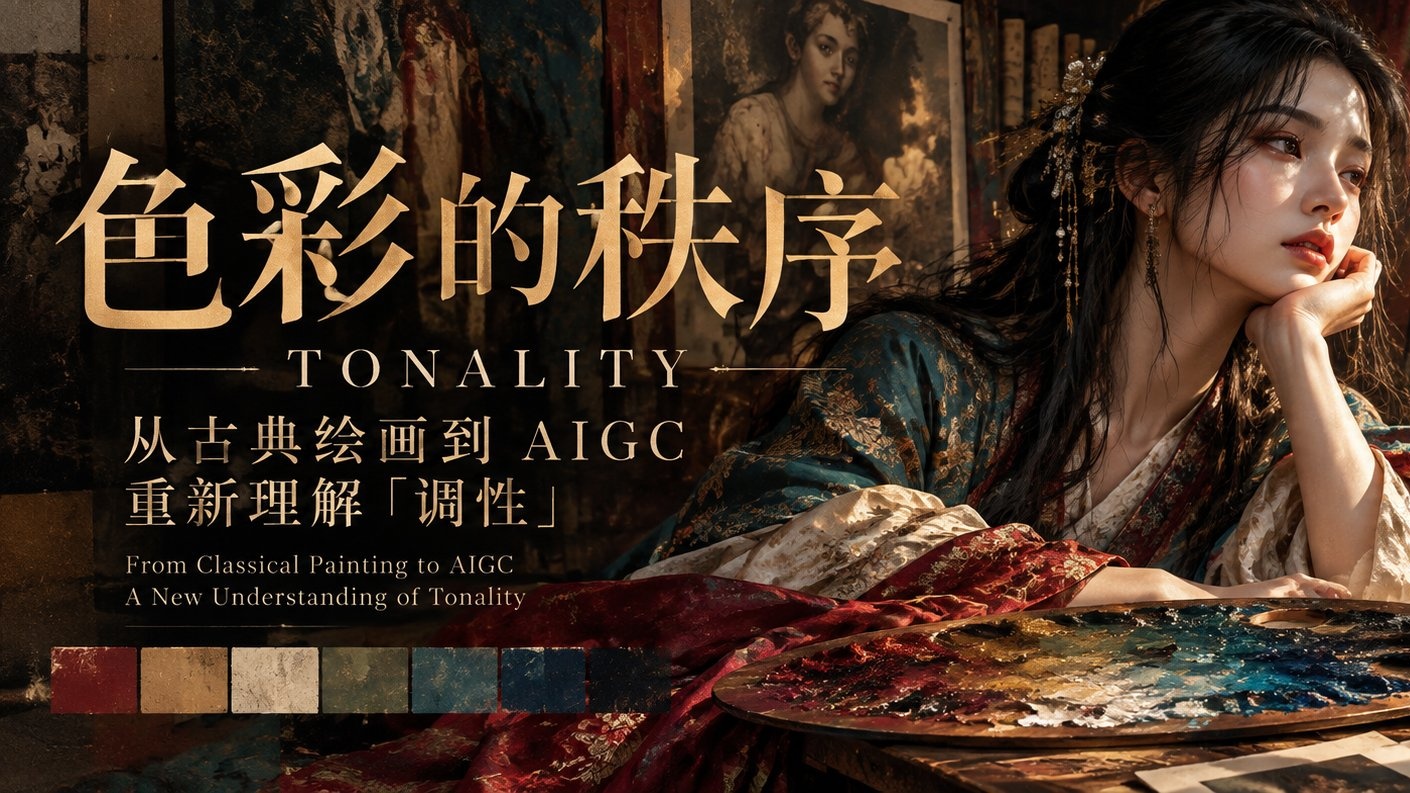
The Order of Color: From Classical Painting to AIGC, Re-understanding "Tonality"
Tonality goes deeper than color palettes—it is the overarching visual order governed by Value Structure, Chroma Relationship, Temperature Interplay, and Area Proportion. Through Rembrandt, Vermeer, and Hammershøi masterworks, learn how to write true tonal-harmony AIGC prompts.
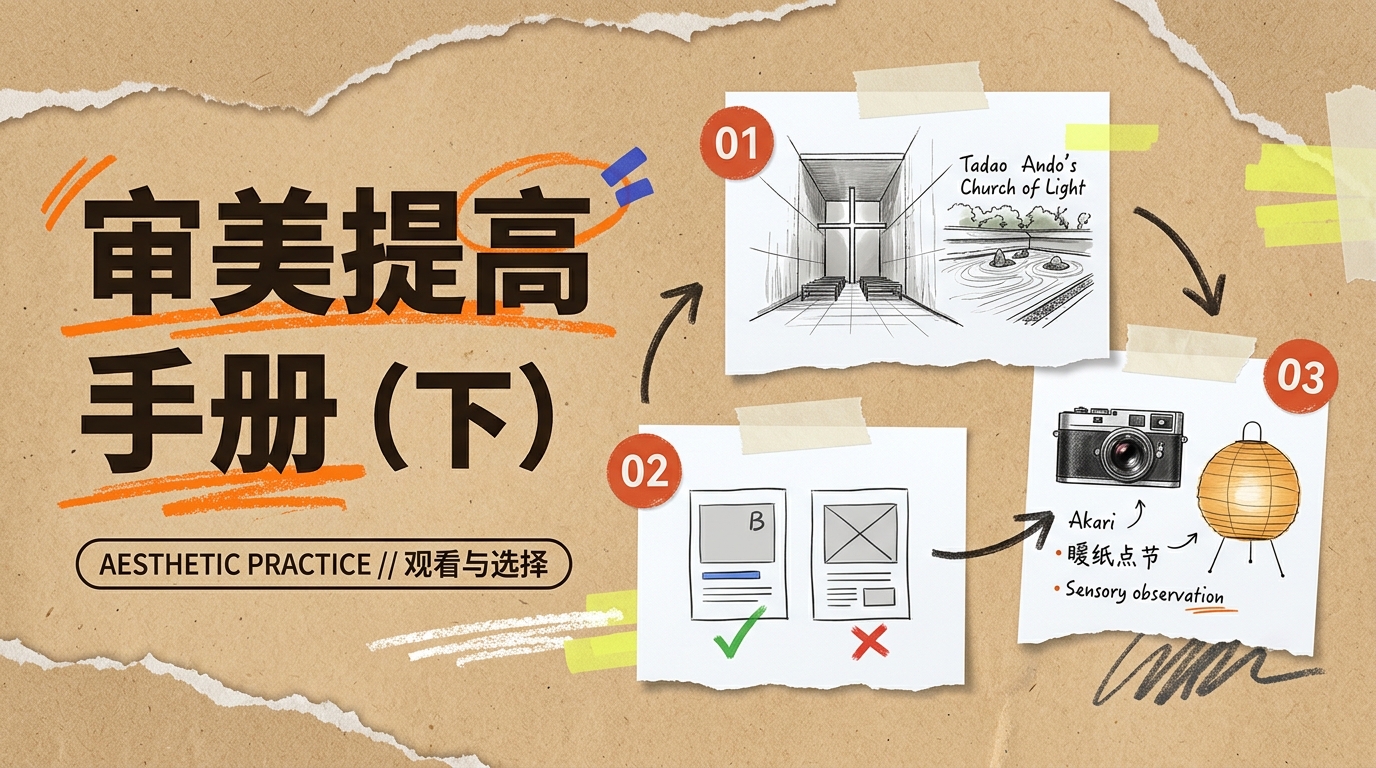
Aesthetic Improvement Handbook in the AI Era (Part 2): Master Observation, Single-Variable Comparison & Real-Space Practice
How do you practically cultivate aesthetic judgment? Through 26 high-resolution plates—spanning Ryoan-ji rock garden, Chichu Art Museum, Matthew Butterick typography comparisons, Monet's Wheatstacks, Tadao Ando's Church of Light, Peter Zumthor's Therme Vals, Isamu Noguchi's Akari lantern, Henri Cartier-Bresson, Michael Wolf, and Hiroshi Sugimoto—this handbook builds an actionable aesthetic training loop.
Need Autonomous Agents?
Explore multi-agent workflows, enterprise RAG, and local LLMs.