
GEO Novice Guide: Building AI Visibility from Scratch
Author: 川野
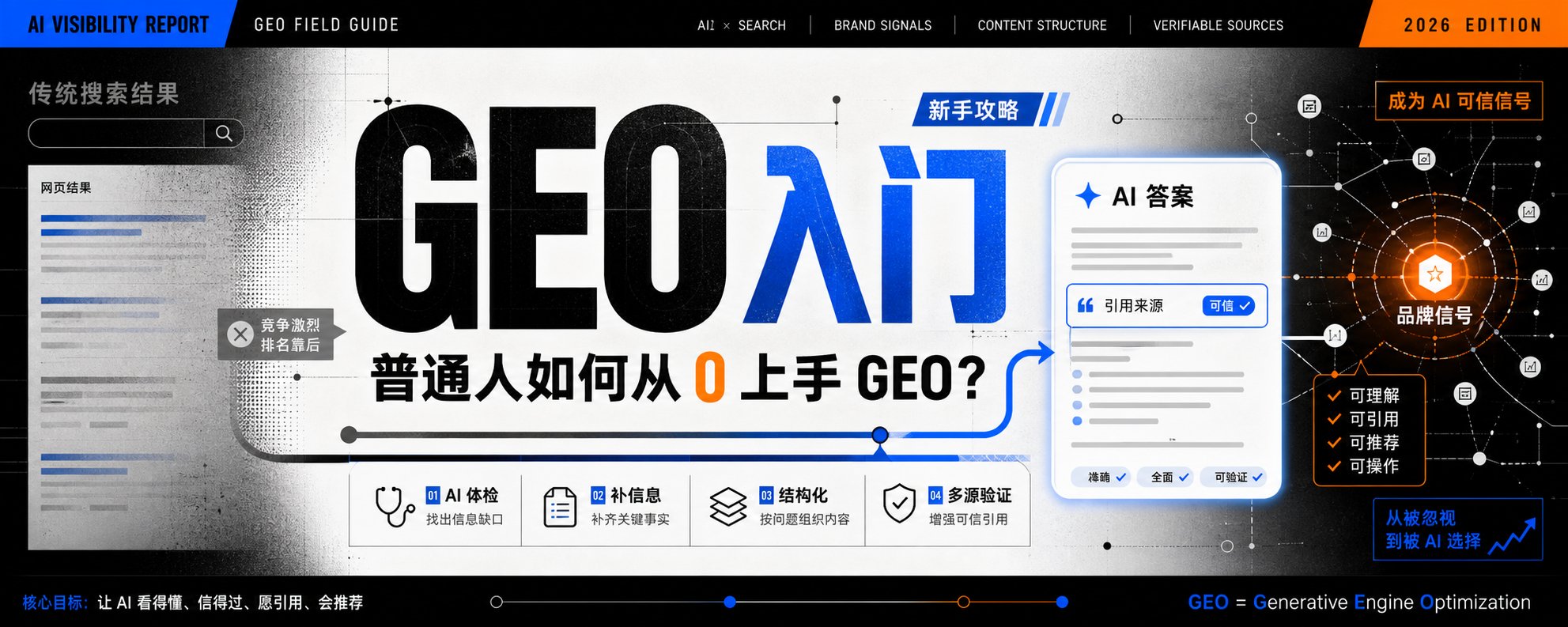
The problem that GEO (Generative Engine Optimization) aims to solve is simple: When users ask AI a question, will the AI understand you, cite you, and recommend you?
Traditional SEO competes for positions on search engine results pages (SERPs), whereas GEO competes for positions inside AI answers.
// Traditional search query:
Chengdu Hotpot Recommendation
// Modern AI conversational search:
Which hotpots in Chengdu are suitable for out-of-town friends visiting for the first time? Please avoid tourist traps, ensure the environment is decent, and ideally support queuing in advance.
Previously, search engines provided links. Now, AI directly organizes the answer.
Therefore, the core of GEO is not "keyword stuffing", but organizing brand details, products, cases, parameters, reputations, and page structures into a format that AI can understand, trust, and cite easily.
💡 Main Action Thread for Beginners:
AI Checkup → Information Complement → Content Structuring → Multi-Source Verification → Page Readability & Operability.
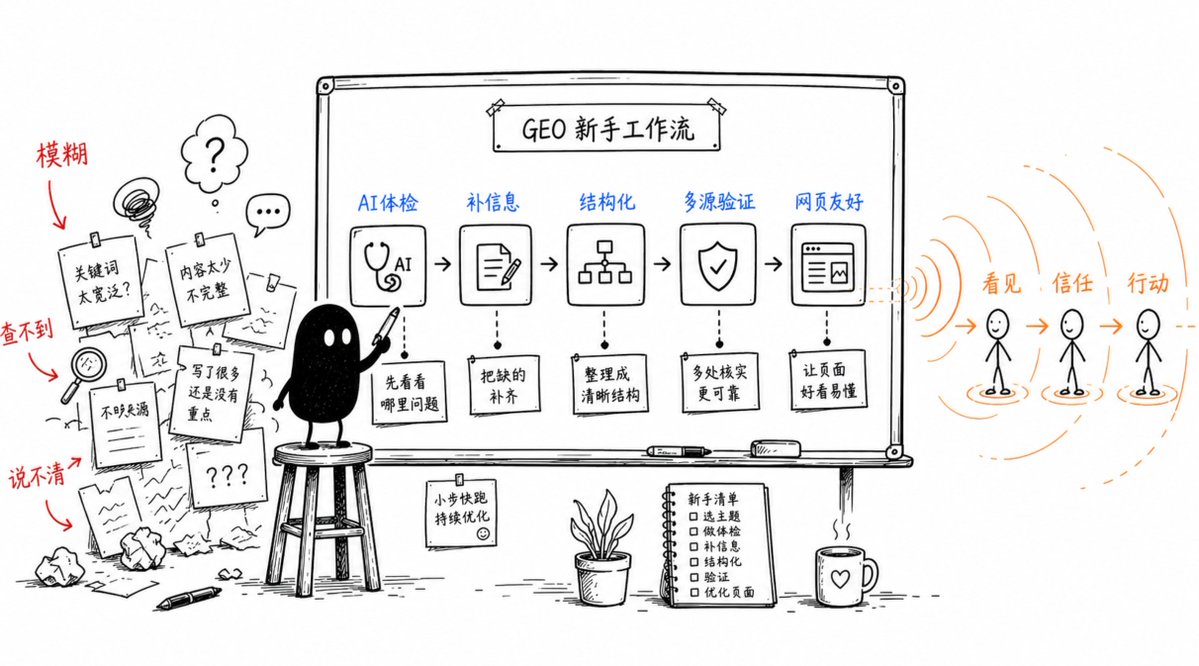
1. Conduct an AI Checkup First
Do not start GEO by blindly publishing articles. Start with a checkup. Open Doubao, DeepSeek, Kimi, and Tongyi, and ask three types of questions:
Type 1: Brand Identification
"Please introduce [Brand/Company/Personal IP]. What does it mainly do?"
Type 2: Industry Recommendation
"If a user wants [Industry/Service], which brands or service providers would you recommend? Please list the top 5 and explain why."
Type 3: Competitor Comparison
"How does [Your Brand] compare with [Competitor A] and [Competitor B]? What are its strengths and weaknesses?"
When recording the results, focus on identifying the cognitive gaps that AI currently has regarding your brand.
The goal of this step is not to immediately optimize rankings, but to identify the cognitive gaps that AI currently has about you.
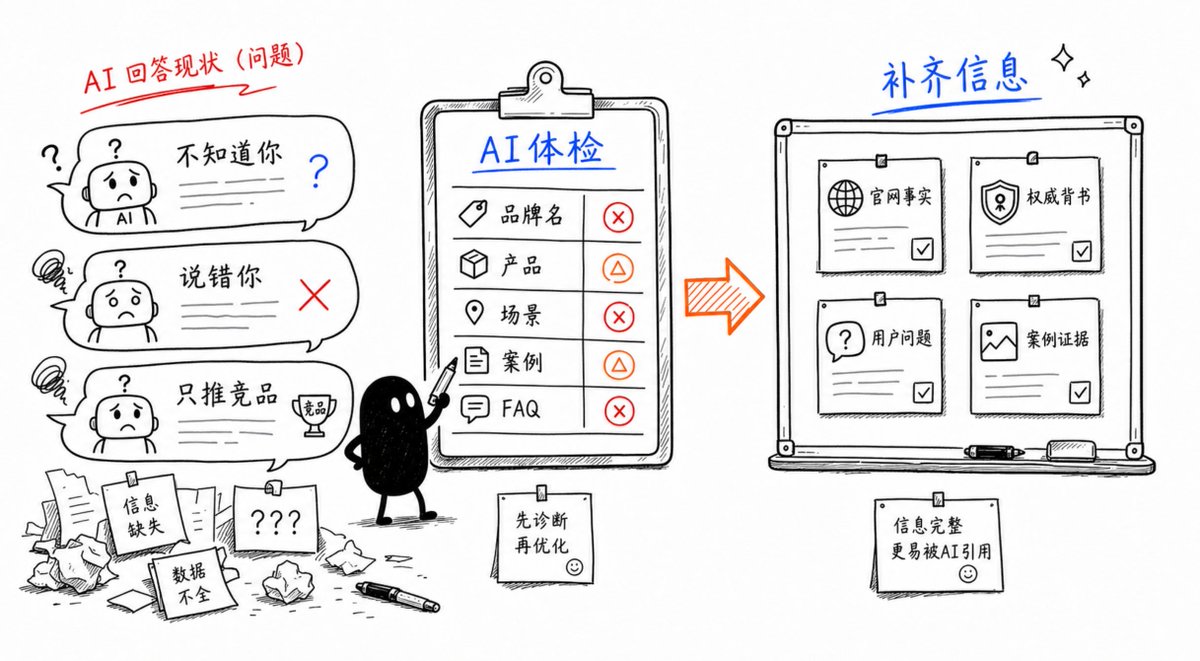
2. Complement Missing Information
AI dislikes empty adjectives. Fluffy statements like "We have been focusing on the industry for years, with a professional team and attentive service to provide high-quality solutions" are rarely cited because they contain no extractable factual data.
GEO-friendly content must prioritize the following elements:
- Brand full name, abbreviation, and aliases
- Core business & target audience
- Product specifications and parameters
- Applicable and non-applicable scenarios
- Service workflows and pricing ranges
- Geographical locations, qualifications, and certifications
- Customer case studies and competitor comparisons
- Frequently Asked Questions (FAQ)
For example, instead of writing "our pediatric dental clinic has professional doctors and a warm environment," write: "Our pediatric dental clinic employs 5 doctors with over 10 years of clinical experience. We provide child-friendly dental treatments, including painless fillings and preventative sealants, in a cartoon-themed environment." Keep the information clean, structured, and easy for machines to parse.
3. Organize Content around User Queries
SEO starts from keywords. GEO starts from questions. Because when users interact with AI, they specify their exact demands, constraints, and preferences in conversational format.
Convert keywords into questions:
- "Pediatric Dentist" → "How to choose a pediatric dentist for a 3-year-old child who is afraid of clinics?"
- "UTM Generator" → "How to track campaign URLs in GA4 for B2B email newsletters?"
GEO is not about making AI remember a single word, but about making AI recall your brand as the optimal answer in a specific question scenario.
4. Write a GEO-Friendly Article
Beginners can directly adopt the following article template structure:
Title: How to choose [Product/Service] for [Scenario/Problem]? A Decision Checklist for [Target Audience]
Introduction (First 100 words):
Directly state what problem this article solves, who it is for, and what decision criteria will be given.
Body Structure:
- Why this problem matters and common pitfalls for beginners.
- Core judgment standards & comparison tables of different options.
- Which solution suits which type of audience.
- FAQ section answering cost, timeline, and competitive differences.
5. Perform Multi-Source Cross-Verification
AI does not trust brands that only praise themselves on their official websites. Modern GEO relies heavily on multi-platform verification.
Distribute your content consistently across: WeChat public accounts, Zhihu, Sohu, Xiaohongshu, CSDN, and Baijiahao.
Maintain three consistencies across all platforms to facilitate AI entity recognition:1. Brand Name Consistency • 2. Core Business Description Consistency • 3. Product/Service Name Consistency
6. Check if Your Web Page is AI-Friendly
GEO is not just about writing. It also involves whether your page can be easily read and operated by AI Agents. Follow this 14-point developer checklist:
- Use Semantic HTML tags: Rely on HTML5 tags like
<main>,<article>,<section>,<nav>, and usearia-labelfor icon-only buttons. - Hide decorative elements: Add
aria-hidden="true"ordata-ai-hidden="true"to decorative SVGs, background grids, or animations to avoid wasting AI context tokens. - Provide stable action locators: Add stable data attributes like
data-testid="submit-order"ordata-ai-action="submit-order"rather than relying on randomized CSS class names. - Use native form inputs: Prefer native components like
<select>,<input type="checkbox">, and<input type="radio">instead of simulating them with div trees. - Avoid hiding critical actions in Hover states: Make important links and actions visible by default; AI agents do not actively hover to discover buttons.
- Prefer pagination over infinite scroll: Provide structured navigation pagination so AI crawlers have clear endpoints and links.
- Render explicit loading states: Show texts like "Saving...", "Loading results..." and disable buttons during execution so AI doesn't double-click.
- Avoid raw Iframes and Shadow DOMs: Provide a clean text summary in the light DOM so AI doesn't miss the nested content.
- Sync page state to URL: Keep filters, categories, search terms, and pagination in query parameters (e.g.
/products?category=shoes&page=2) to allow exact state reproduction. - Provide text-based error messages: Write errors in clear text (e.g. "Password must include uppercase letters") rather than just showing a red border.
- Support programmatic inputs: Listen to native `input` and `change` events rather than just `keydown` or `keyup` triggers.
- Avoid opening new windows for critical paths: Keep login, payment, or authorization flows in the same tab context to prevent losing AI agent focus.
- Expose AI-readable API endpoints: Place a machine-readable JSON specification at
/.well-known/ai.json. - Do not immediately prompt Recaptcha: Avoid blocking AI agents with heavy image verification on initial landing.
7. Copyable GEO Self-Audit Prompt
You are now a professional industry analyst and business intelligence expert. Based on the information currently accessible to you, objectively analyze the following brand. If there is insufficient information, please explicitly state "unknown" or "insufficient data" without fabricating facts.

Target Brand: [Fill in Brand/Company/Personal IP]
Core Business: [Fill in Industry and Service]
Target Users: [Fill in Target Audience]

Please respond using the following structure:

1. Who do you think this brand is? What is its core business?
2. When a user asks for "[Industry/Service] recommendation," would you list it in the top 5? Why or why not?
3. Who do you think are its main competitors? Why are the competitors more likely to be recommended?
4. What information about this brand are you currently missing the most? (e.g., price, process, cases, parameters, reviews, qualifications, region).
5. If you were to improve its visibility in AI Search, which 5 categories of content should be prioritized?
6. Which platforms are these contents best suited for publication?
7. Please provide 10 questions that users are likely to ask and are worth optimization under GEO.