
From GSC/GA4 to Optimization Tasks: How to Build a Content Growth Diagnostic System
Author: Tim Research GEO
In recent years, one shift has become increasingly obvious: content operations are moving from a traffic mindset to a growth mindset. As AI search and content distribution become more complex, simply doing SEO, publishing content, and tracking impressions or clicks is no longer enough. Content teams are now expected to understand the full user journey: how users arrive, why they stay, why they fail to convert, and what should be optimized at each step.
The issue is not a lack of data. The issue is the absence of a decision-making chain that connects:Search demand → Page intent matching → User behavior → Business action → Optimization task → Performance feedback
To solve this, we built an internal content growth diagnostic system and have validated it across multiple independent websites in e-commerce, manufacturing, consumer electronics, and AI SaaS. Below is a walkthrough of the full workflow.
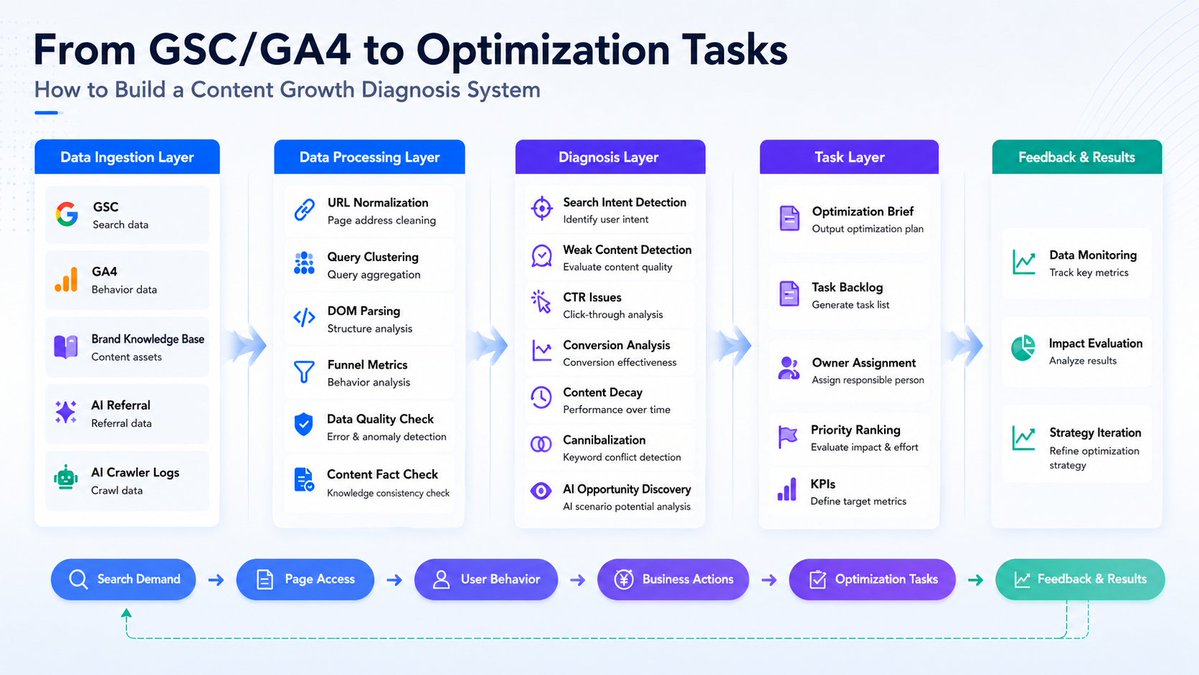
Chapter 1. Data Ingestion: Put Search, Behavior, Facts, and AI Signals Into One Chain
The first layer is data ingestion. We mainly connect five types of data:
1.1 GSC and GA4
GSC is responsible for search-side performance. It provides impressions, clicks, CTR, average position, and detailed query-level performance. GA4 is responsible for on-site behavior. It provides organic search landing sessions, engagement rate, scroll behavior, CTA impressions, CTA clicks, sign-ups, and key events.
GSC and GA4 only become powerful when they are used together:
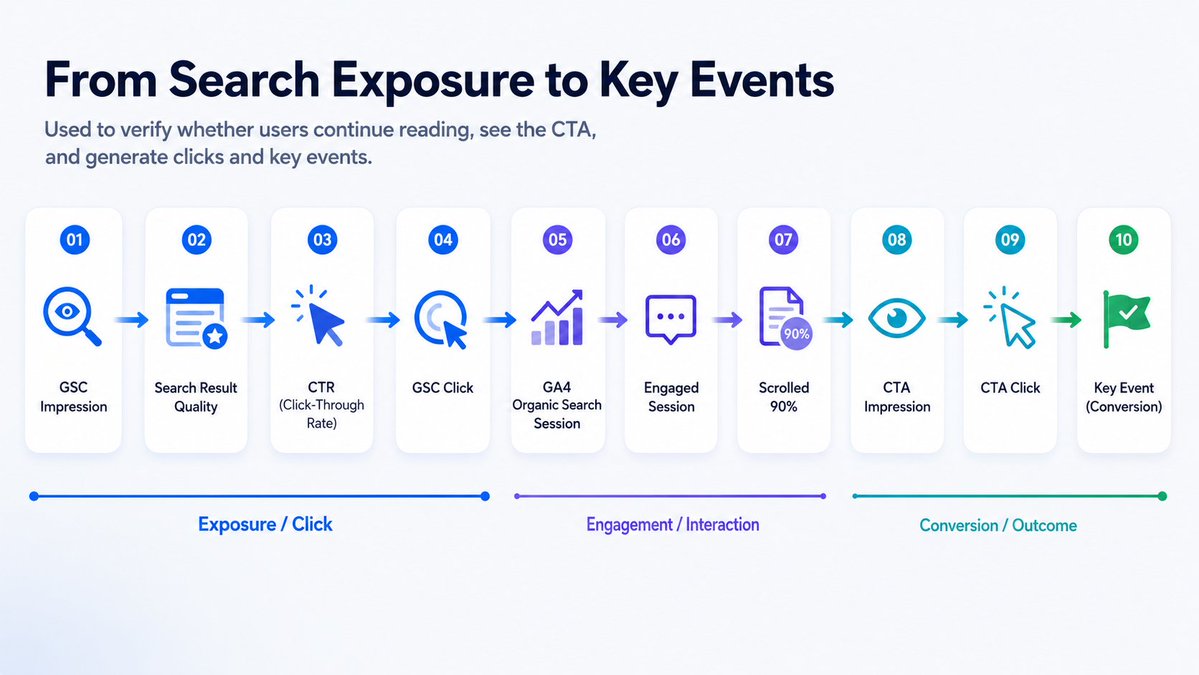
- High impressions but low CTR: Prioritize the title, meta description, and search result relevance.
- High clicks but low engagement: Prioritize the opening section, table of contents, page structure, and content-intent match.
- Good engagement but low CTA clicks: Prioritize product modules, CTA copy, and CTA placement.
- CTA clicks exist but key events remain low: Continue checking the registration path, demo path, or landing page flow.
1.2 Brand Knowledge Base
The brand knowledge base is responsible for product fact verification. Teams can sync the latest product features, pricing plans, screenshot versions, brand messaging, competitor comparison standards, FAQ answers, and important product updates into the knowledge base. The system then compares page content against the knowledge base to determine whether product info has become outdated.
1.3 AI Referrals and AI Crawler Logs
AI referral sessions show whether products such as ChatGPT or Perplexity bring real visits. AI crawler logs show whether crawlers such as GPTBot, PerplexityBot, and ClaudeBot have accessed a page, and whether access is affected by robots rules, WAF, CDN configuration, or missing logs.
Chapter 2. Data Processing: Align URLs First, Then Build Page-Level Evidence
2.1 URL-Level Data Alignment
GSC, GA4, and server logs often record page addresses differently. The system first cleans page addresses by removing UTM parameters, ad click parameters, page anchors, and other elements, mapping the same article to one canonical page URL.
2.2 Query Clustering
The system groups queries by search intent (Definition, Tool-selection, Comparison, Commercial, Pricing, Support, Navigational) and labels them. This changes the team's view from thousands of keywords to a smaller number of user needs.
2.3 Page DOM Parsing
The system crawls and analyzes the page structure, then determines whether each query cluster has a corresponding content position on the page.
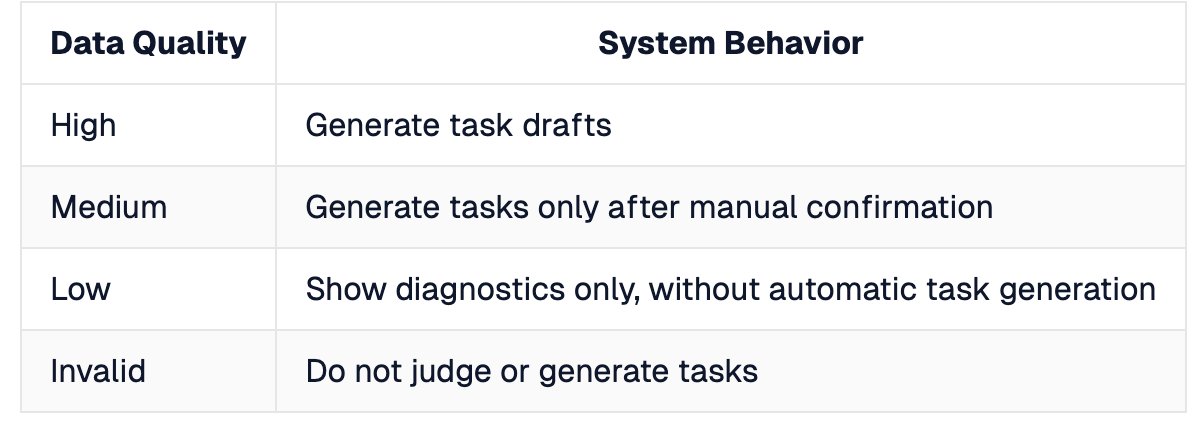
2.4 Data Quality Assessment
Data quality directly determines what the system is allowed to do.
Chapter 3. Diagnostic Loop: From Search Demand to Page Matching, User Behavior, and Business Action
3.1 Search Side: Which Queries and Intents Bring Users In?
The system reviews GSC queries and clusters to answer: What task is the user trying to complete when entering the page?
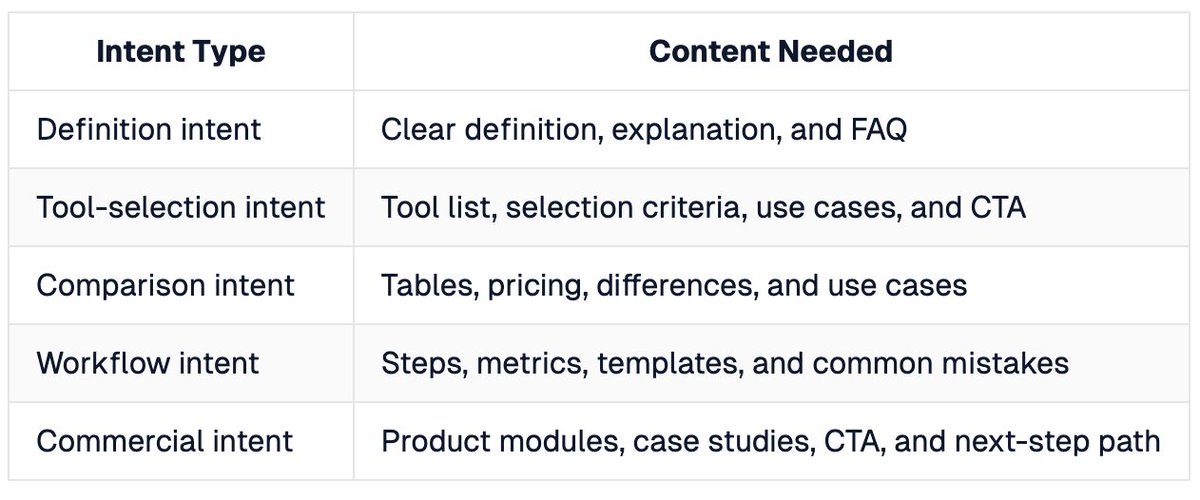
3.2 Page Side: Does the Page Match the User’s Search Intent?
Different intents require different content structures:
3.3 Behavior Side: Do Users Read, See CTAs, and Click?
The system builds a page funnel from search exposure to business action:
3.4 Facts Side: Is the Product Info Accurate?
The brand knowledge base aligns page content with the latest product facts to prevent outdated pricing, features, or competitor comparisons.
3.5 AI/GEO Side: Can AI Sources Access and Cite the Page?
Tracks AI referrals sessions from GA4 and checks if AI crawler status returned 200, 304, 403, or 404 in server logs.
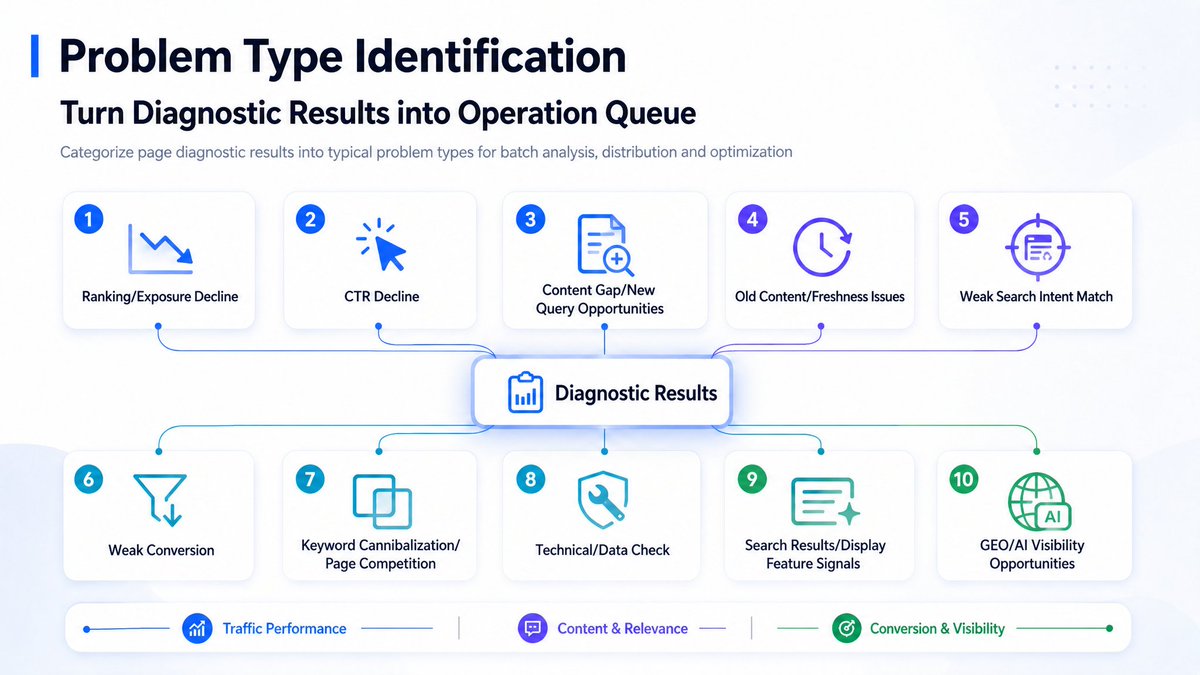
Chapter 4. Issue Type Identification: Turn Diagnostic Results Into an Operations Queue
The value of issue grouping is that content optimization becomes batch operations instead of one-off article editing. Common issue groups include:
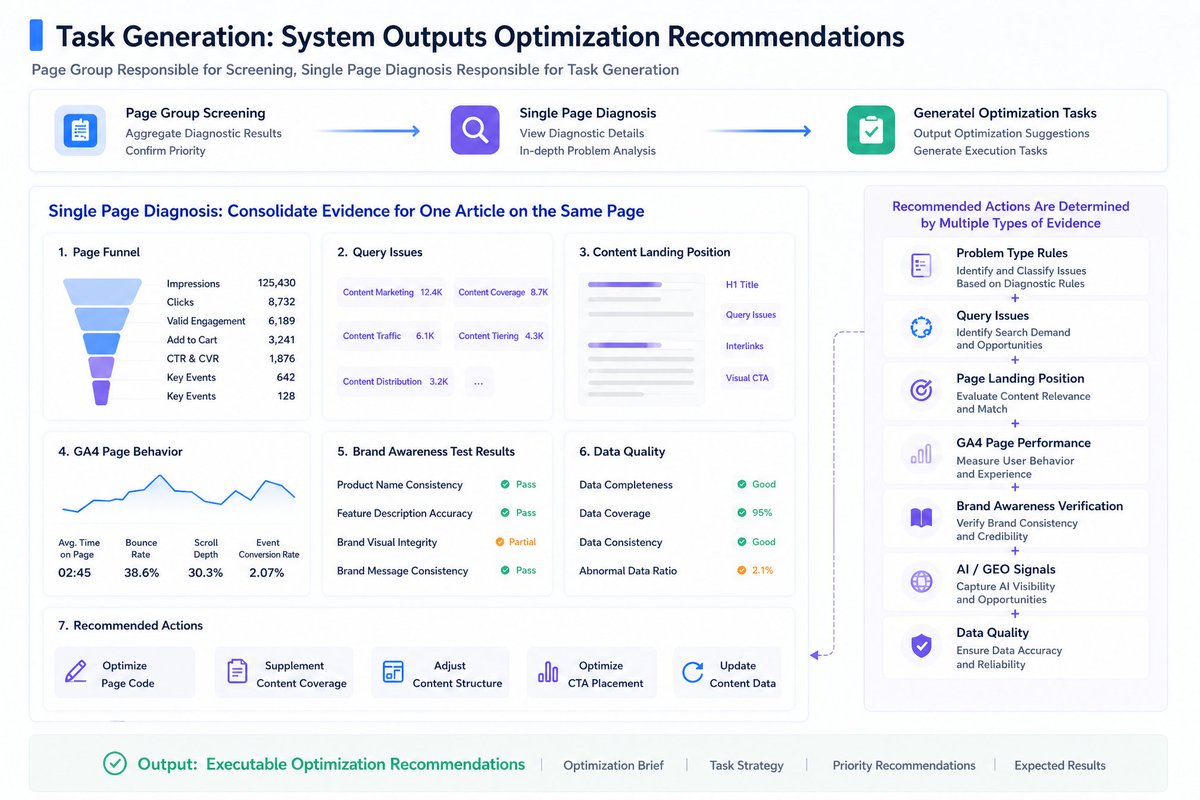
Chapter 5. Task Generation: The System Outputs Optimization Recommendations
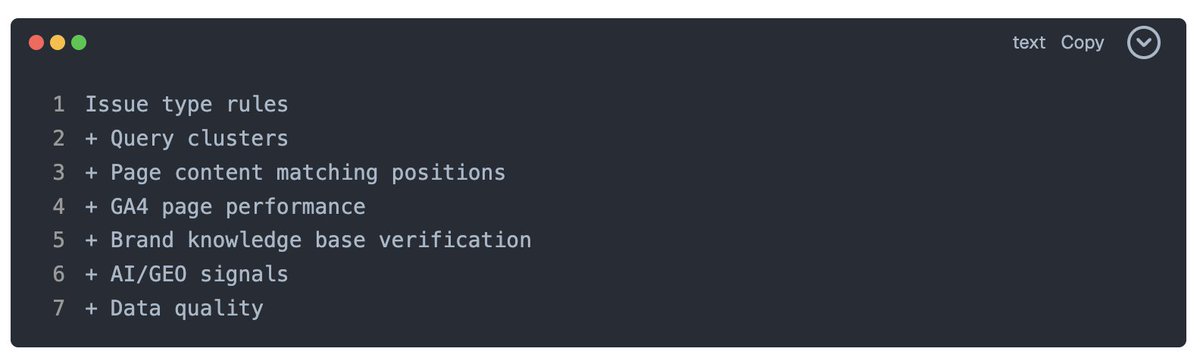
Recommended actions are mainly determined by a combination of evidence types:
When entering a single-page diagnostic view, the system places all evidence for an article on one page:
Chapter 6. Example: How the Full Diagnostic Chain Works on One Page
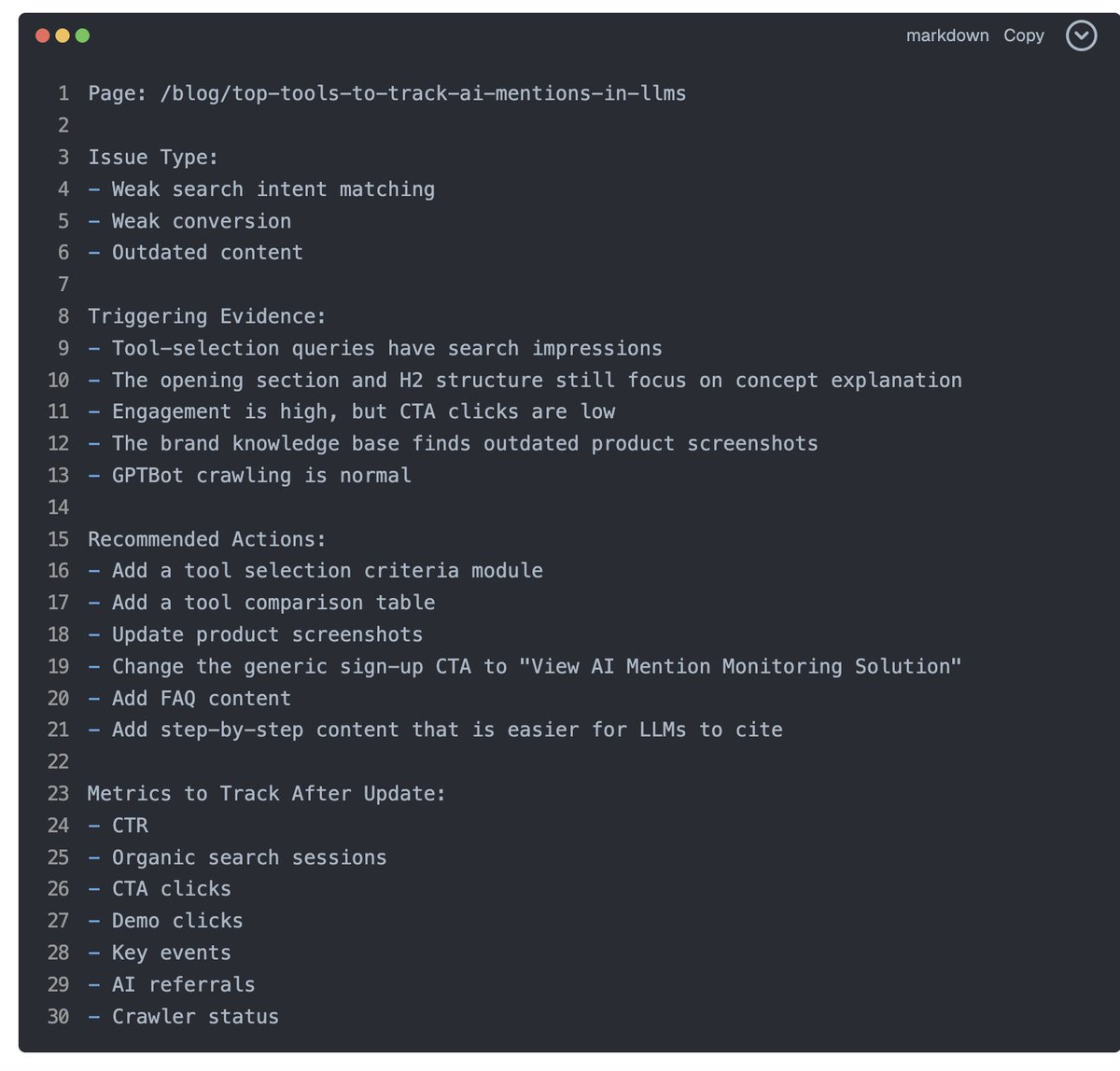
Taking a real page as an example: https://dageno.ai/en/blog/top-tools-to-track-ai-mentions-in-llms. Final Task Draft: The system generates a task draft like this:
Chapter 7. Performance Monitoring and Review & Chapter 8. What Still Needs to Be Built
We continue building query intent clustering, auto-updating knowledge bases, and closed-loop performance tracking to make content growth scalable and reviewable.