
Fan-out 框架:优化 AI 检索与 SEO 曝光的 5 个步骤
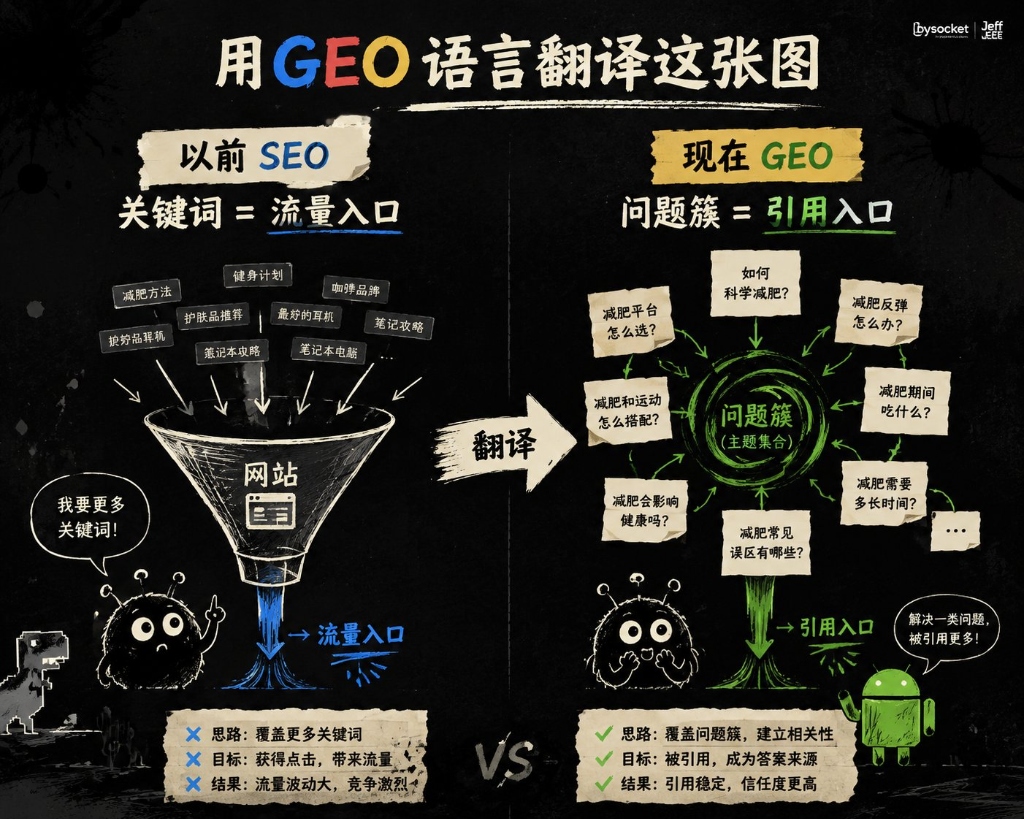 Fan-out Framework 封面
传统 SEO 从关键词出发:你的页面排上用户搜索的关键词,就能拿到自然流量。AI 搜索生成回答的机制则更复杂:
AI 引擎会整合 LLM 训练数据、常规搜索前排网页和 Fan-out 并发子查询结果。你的网站在 AI 后台检索中出现得越多,进入最终回答的概率就越高。
传统搜索引擎直接展示网页链接。AI 搜索引擎为了组装完整回答,会在后台并发生成多条细分检索词(Fan-out queries),分别拉取不同角度的信息,再合并成最终答复。只要你的品牌或网站覆盖更多 Fan-out 子查询,进入最终 AI 回答的概率就会大幅提高。
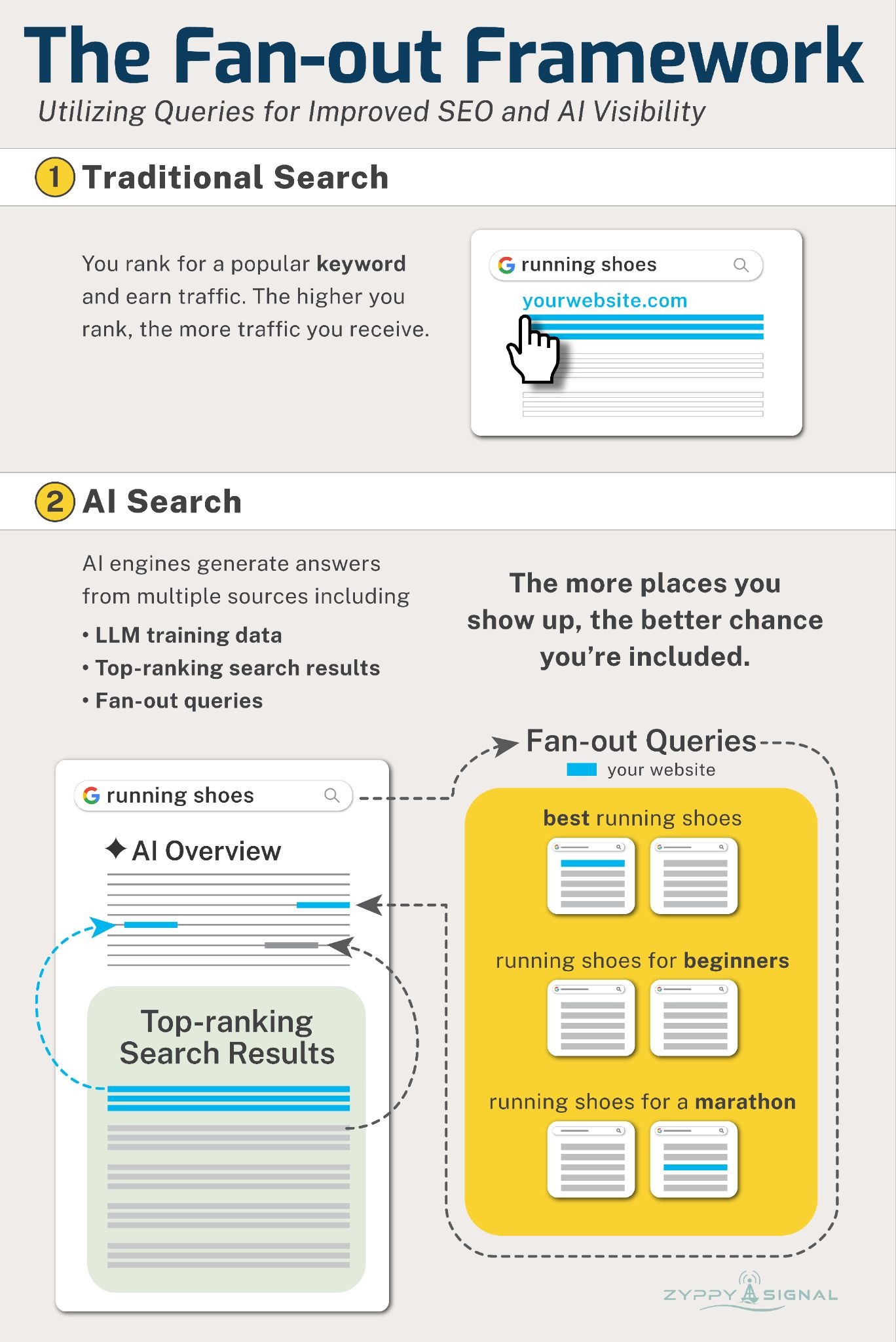 图 1:AI 搜索引擎借助 Fan-out 子查询整合多方信源的流程
塞勒斯·谢泼德(Cyrus Shepard)总结了一套围绕 Fan-out queries 优化网站的 5 步实操框架:
| 步骤 | 核心动作 | 目标说明 |
|---|---|---|
| 1. 锁定核心关键词 | 找出当前已有自然搜索排名的关键词 | 从 GSC 已有首页/二页排名的页面切入,撬动最快引用转化 |
| 2. 挖掘 Fan-out 检索词 | 汇总 AI 触发的 8~12 路并发子查询 | 通过 API 工具、Bing Grounding 报表与 LLM 合成子查询 |
| 3. 筛选核心主题 | 聚类筛选高价值的搜索意图主题 | 去除离题噪点与重复词,浓缩为 20~25 个核心目标词 |
| 4. 优化或新建页面 | 补充直答问题并附带一手证据的段落 | 标题直答子查询,避免把单页写成包罗万象的巨型百科页 |
| 5. 追踪引用成效 | 追踪网站在 Perplexity 和 Google 中的引用率 | 利用 Bing AI 报表、GSC 与 Brand Radar 观测 70 天内反馈 |
AI Fan-out 子查询模拟生成器
第一步:锁定已有排名基础的核心关键词
决定网页能否进入 AI 回答的首要因素,是它在常规自然搜索中的排名。
三项行业数据印证了这一点:
- Ahrefs 研究显示,Google AI Overviews 中 38% 的引用来自自然排名前 10 的网页。
- AirOps 数据显示,ChatGPT 引用的信源中有 43.2% 是 Google 自然排名第 1 的页面。
- Semrush 对比发现,Perplexity 回答引用的信源与 Google 前 10 名结果重合度达 82%。
页面同时排上多个 Fan-out 子查询时,获得 AI 引用的概率还会进一步上升。你可以打开 Google Search Console(GSC),筛选自然排名在第 1~2 页前列的页面,优先挑选受 AI Overviews 挤压导致点击下滑的网址。
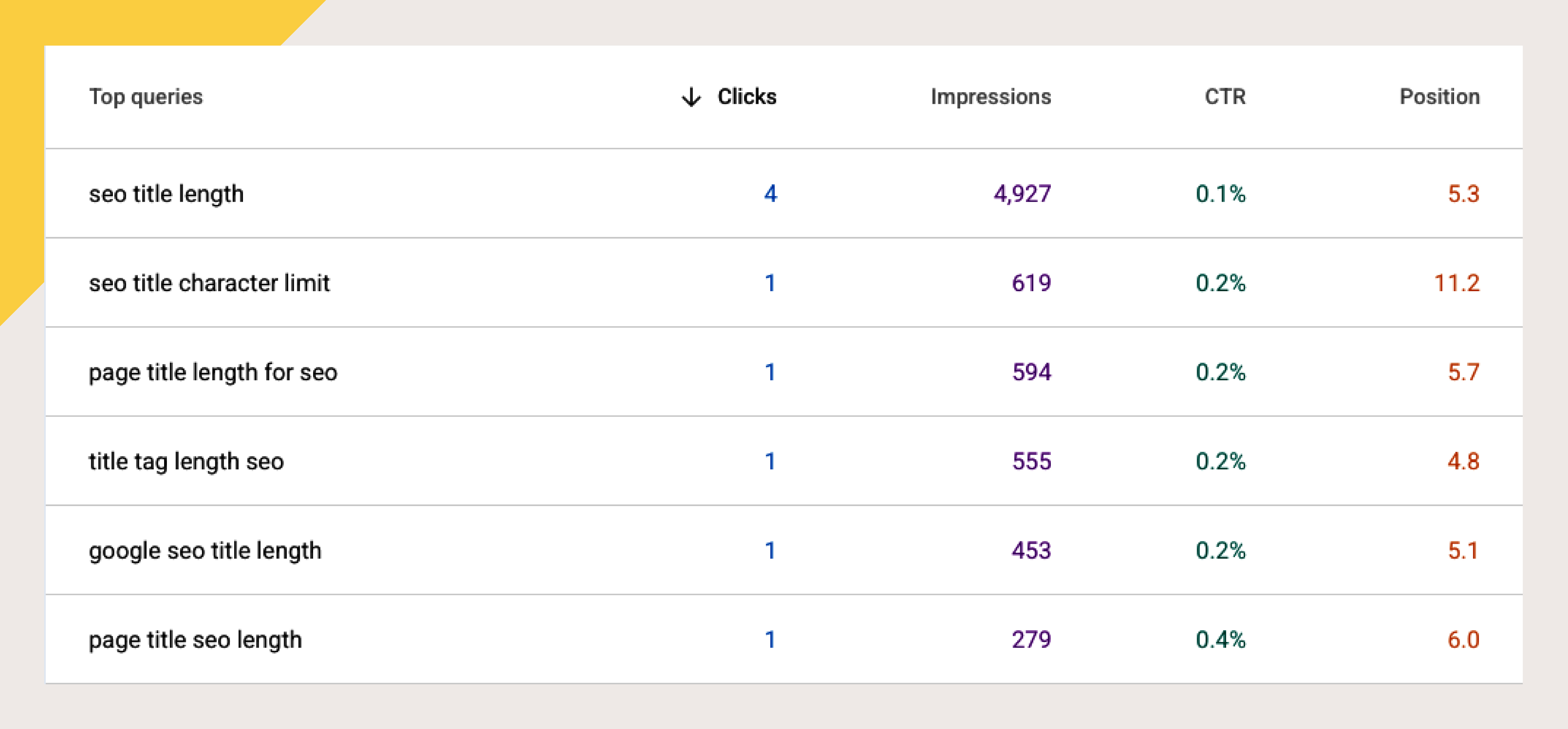 图 2:在 GSC 中定位高展现但点击受 AI 回答挤压的“title tag length”关键词
第二步:挖掘并汇总 Fan-out 检索词
先澄清一个常见误区:同一个搜索词触发的 Fan-out 子查询并不是固定不变的。AI 引擎会在每次检索时实时生成子查询,结果带有随机性和个性化差异。哪怕连续搜索 10 次,后台也可能跑出 10 组不同的子查询。
不过这些子查询的核心搜索意图高度重合。你可以结合以下三类工具汇总子查询列表:
- QueryFan / Qforia(基于 API 自动挖掘):输入目标词后,工具会自动调用 OpenAI 或 Gemini API,模拟不同用户画像导出子查询报表。
- Bing Webmaster Tools(Grounding 验证词):必应站长工具的 AI 效果报表会直接列出触发引用的 Grounding 检索词。
- 非 API 在线工具:使用 Dejan 开发的
queryfanout.ai或 Otterly 的子查询分析工具,直接在网页端提取。
用大模型直接合成模拟子查询
你也可以不用专门的 API 工具,直接向 ChatGPT 或 Claude 输入结构化 Prompt 来生成模拟子查询列表。塞勒斯提供了以下 Prompt 模板(Prompt 1: Synthetic Query Fan-out Generator):
| 1 | You are an expert SEO strategist and search intent analyst. Generate fan-out queries for this seed search phrase: |
| 2 | |
| 3 | [INSERT SEARCH PHRASE] |
| 4 | |
| 5 | A fan-out query is a realistic search query that helps satisfy the user’s underlying information need behind the seed phrase. It may restate, refine, define, compare, troubleshoot, or apply the topic to a specific platform, audience, tool, or use case. |
| 6 | |
| 7 | Return 50 total queries grouped under these headings: |
| 8 | Primary intent queries |
| 9 | Supporting subtopic queries |
| 10 | Comparison queries |
| 11 | Problem/solution queries |
| 12 | Audience or use-case queries |
| 13 | Decision-stage queries |
| 14 | |
| 15 | Rules: |
| 16 | - Stay tightly connected to the seed phrase, its intent, and the subtopics needed to answer it well. |
| 17 | - Include exact-intent variants, follow-up questions, definitions, attributes, examples, comparisons, problems, fixes, tools, platforms, and use cases when relevant. |
| 18 | - Use natural search-query wording. |
| 19 | - Include short-head, mid-tail, and long-tail queries. |
| 20 | - Avoid broad, vague, off-topic, redundant, awkward, or unlikely queries. |
| 21 | - Do not force commercial, tool, platform, or “best” queries unless they naturally fit. |
| 22 | - Put each query on its own line. |
| 23 | - Do not number queries. |
| 24 | - Do not include commentary. |
| 25 | |
| 26 | Silently remove anything that is not useful for SEO content planning. |
第三步:筛选核心 Fan-out 主题
跑完上面的 Prompt 后,表格里通常会攒下大批量子查询。例如分析“SEO title length”时,我们一次拿到了近 400 条子查询。里面混杂着不少语义重复、偏离主题或范围过窄的噪点词。
手动清洗耗时费力。你可以把原始列表发回给 ChatGPT 或 Claude,用下面的筛选 Prompt 去重并归并核心词(Prompt 2: Fan-out Cleaner & Keyword Consolidation):
| 1 | You are an expert SEO strategist and keyword researcher. I will give you a primary search phrase and a raw list of fan-out queries. Your job is to clean, filter, and consolidate the list into a focused keyword set for SEO content planning. |
| 2 | |
| 3 | Primary search phrase: |
| 4 | [INSERT SEARCH PHRASE] |
| 5 | |
| 6 | Raw fan-out queries: |
| 7 | [PASTE QUERY LIST] |
| 8 | |
| 9 | Instructions: |
| 10 | 1. Identify the core search intent behind the primary phrase. |
| 11 | 2. Remove queries that are obviously not useful for ranking a single strong page for that intent. Remove: |
| 12 | - Different meanings of the main words |
| 13 | - Broad or generic topic drift |
| 14 | - Loosely related subtopics |
| 15 | - Queries better suited to a separate article |
| 16 | - Unrelated tools, platforms, trends, news, jobs, salaries, rules, or frameworks |
| 17 | - Duplicates, awkward phrasing, or unlikely searches |
| 18 | Do not remove adjacent queries if they directly support the primary topic’s specific angle. |
| 19 | 3. Keep queries that naturally belong on the same page and help explain, expand, compare, refine, or satisfy the core intent, including: |
| 20 | - Core synonyms |
| 21 | - Beginner questions |
| 22 | - What/how/why/best/vs/for variations |
| 23 | - Problem and solution queries |
| 24 | - Comparison queries |
| 25 | - Attribute, feature, tool, process, or platform-specific queries, when relevant |
| 26 | 4. Consolidate duplicates and near-duplicates. |
| 27 | Choose the clearest, most natural search phrase for each group. |
| 28 | Do not list multiple queries that mean essentially the same thing unless they represent meaningfully different search behavior. |
| 29 | 5. Create: |
| 30 | - 20–25 primary keywords worth targeting directly |
| 31 | - 5–10 optional secondary queries to include naturally |
| 32 | Primary keywords should cover the strongest recurring intent clusters, not just close synonyms of the head term. |
| 33 | Optional secondary queries should be useful supporting concepts, not a dumping ground. Include them only when they add topical coverage but are too narrow, tool-specific, platform-specific, use-case-specific, or low-priority to be direct ranking targets. |
| 34 | Be strict. Do not include weak queries just to reach a count. |
| 35 | |
| 36 | Output format: |
| 37 | Obvious off-topic buckets: |
| 38 | - [Bucket]: [brief examples] |
| 39 | |
| 40 | Consolidated target query set: |
| 41 | 1. [keyword] |
| 42 | 2. [keyword] |
| 43 | |
| 44 | Optional secondary queries: |
| 45 | 1. [query] |
| 46 | 2. [query] |
| 47 | |
| 48 | Do not include a page structure or extra commentary. |
查询量评估与关键词聚类
运行 Prompt 2 后,你会筛出 20~25 个核心目标词。接下来可以把这批词导入 Ahrefs 查看月搜索量(Search Volume)。即便不少长尾子查询显示零搜索量也没关系,AI 后台检索并不看重传统搜索量高低。
为了找出网站的内容缺口,你可以用 Keyword Insights 等工具做关键词聚类(Clustering)。工具会根据 Google 搜索结果的重合度,判断哪些子查询适合放进同一个页面,哪些需要新建独立页面。
在塞勒斯的实测案例中,原有的 title tag 页面缺少两组关键子查询内容,分别是 title length checker(标题长度检测工具)和 serp snippet preview tool(搜索摘要预览工具)。这两个缺口就是补充 AI 引用的突破口。
第四步:针对 Fan-out 子查询优化页面
找到内容缺口后,你可以新建独立页面,也可以更新现有页面。实操中直接补充已有的高排名页面见效更快,具体遵循以下 3 条原则:
- 标题与首句直答子查询(Strict Alignment):在 H2 或 H3 小标题里直接写入目标 Fan-out 词或其自然变体(例如“哪款 SEO Title Length Checker 更好用”),紧接着在第一句话直接给出明确结论。这种排版方便 AI 引擎直接抽取答案。
- 避免堆砌成巨型百科页(Avoid Godzilla Pages):不要为了覆盖全部 20 多个子查询,把单个页面塞成包罗万象的巨型长文(Godzilla Pages)。单页只聚焦 2~3 个紧密相关的意图,偏离主线的话题应拆分到独立子页面。
- 提供一手测评与数据,剔除空洞套话(Ensure Originality):AI 引擎偏好抓取有增量信息的段落。在回答中加入一手实测数据、具体工具打分或实践判断,不要用 AI 生成泛泛而谈的常识套话。
在这个案例里,塞勒斯实测了几款主流 Title Checker 工具,把一手评测结论整理成独立的 H3 小节,直接补充到原有文章中。
第五步:追踪 AI 搜索中的引用表现
AI 搜索引用生效的速度通常比传统 SEO 排名更快。Google AI Overviews 等生成式模块依赖 FastSearch 和 RankEmbedBERT 缓存机制,评估窗口期一般在 70 天以内;而传统自然排名算法往往要综合近 13 个月的历史数据。
你可以用以下三类工具追踪引用变化:
- Bing Webmaster Tools AI Performance Report(必应 AI 报表):必应站长工具目前提供了清晰的 AI 引用统计。你可以在报表中查看每个 URL 获得的 Copilot 引用次数,以及触发引用的具体 Grounding Queries。
- Google Search Console Generative AI Features(Google AI 概览报表):GSC 已上线生成式 AI 筛选视图。虽然它还不提供具体的子查询词明细,但能监控网站在 AI 模式下的整体展现与点击趋势。
- Ahrefs Brand Radar 等第三方监测平台:录入上百条常用 AI Prompt 后,平台会定期抓取 GPT-4、Claude 3 和 Gemini 等模型的回答,自动统计品牌提及率与链接引用率。
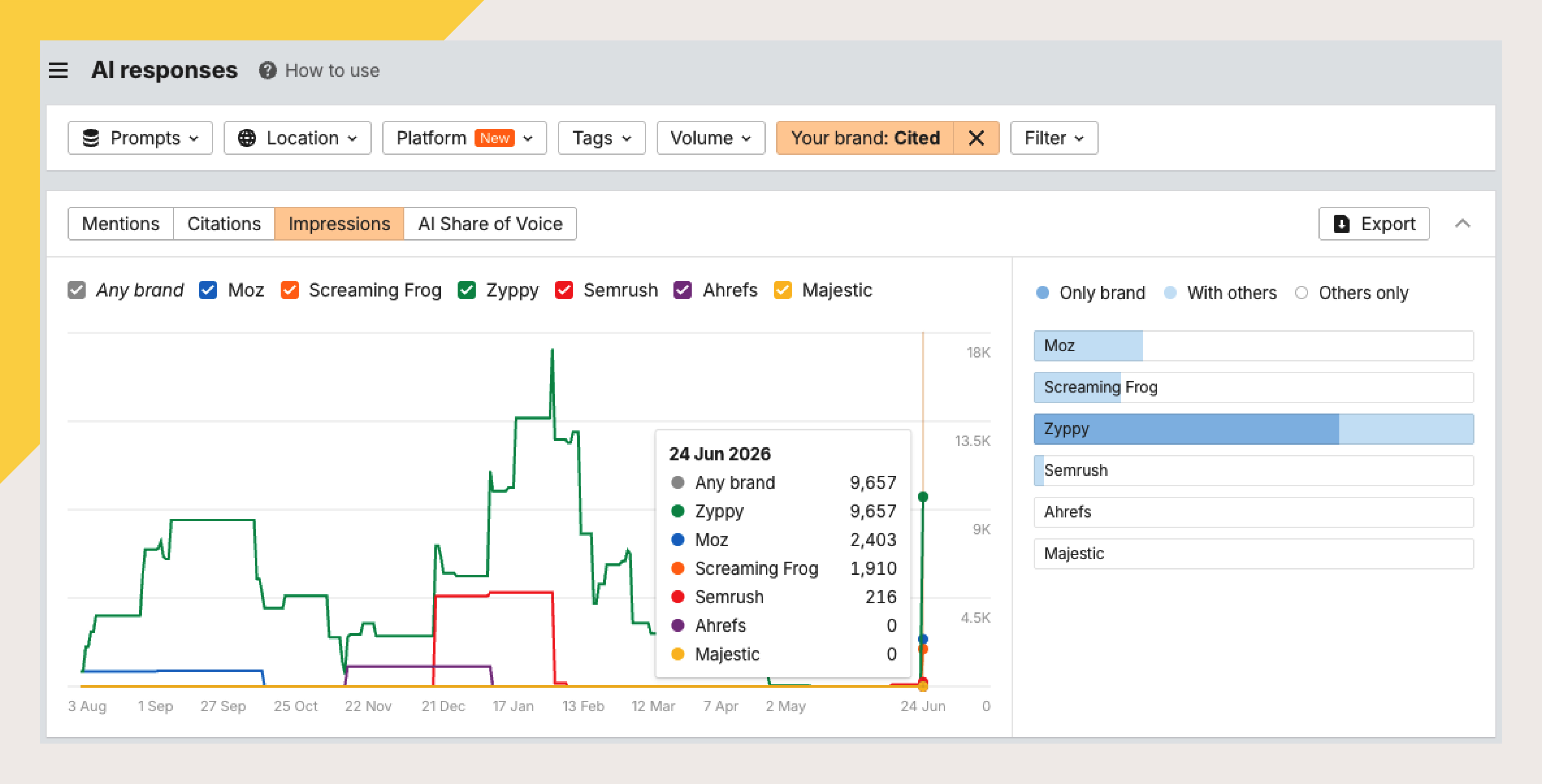 图 3:在 Ahrefs Brand Radar 中长期追踪核心词的 AI 引用占比
进阶自动化:AI 内容缺口分析助手 为了省去手工筛词的重复劳动,塞勒斯在 ChatGPT 和 Claude 上分别制作了自动化缺口分析助手。工具会自动抓取目标页面 URL 与前排竞品内容,对照 Fan-out 子查询列表输出四项诊断:
- 目标关键词对应的核心搜索意图分类
- 当前页面已经覆盖完整的子查询主题
- 尚未覆盖的内容缺口,以及配套的 H2 小标题与写作提纲
- 操作建议:在原页面补充段落,还是新建独立子页面
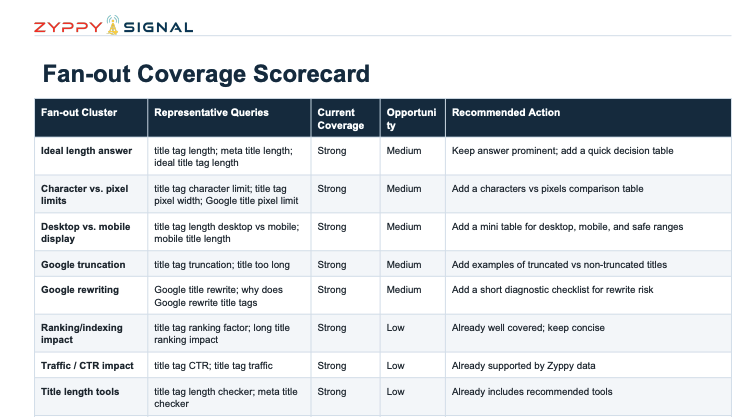 ChatGPT Query Gap Analyzer
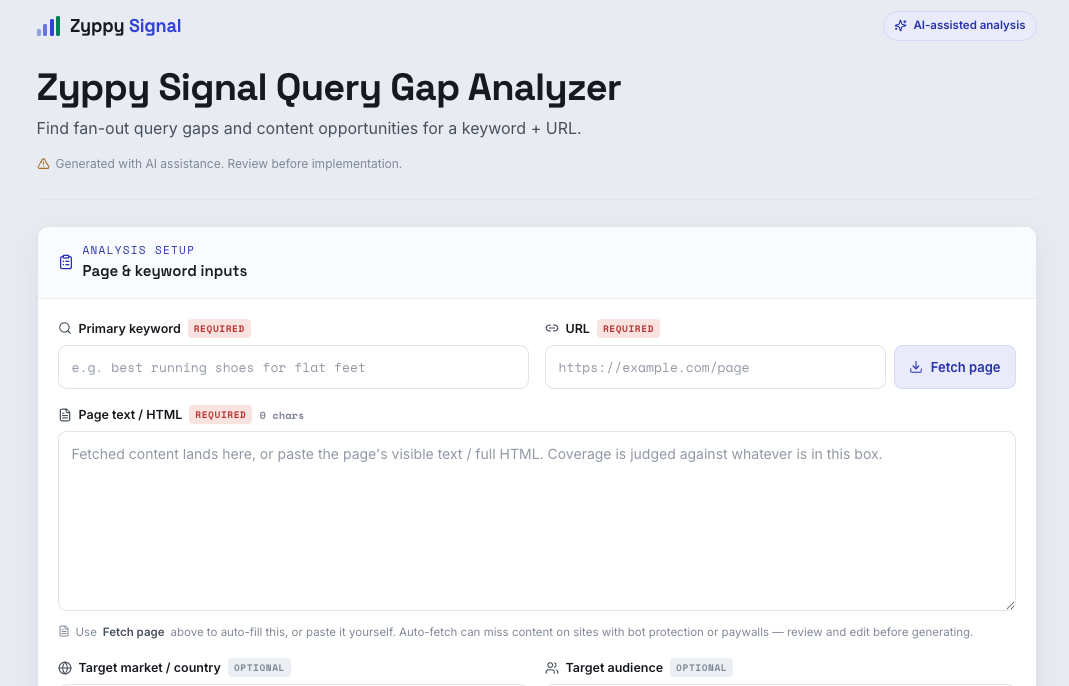 Claude Query Gap Analyzer
要点小结:传统 SEO 帮页面拿到自然搜索前排位置,Fan-out 框架则在 AI 后台检索的多条分支上补充信源,提高最终回答的引用率。
常见问答(FAQ)
Q1: 这和传统 SEO 里的“相关搜索词”(Related Searches)优化有什么区别?
两者思路相通,但实操有 3 点核心差异。第一,AI 会并发拆解出更细的子查询,涵盖竞品对比、故障排查和购买决策等环节。第二,Fan-out 优化不看重传统月均搜索量,哪怕某个子查询在 GSC 里显示 0 搜索量,只要处于模型的检索路径上就值得覆盖。第三,AI 模型更新引用的反馈周期比传统自然排名短得多。
Q2: 这套方法主要是为了进入 AI 回答正文,还是拿到下方的引用链接卡片?
实操中首要目标是拿到信源引用链接(Citation),因为链接能直接给网站带来点击流量。不过两者的触发条件高度重合:模型在首段归纳你的观点,通常来自多个外部网页对你的提及;模型在回答里推荐你的产品并附上链接,则取决于你的页面是否直接答出了后台召回的子查询。
Q3: 为什么 AI 引用更新的反馈速度比传统 SEO 排名快得多?
两套系统使用的检索模块不同。Google AI Overviews 主要调用 FastSearch 和 RankEmbedBERT 模块,侧重抓取和评估最近约 70 天内的网页更新。传统核心自然排名(Core Ranking)周期更长,往往要综合 13 个月以上的历史交互与整站数据。因此你在页面上补齐内容缺口后,往往几天内就能在新一轮 AI 索引刷新中拿到引用。
作者专栏档案
塞勒斯·谢泼德(@CyrusShepard) — 资深海外 SEO 专家,前 Moz 全球 SEO 负责人,曾任 Amazon 等科技公司的搜索增长顾问,长期研究 AI 搜索可见度量化与内容优化框架。
觉得本文有启发?一键复制标准引用摘要
自带原文归因链接与核心摘要,可直接粘贴至团队飞书/Slack 知识库、技术周报或大模型上下文。