
Traditional SEO starts with keywords. You ranked for a keyword people searched for, and you received traffic from Google. But AI answers are more complex:
AI engines generate answers from multiple sources, including LLM training data, top-ranking search results, and fan-out query results. The more places you show up in the AI’s research, the better your chances are of being included.
Traditional search engines display links. To compile a rich reply, AI engines generate several background queries (Fan-out queries). These background queries serve as bridges to retrieve multi-source information. The more places you show up in the AI’s background research, the better your chances are of being included in the final synthesized output.
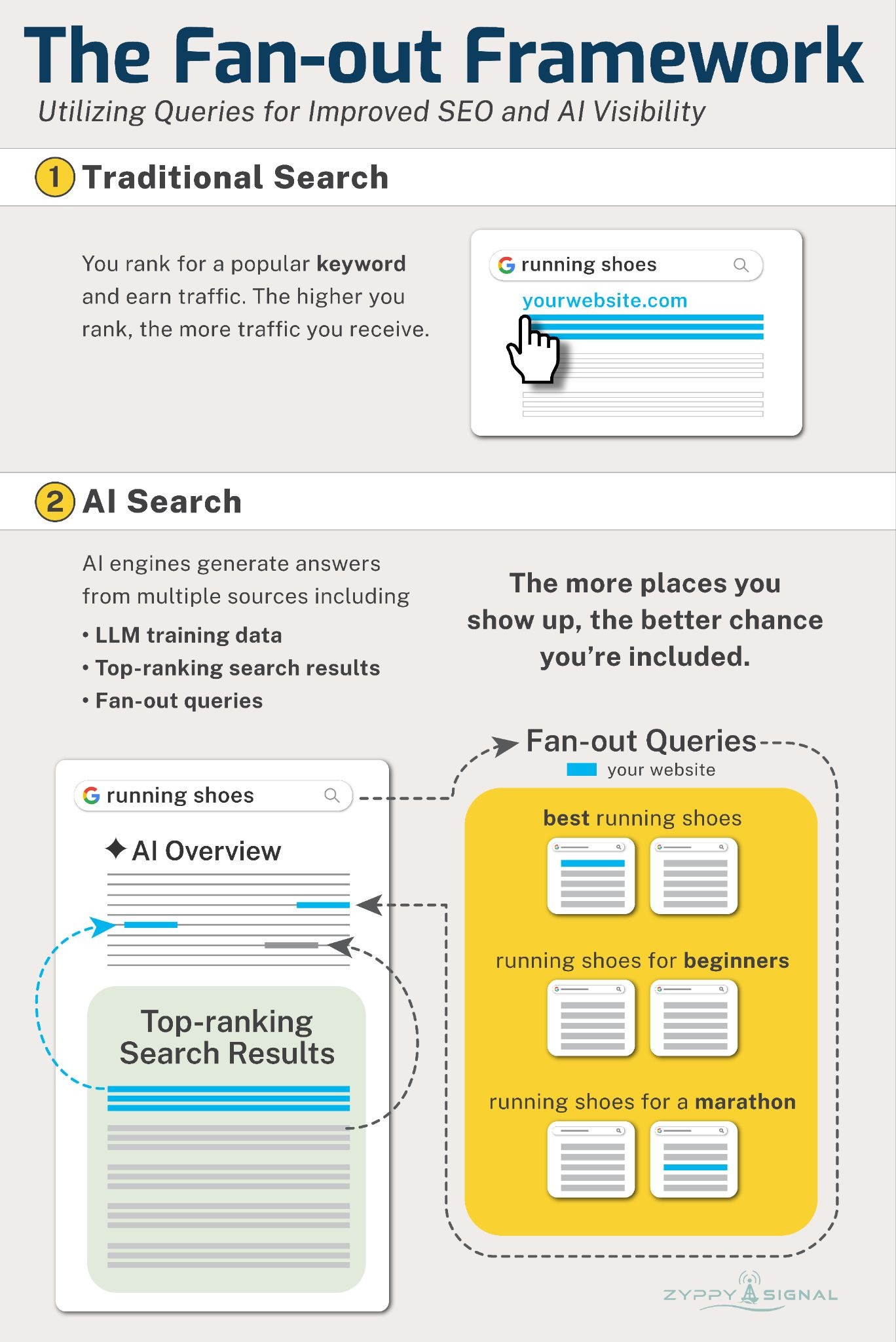 Figure 1: Info integration process via AI Fan-out sub-queries
How do you optimize for this? Here is Cyrus Shepard's 5-step Fan-out optimization framework:
Find keywords you already rank high for
Map concurrent AI prompt branching
Cluster intents into commercial nodes
Build structured Q&A and proof blocks
Monitor citations and conversion flow
Step 1: Find a keyword topic you already rank for
Here is a truth every marketer should know: the #1 predictor for appearing in AI answers is ranking highly in regular organic search results.
📊 Data studies support this correlation:
- Ahrefs Study: 38% of Google AI Overview citations come from Google’s top 10 ranking pages.
- AirOps Data: ChatGPT cited the page ranking #1 in Google 43.2% of the time.
- Semrush Data: AI answers from Perplexity had an 82% overlap with Google’s top 10 results.
If you rank for multiple fan-out queries as well, your chances of appearing in AI will be stronger still. You can identify these target pages inside your Google Search Console account.
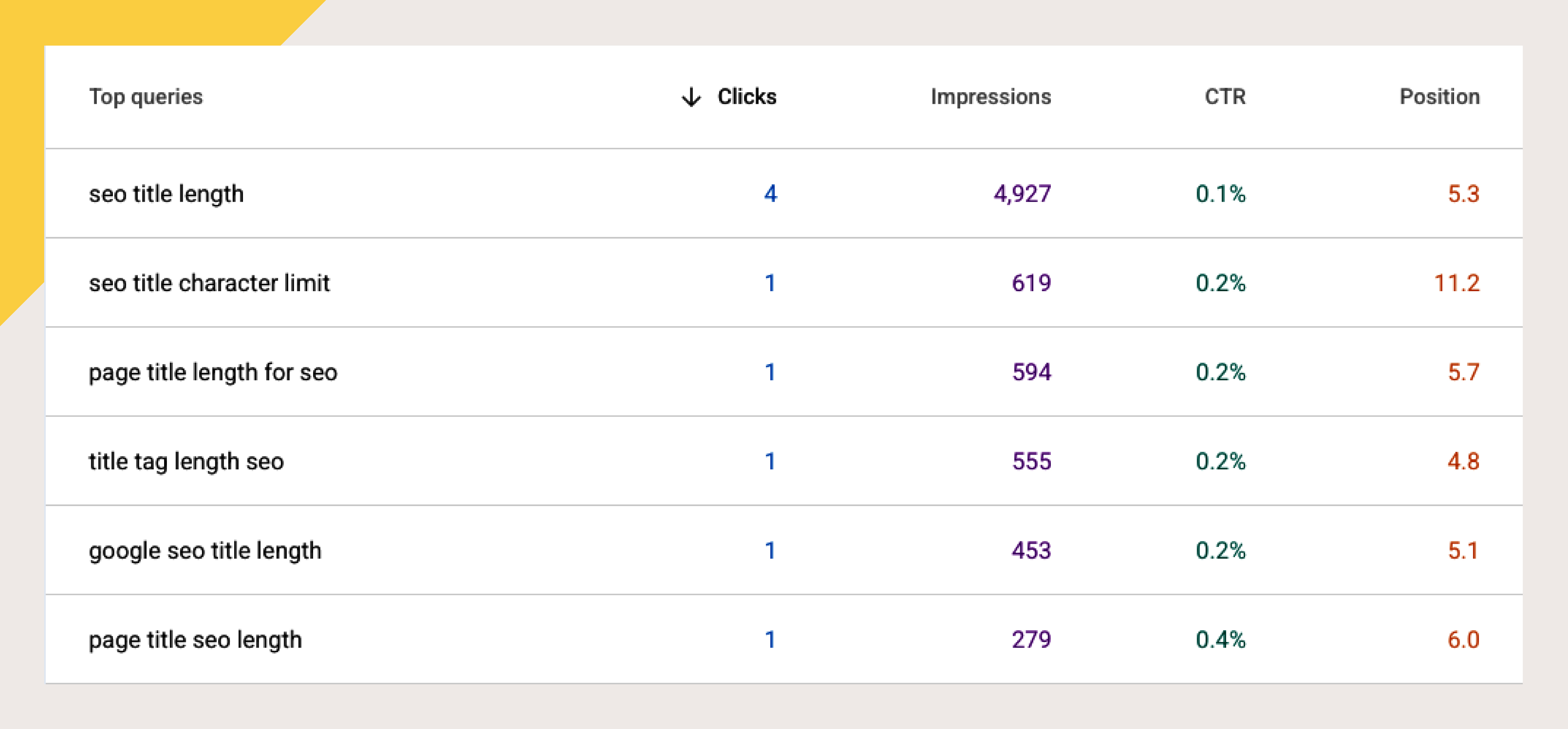 Figure 2: Identifying high-impression "title tag length" keywords in GSC
Step 2: Find Fan-out Queries
Before we search for fan-outs, we need to address the fan-out myth: that for any given search, there is a stable, pre-determined list of sub-queries. In reality, they are probabilistic and personalized, varying across LLM models and user sessions.
But that’s okay. Fan-out queries will never be entirely stable, but they are broadly similar in intent Commonalities. We can gather them using several tools and approaches:
- QueryFan / Qforia (基于 API 的自动挖掘):Using OpenAI or Gemini API keys to simulate personas and fetch automated lists of background sub-queries.
- Bing Webmaster Tools (Grounding 验证词):Bing displays Grounding Queries in its AI Performance Report, which have immense overlap with Fan-out keywords.
- 非 API 在线工具:No-API tools like Dejan's queryfanout.ai or Otterly's query analysis UI.
🤖 Generating Synthetic Fan-out Queries directly via LLMs
You actually don't need custom API tools. You can ask Claude or ChatGPT to generate synthetic fan-out clusters directly by using a fine-tuned intent-analysis prompt. Use the template below:
You are an expert SEO strategist and search intent analyst. Generate fan-out queries for this seed search phrase:

[INSERT SEARCH PHRASE]

A fan-out query is a realistic search query that helps satisfy the user’s underlying information need behind the seed phrase. It may restate, refine, define, compare, troubleshoot, or apply the topic to a specific platform, audience, tool, or use case.

Return 50 total queries grouped under these headings:
Primary intent queries
Supporting subtopic queries
Comparison queries
Problem/solution queries
Audience or use-case queries
Decision-stage queries

Rules:
- Stay tightly connected to the seed phrase, its intent, and the subtopics needed to answer it well.
- Include exact-intent variants, follow-up questions, definitions, attributes, examples, comparisons, problems, fixes, tools, platforms, and use cases when relevant.
- Use natural search-query wording.
- Include short-head, mid-tail, and long-tail queries.
- Avoid broad, vague, off-topic, redundant, awkward, or unlikely queries.
- Do not force commercial, tool, platform, or “best” queries unless they naturally fit.
- Put each query on its own line.
- Do not number queries.
- Do not include commentary.

Silently remove anything that is not useful for SEO content planning.
Step 3: Determine Your Most Important Fan-out Topics
Using the previous steps, you will quickly gather an overwhelming number of query variants. For our "seo title length" study, the sheet contained nearly 400 potential fan-outs! You must clean, consolidate, and filter this list.
Rather than filtering manually, feed this raw spreadsheet output back to ChatGPT or Claude to cluster and filter them using a strict gap-consolidation prompt:
You are an expert SEO strategist and keyword researcher. I will give you a primary search phrase and a raw list of fan-out queries. Your job is to clean, filter, and consolidate the list into a focused keyword set for SEO content planning.

Primary search phrase:
[INSERT SEARCH PHRASE]

Raw fan-out queries:
[PASTE QUERY LIST]

Instructions:
1. Identify the core search intent behind the primary phrase.
2. Remove queries that are obviously not useful for ranking a single strong page for that intent. Remove:
- Different meanings of the main words
- Broad or generic topic drift
- Loosely related subtopics
- Queries better suited to a separate article
- Unrelated tools, platforms, trends, news, jobs, salaries, rules, or frameworks
- Duplicates, awkward phrasing, or unlikely searches
Do not remove adjacent queries if they directly support the primary topic’s specific angle.
3. Keep queries that naturally belong on the same page and help explain, expand, compare, refine, or satisfy the core intent, including:
- Core synonyms
- Beginner questions
- What/how/why/best/vs/for variations
- Problem and solution queries
- Comparison queries
- Attribute, feature, tool, process, or platform-specific queries, when relevant
4. Consolidate duplicates and near-duplicates.
Choose the clearest, most natural search phrase for each group.
Do not list multiple queries that mean essentially the same thing unless they represent meaningfully different search behavior.
5. Create:
- 20–25 primary keywords worth targeting directly
- 5–10 optional secondary queries to include naturally
Primary keywords should cover the strongest recurring intent clusters, not just close synonyms of the head term.
Optional secondary queries should be useful supporting concepts, not a dumping ground. Include them only when they add topical coverage but are too narrow, tool-specific, platform-specific, use-case-specific, or low-priority to be direct ranking targets.
Be strict. Do not include weak queries just to reach a count.

Output format:
Obvious off-topic buckets:
- [Bucket]: [brief examples]

Consolidated target query set:
1. [keyword]
2. [keyword]

Optional secondary queries:
1. [query]
2. [query]

Do not include a page structure or extra commentary.
📈 Search Volume & Keyword Clustering
After consolidating down to 20-25 keywords, we put them into Ahrefs Keyword Explorer to check search volume. Even if many queries have 0 search volume, that’s fine. AI grounding paths don't strictly depend on high traditional search volumes.
Next, we perform keyword clustering (e.g., using Keyword Insights) to group query fan-outs based on Google SERP overlaps, helping us identify content gaps and decide whether to update the main page or launch new URLs.
For instance, Cyrus identified a major content gap around "title length checker" and "serp snippet preview tool" clusters, representing golden citation-capture targets.
Step 4: Optimize for the Fan-out Queries
You have two options when targeting the gaps: build new pages or update the current high-authority page. Updating the existing page is usually the faster path. The absolute rules for page optimization are:
🎯 1. Align Content Directly to the Fan-out query
Use the fan-out query or a close variant directly inside headings (H2, H3), and follow it immediately with a concise, direct answer in the very next sentence.
🚫 2. Do Not Create "Godzilla" Pages
Do not dump all 20+ fan-out topics onto a single page, resulting in massive, diluted pages. Focus only on 2-3 tightly-related intents.
💎 3. Skip Generic, Commodity Text
Engines prioritize fresh viewpoints or data points. Add proprietary metrics, first-hand reviews, or expert analysis.
For their title length page, they tested several length checkers and added a dedicated write-up directly to the article.
Step 5: Measure The Results
The good news is that you can often influence AI answers much faster than traditional organic search results. Google's generative search features leverage RankEmbedBERT caching, analyzing content with a ~70-day window compared to the 13-month timeline of traditional organic algorithms.
You can verify and monitor your AI search visibility through three main reporting vectors:
- Bing Webmaster Tools AI Performance Report (必应 AI 报表):Bing Webmaster Tools provides an AI report showing exact citation counts and matching grounding terms.
- Google Search Console Generative AI Features (谷歌 AI Overviews 展示):Google recently added Generative Search features tracking under GSC Search Console Performance tabs.
- 使用 Ahrefs Brand Radar 等专业监测方案:Platforms like Peek, Otterly, Profound, or Ahrefs Brand Radar trace prompt citations systematically.
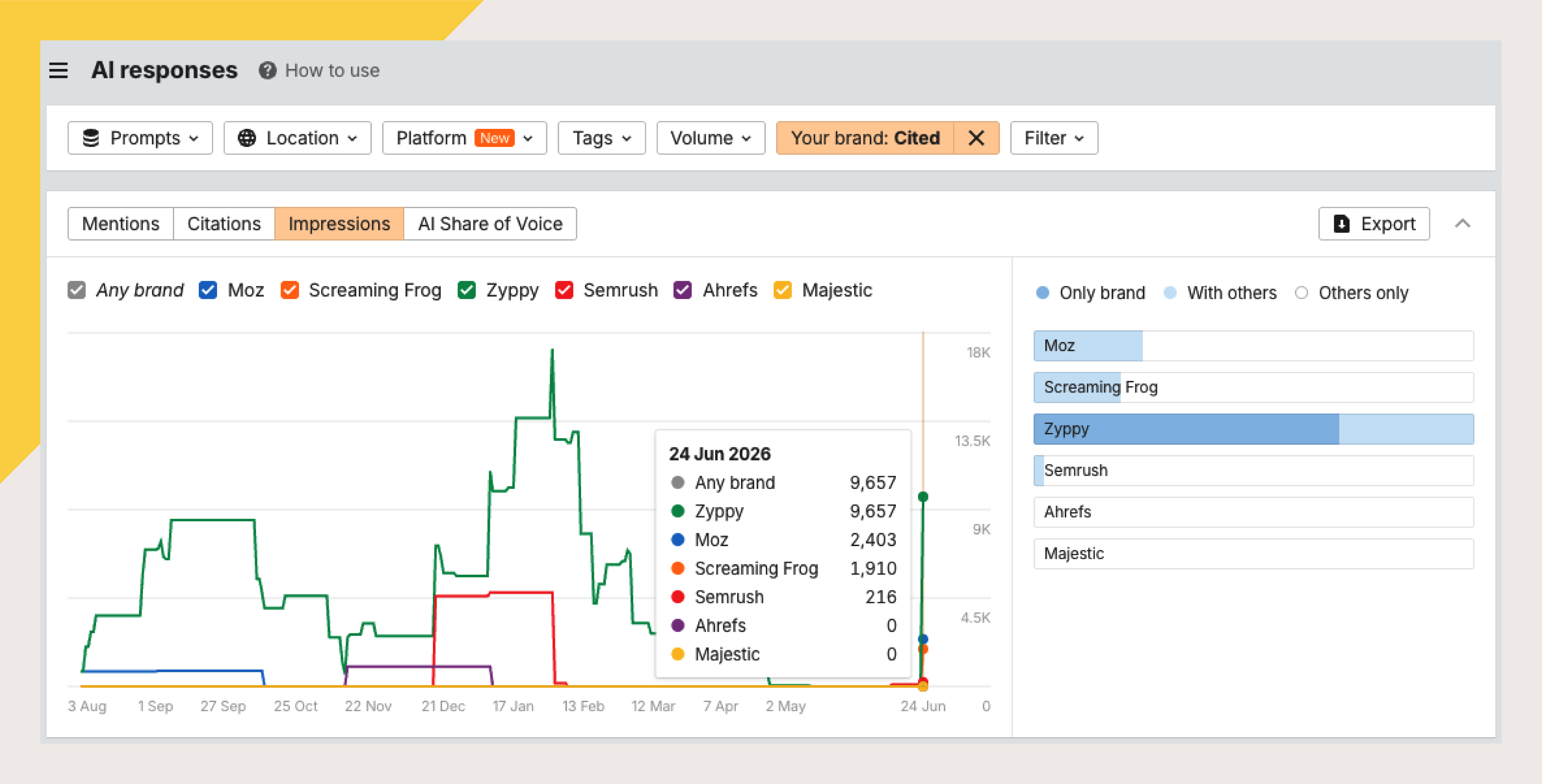 Figure 3: Monitoring topical citation share inside Ahrefs Brand Radar
💡 Pro Bonus: AI Query Gap Analyzer Tools
To automate the analysis, two AI tools were built (one in ChatGPT, one in Claude) that ingest your URL and competitor pages, cross-check them against background fan-out clusters, and generate scorecards detailing:
- Core intents and classification card for keywords.
- Which sub-query clusters are already well addressed.
- Exact content gaps with recommended H2 headings and outlines.
- Strategic advice: update existing URL vs build standalone URL.
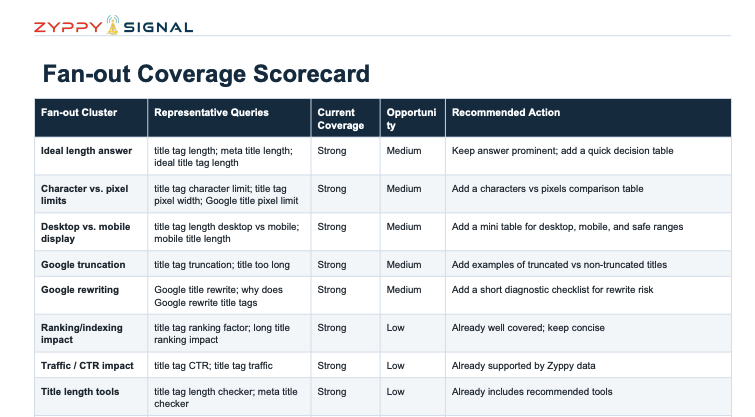 ChatGPT Analyzer
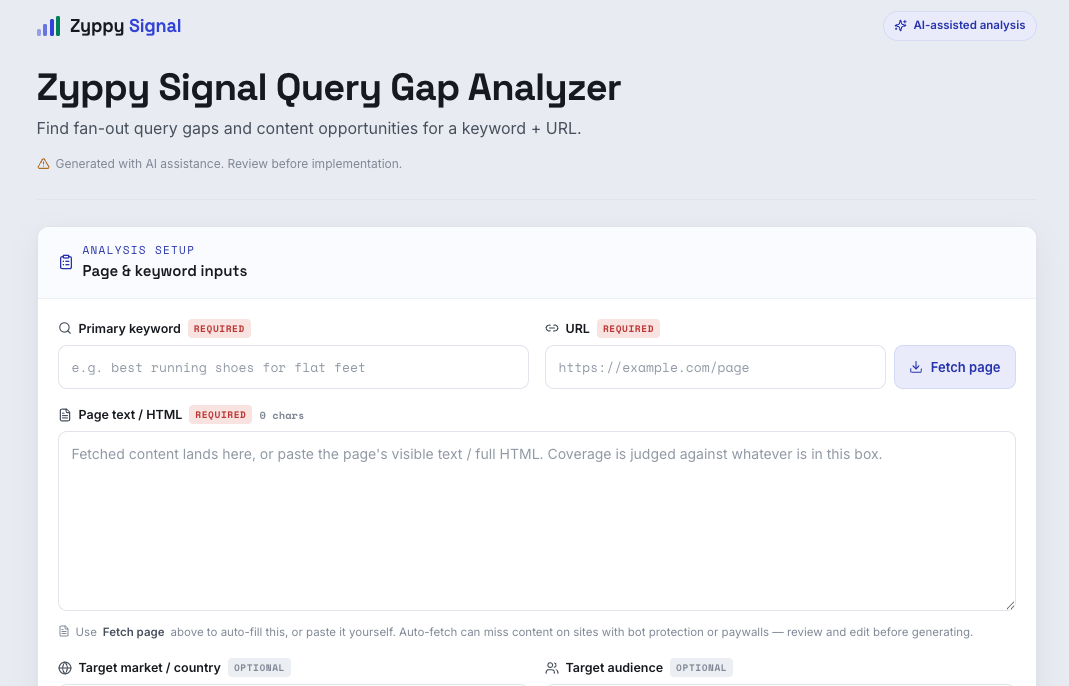 Claude Analyzer
🎯 Key Takeaway: Traditional SEO positions us at the organic front row, while the Fan-out Framework ensures we secure citations along the AI's information synthesis journey.
Frequently Asked Questions
Q1: Isn't this just optimizing for related queries, with a different name?
Most concepts in LLM optimization echo traditional SEO. The answer is "kinda, sorts, with a twist." While similar, they aren't identical. AI answers compile far more specific attributes, comparisons, and troubleshooting stages. We care less about traditional monthly volume metrics. We target the semantic grounding paths LLMs use, employing completely different tracking surfaces.
Q2: Is this process about appearing in the AI answer, or being cited by it?
Great question! Most of this process is about getting cited by the AI, but in reality, there’s a lot of overlap here with appearing in the AI answer as well. Different AI engines are constantly updating how they answer and format questions, too. The more places you appear in the surfaces AI uses as sources, the better your chance of appearing.
Q3: How can you influence AI answers faster than traditional search results?
They run on completely different algorithms. Google uses modules like FastSearch/RankEmbedBERT to populate generative blocks, which leverage a ~70-day user/document cycle rather than the 13-month core organic ranking signals. A fresh update to a URL can trigger AI citation updates in days, long before the core SERP page ranking shifts.
