

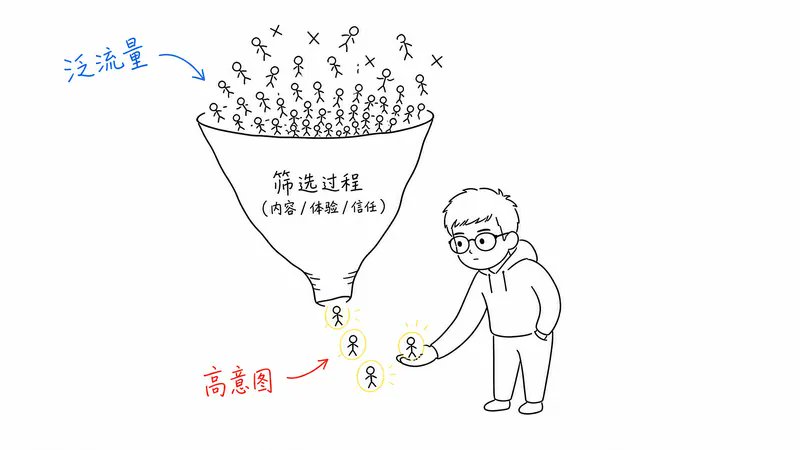
Many think SEO is just for traffic, but search traffic is ultimately for conversion, including signups and paid subscriptions.
1,000 high-intent users are far better than 10,000 generic traffic users. Learn to deduce link velocity from revenue funnels.
1. How to Analyze SEO Conversion Data
Here is how I analyze SEO conversion data, the spreadsheets and funnel structure are shown below:
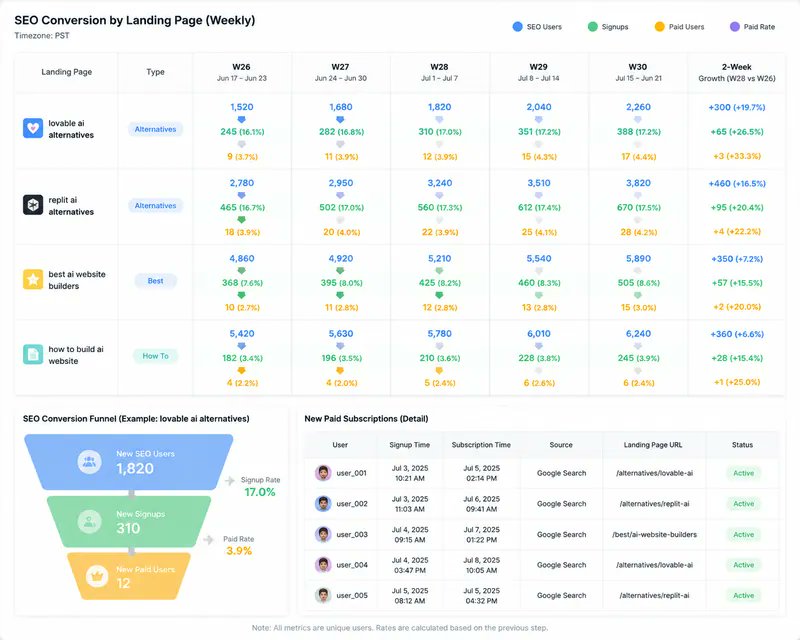



As shown above, structured by URL directory and weekly intervals:
- Layer 1: New SEO Users:Mapped to source = organic search and grouped by landing URL directories.
- Layer 2: New Registered Users:Tracking direct signup conversions generated by specific landing pages.
- Layer 3: New Subscribers:Paid subscribers, mapping user attributes back to their first landing URL.
💡 Jeff's Bi-Weekly Review Rule
Do not watch rankings daily; SEO moves too slowly. Review traffic, rank, signups, and subscriptions bi-weekly. This filters out short-term fluctuations and ensures the data volume is statistically significant.
For instance, on an AI Website Generator site, you might find high-traffic general blog posts convert poorly, whereas comparison terms like lovable alternatives or replit alternative yield signup rates up to 20%. These high-converting URLs are where backlink budget must go.
2. Backlink Allocation & Frequency
Backlink building should not be blind broadcasting; it must be a conversion-driven, scientific process guided by current SERP positions:
- New Sites: Elevate Site Authority First:In the early stage, direct over 70% of the backlink budget to the homepage to build base Domain Authority.
- Assaulting Page 1 (Rank 11-20):For high-converting URLs sitting on page 2, add 5-10 backlinks per week for 4 weeks, and observe for 2 weeks.
- Breaking into Top 5 (Rank 6-10):The golden zone. Focus 10-20 high-quality referring domains per week for 4-6 weeks to surpass competitors and lock in Top 5 rankings.
🎯 Golden Rule: Backlink budget should always be spent on pages closest to the Top 5 that have the highest conversion rates. That is the highest ROI route.
3. Expanding High-Conversion Keywords
Once high-converting page typologies are identified, double-down by instantly generating content nodes around related semantics:
- Alternatives(替代方案类):E.g., X alternatives to capture active buying intent.
- Vs(单对单对比):E.g., X vs Y, comparing features and pricing for late-stage decision makers.
- Competitors(竞争对手分析):Reviewing competitor dynamics in the same niche.
- Review(工具测评):Providing user experience and proof-based evaluations.
