
Aesthetic Improvement Handbook in the AI Era (Part 2): Master Observation, Single-Variable Comparison & Real-Space Practice
Aesthetic Improvement Handbook in the AI Era (Part 2): Master Observation & Single-Variable Comparison
How do you systematically train visual taste? Through Ryoan-ji rock gardens, Monet’s Haystacks across shifting light, Matthew Butterick’s typography contrasts, and daily single-variable A/B observation.
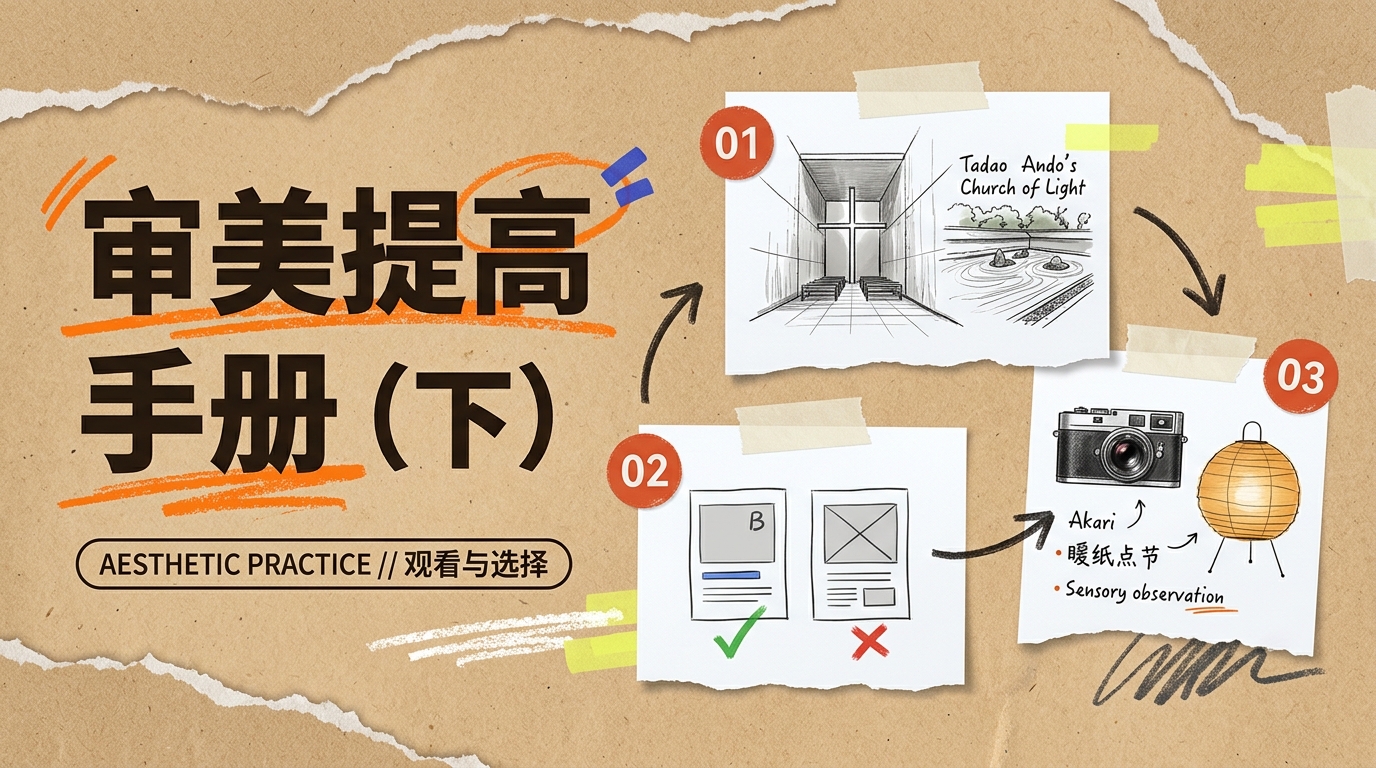
1. The Single-Variable Comparison Method for Training Visual Taste
You cannot improve taste by passively scrolling thousands of random images. The most effective perceptual training method is **Single-Variable A/B Comparison**: holding content 100% constant while varying exactly one parameter (such as line-height, color temperature, or focal length) and articulating why Version A feels calmer or more authoritative than Version B.
- Monet’s Haystacks Method: Observe the exact same physical subject at 06:30 dawn, 12:00 noon, and 17:45 dusk to internalize how light temperature reshapes emotion.
- Butterick’s Practical Typography: Compare identical paragraphs at 1.15x vs. 1.55x line-height and 45-character vs. 110-character measure.
- Ryoan-ji Spatial Tension: Study how 15 stones arranged in asymmetric clusters create equilibrium across raked white gravel.
2. Building a Personal Curated Visual Vault (Anti-Algorithmic Diet)
Algorithmic social feeds optimize for immediate dopamine spikes (high contrast, exaggerated faces, sensational hooks), which gradually corrupts subtle aesthetic sensitivity. Curate a private library of architecture, cinema stills, classical painting, and print editorial typography.
- Deconstruct Before Saving: Whenever you save a reference image, write a 3-line note identifying its (1) Light Source, (2) Color Ratio, and (3) Spatial Grid.
- Run Controlled Prompt Ablations: Test a single prompt across 4 lighting temperatures while locking seed and composition.
[Controlled Single-Variable Lighting Study]:
Base Scene (Locked): A solitary minimalist timber pavilion beside a still alpine lake, framed in a 16:9 wide shot using a 50mm lens, subject anchored at the lower-right third.
Variable A (Dawn): Illuminated by cool 5800K pre-dawn blue-hour mist with faint silver rim light on the water.
Variable B (Golden Hour): Illuminated by low-angle 3200K warm amber sunset light casting long diagonal shadows across the timber deck.
Engineering Comparison Matrix: Anti-Patterns vs. Production Best Practices
| Dimension | Common Anti-Pattern | 2026 Production Standard |
|---|---|---|
| Taste Training | Passively saving thousands of random Pinterest/Midjourney images | Active single-variable A/B comparison with written 3-point deconstruction |
| Prompt Experimentation | Changing subject, style, lens, and lighting all at once between runs | Lock base scene and ablate one visual variable per generation |
Pre-Flight Production Verification Checklist
- 01Practice single-variable comparison across typography, lighting temperature, and cropping ratios.
- 02Annotate every saved reference image with its spatial ratio, light direction, and dominant color chord.
- 03Use AI image models as a rapid visual laboratory to test lighting and lens variations on a locked composition.
Found this actionable? Copy standard citation & summary
Formatted with canonical attribution link and executive summary—ready for Slack, Notion, or LLM context.
Put Into Practice: Companion Browser Workbenches
AI Media Provenance Clue Inspector & SynthID Portal
Client-side heuristic inspection for C2PA/XMP metadata markers and prompt text clues, with direct handoff to the official SynthID Portal.
EVA Studio Visual Poster Workspace
Social ad canvas presets, client-side AI background removal, and watermark-free vector export.
Explore More Image Guides
Back to Hub
ByteDance Seedream 5.5 Hands-On Review: Zero Degradation Across 100 Edit Rounds While GPT Image 2.6 Artifacts
Across 100 iterative editing rounds, GPT Image 2.5 and 2.6 suffer severe artifacting after just 10 turns while ByteDance Seedream 5.5 keeps faces and backgrounds rock-solid. Full review covering Jimeng Canvas multi-round outfit swaps, Beijing/Tianjin snow realism & world knowledge, Capwise transparent icon layer splitting, Li Qingzhao historical portrait-to-real conversion, and 0.4% low-error Chinese/English infographic text rendering.
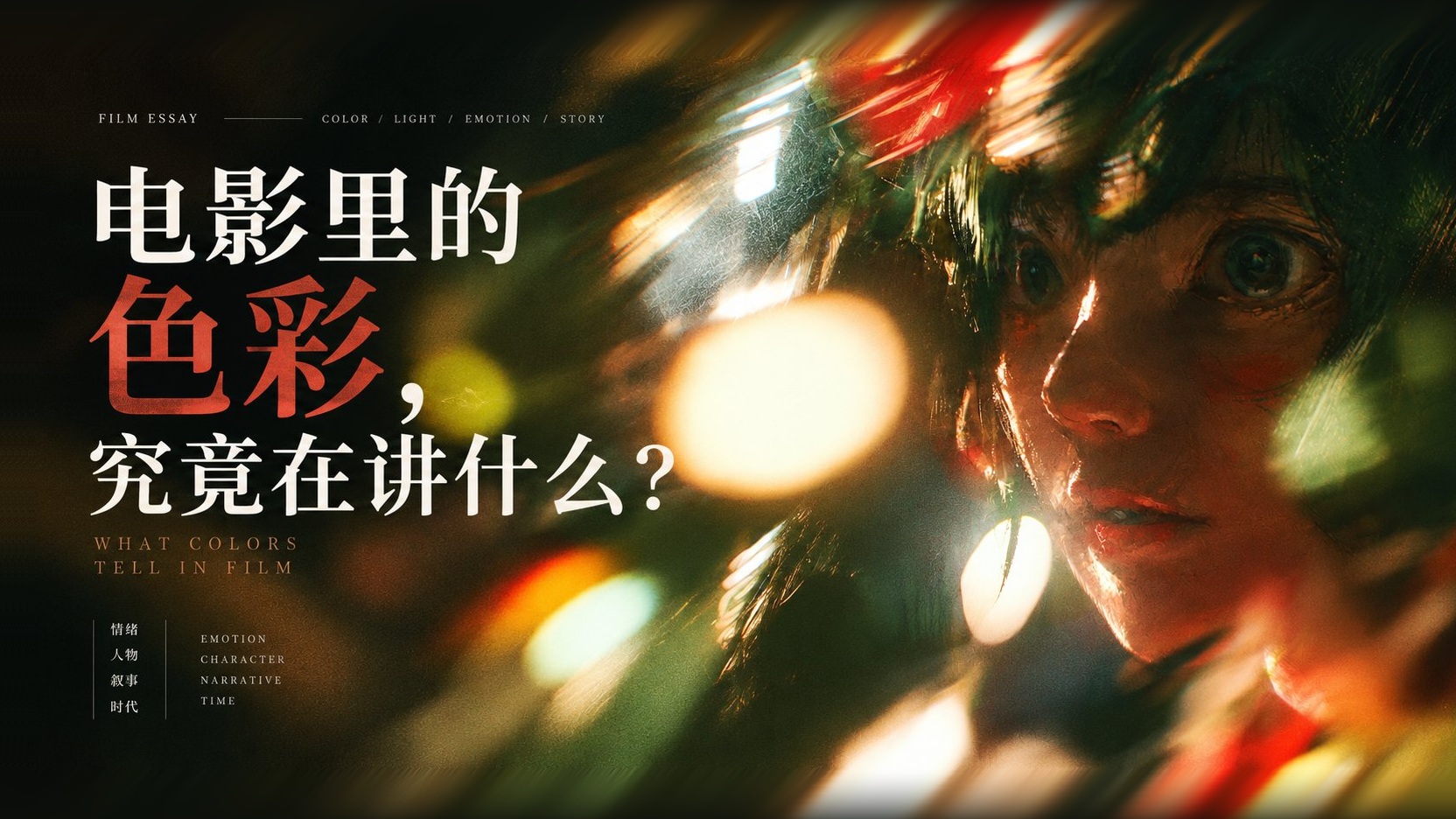
What Colors Tell in Film: Decoding Cinematic Color Storytelling from In the Mood for Love to The Grand Budapest Hotel
Black bars and teal-orange filters do not automatically create a cinematic feel. Through 10 high-resolution frame comparisons across In the Mood for Love, Moonlight, Raise the Red Lantern, Blade Runner 2049, and The Grand Budapest Hotel, learn how Hue, Value, Saturation, and Dominant/Secondary/Accent color hierarchy work with light, character placement, and spatial scale to tell a story.
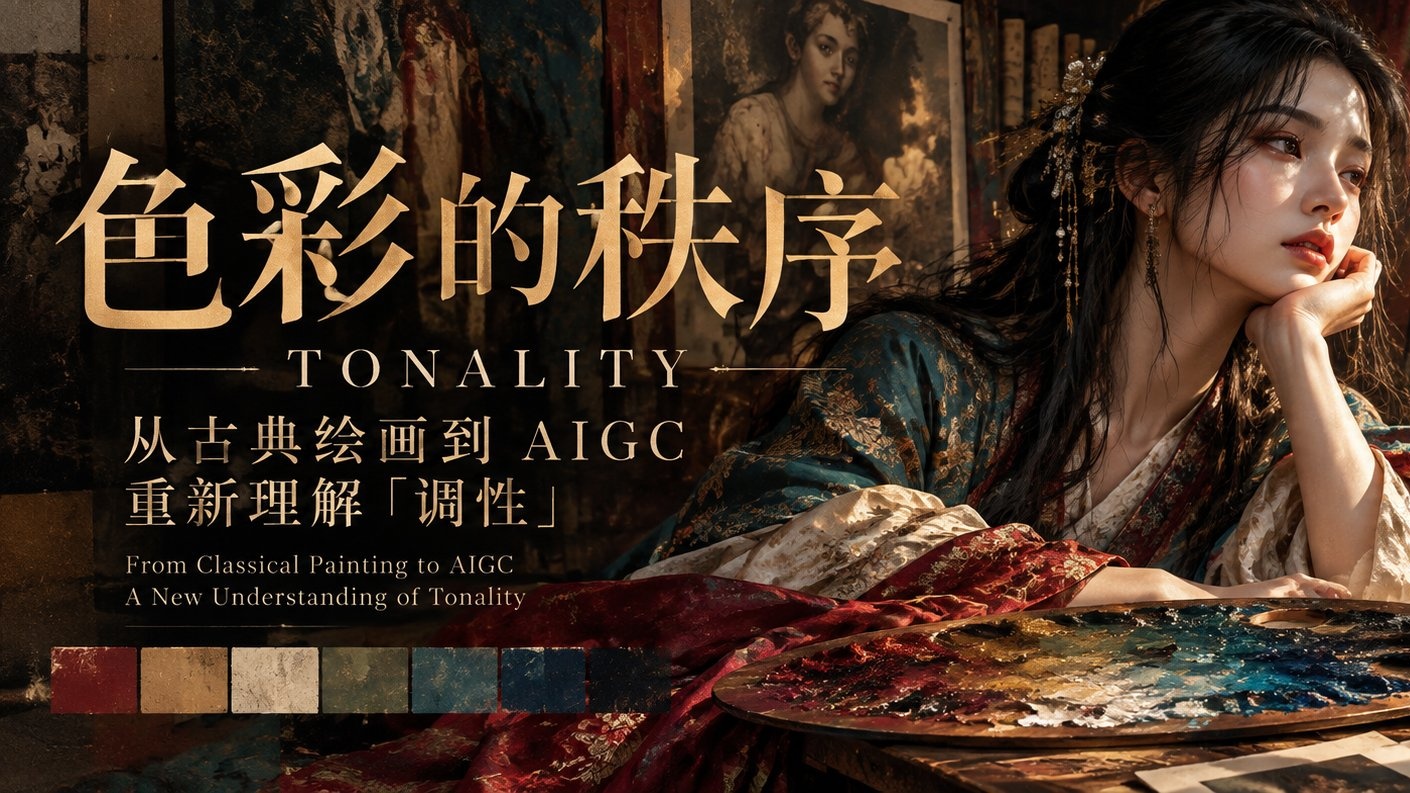
The Order of Color: From Classical Painting to AIGC, Re-understanding "Tonality"
Tonality goes deeper than color palettes—it is the overarching visual order governed by Value Structure, Chroma Relationship, Temperature Interplay, and Area Proportion. Through Rembrandt, Vermeer, and Hammershøi masterworks, learn how to write true tonal-harmony AIGC prompts.
Need Autonomous Agents?
Explore multi-agent workflows, enterprise RAG, and local LLMs.