
Hands-on Review of Gemini 4 Argon: Google's Stumbling Last Stand in the Frontier AI War
Author: 数字生命卡兹克 @Khazix0918
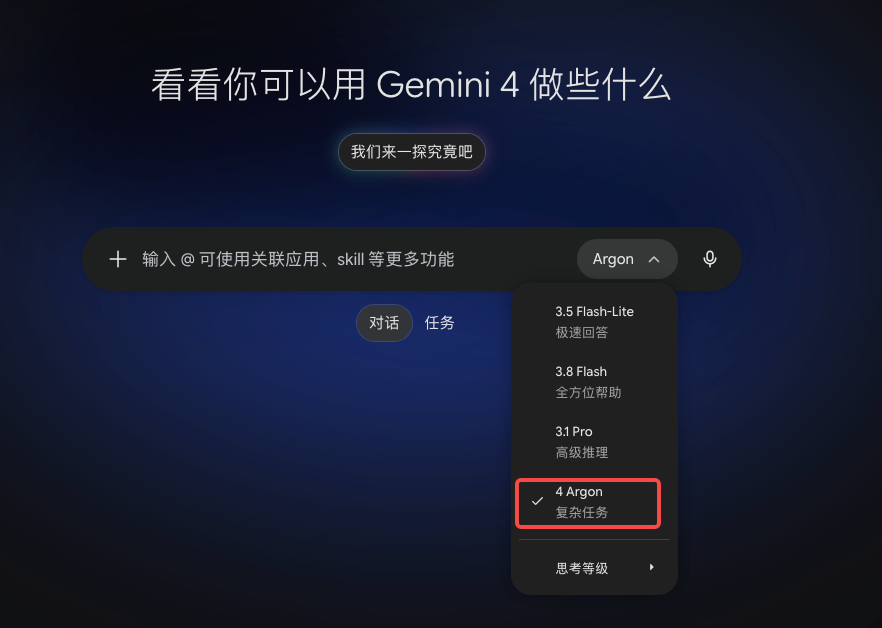
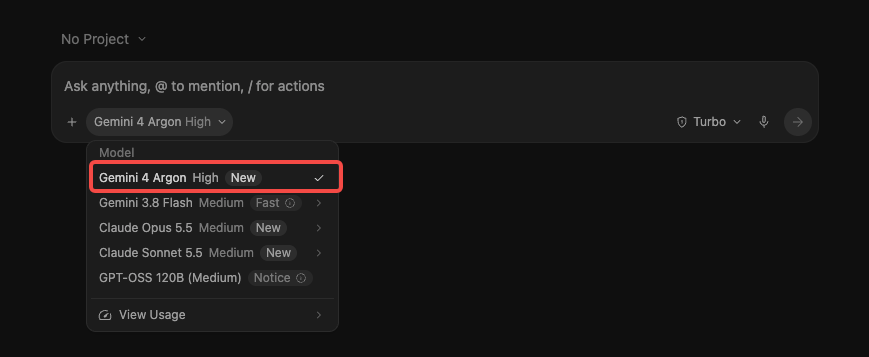
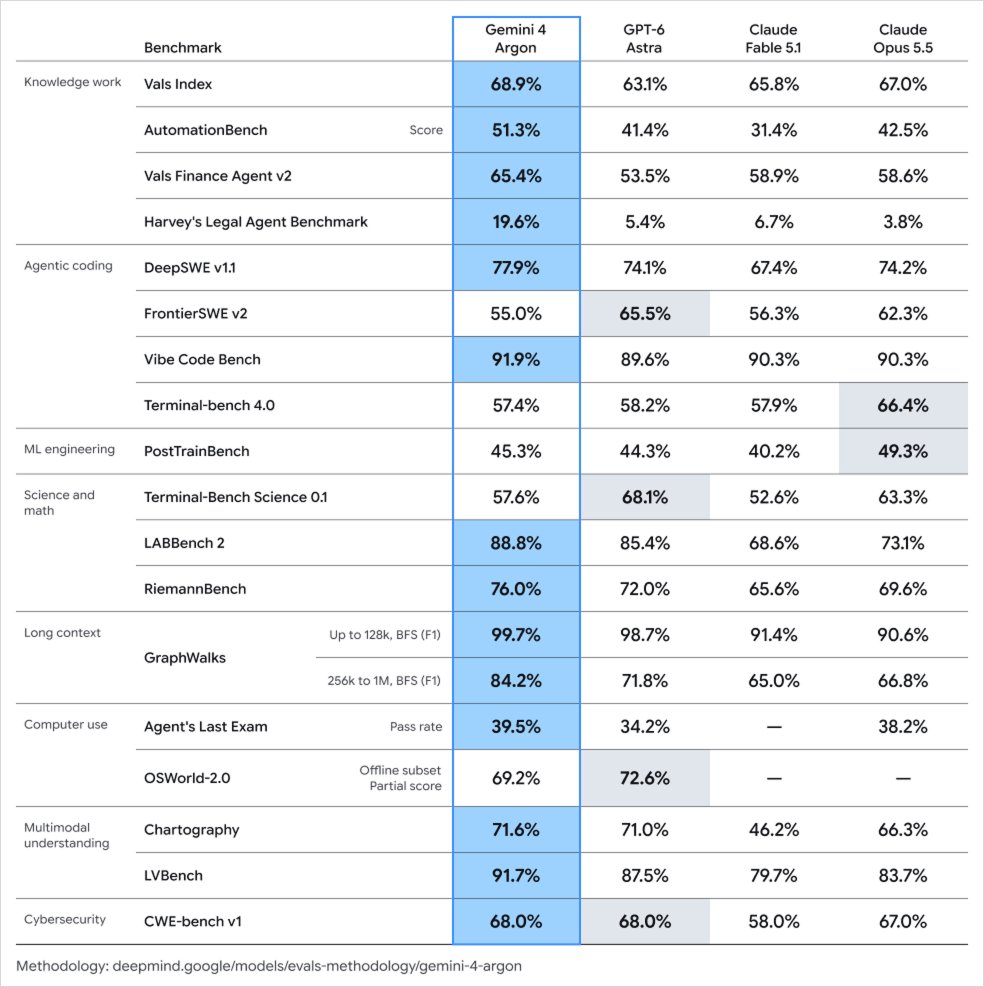
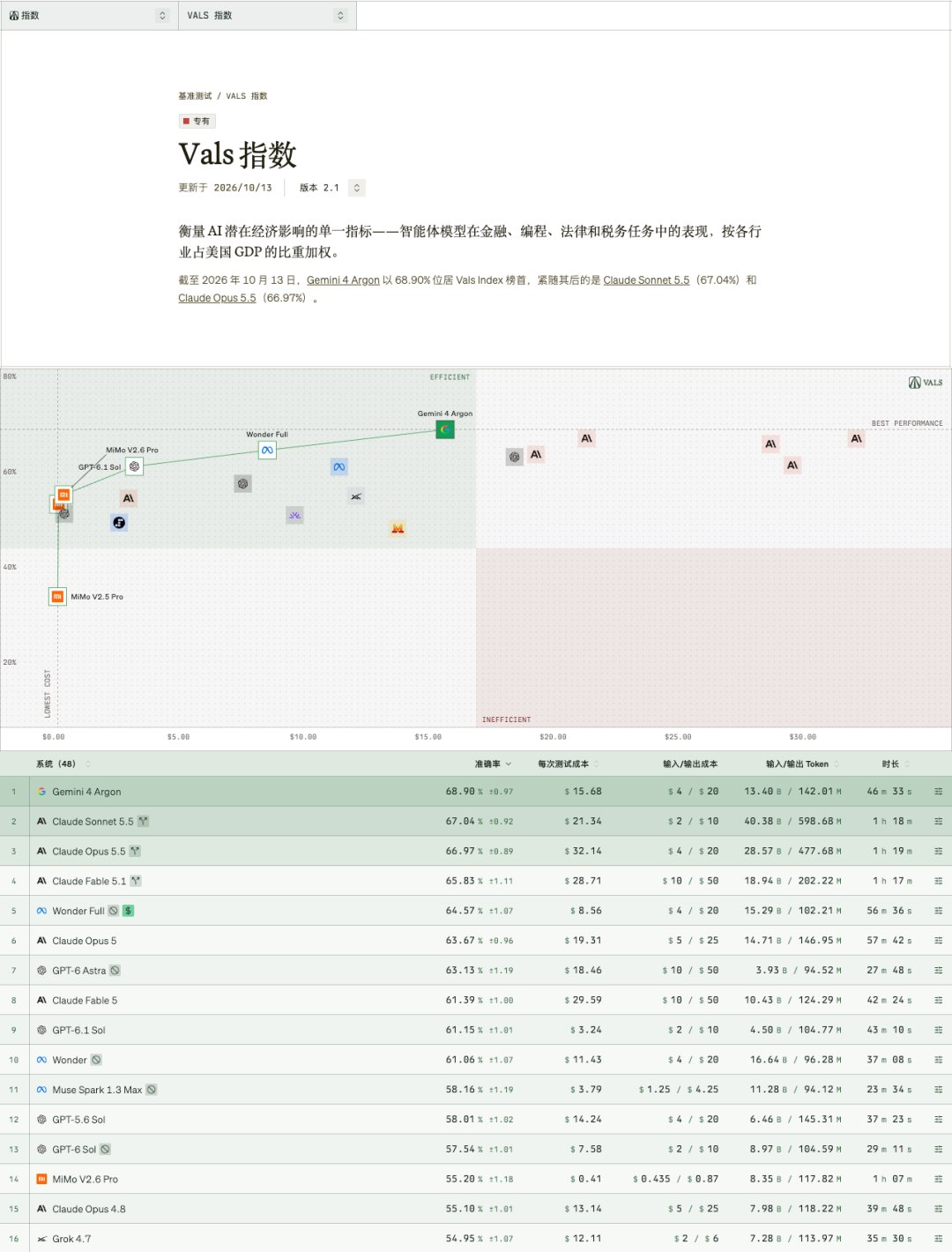
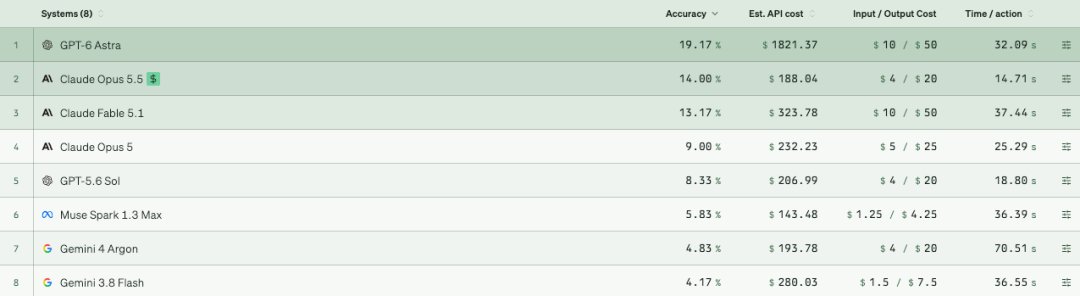
After spending $100 on a Google Ultra subscription and testing Gemini 4 Argon intensively for hours, the verdict is clear: it still cannot dethrone Claude Opus 5.5 or GPT-6 Astra. While Argon ranks #1 on the Vals Index (68.9%) for domain knowledge work (finance, law, tax), it lags badly in computer-use agency (4.83% on CUA-bench), burns through Antigravity Ultra quotas in under 10 tasks, and struggles with unnatural Chinese prose.
1. Google's Turbulent Six Months & the September–October AI Blitz
Tonight, Gemini 4 Argon finally opened to the general public after its initial October 1 announcement (which was restricted to the Fairwind cybersecurity initiative). Looking back at the September–October 2026 frontier model blitz:
- Sep 4: GPT-6 Astra
- Sep 22: Grok 4.7
- Sep 23: Claude Opus 5.5, GPT-6 Sol & Luna (three releases in a single night)
- Sep 30: OpenAI DevDay — GPT-6.1 Sol
- Oct 1: Gemini 4 Argon initial announcement
- Oct 13: Meta's first frontier model, Muse Wonder
- Oct 14: Gemini 4 Argon general availability
After cancelling Gemini 3.5 Pro due to lagging coding performance and witnessing the August 5 leadership shakeup—where Demis Hassabis transitioned to Chairman & Chief Scientist, Koray Kavukcuoglu took over as DeepMind CEO, and 27-year Google legends Jeff Dean and Sanjay Ghemawat departed to start a new venture—SemiAnalysis famously wrote “Gemini is Cooked but GCP is Cooking.” Gemini 4 Argon is nothing short of Google's last stand.
2. Tier Paywalls, Continuation Protocol & API Caching Economics
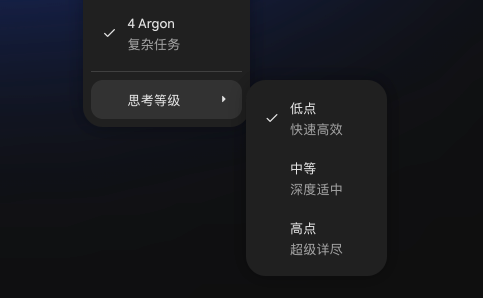
While $20 Pro subscribers can use Gemini 4 Argon inside the Gemini web/mobile app, using Argon inside Google Antigravity requires the $100/month Ultra plan—a move that immediately drew heavy backlash from developers.
On context length, Google clarified that the 1M token window is combined input + thinking + output. A single turn still caps around 64K output tokens (compared to GPT-6 Astra's native 128K output), relying on an encrypted continuation protocol token to stitch multi-turn outputs up to 1M tokens. Promotional API pricing runs until Nov 30 at $2/M input, $10/M output, and $0.10/M cache read, doubling on Dec 1 to $4 / $20 / $0.20 (matching Claude Opus 5.5).
3. Built for Knowledge Work: Artificial Analysis & Vals Index
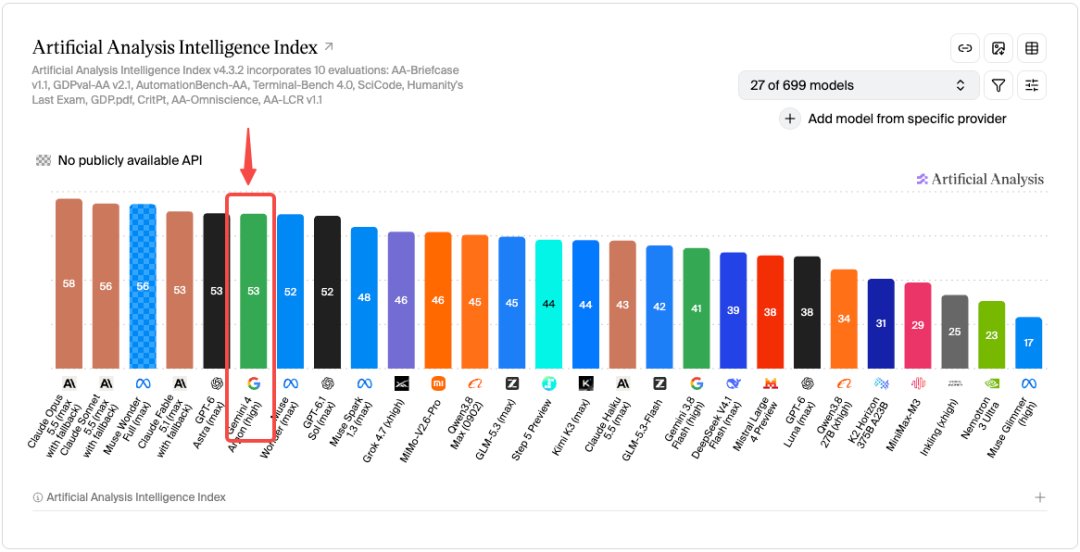
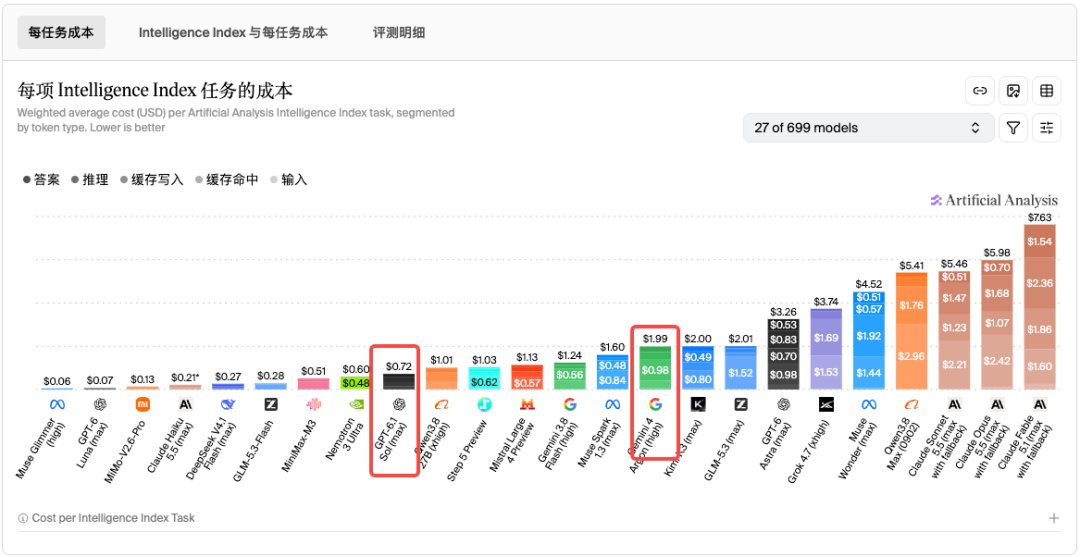
On Artificial Analysis (AA), Gemini 4 Argon scores 53, tying GPT-6 Astra behind Claude Opus 5.5 (#1) and Claude Sonnet 5.5 (#2). However, because of verbose thinking and output tokens, Argon costs an average of $1.99 per task on AA compared to just $0.72 for GPT-6.1 Sol Max at the exact same per-token rate.
Where Argon shines is the 26-test Vals Index (finance, law, tax, healthcare), claiming #1 overall at 68.9% on the Pareto frontier at $15.68 per run (less than half of Opus 5.5's $32.14). Conversely, on CUA-bench (computer use), Argon scores a dismal 4.83% (second to last), far behind GPT-6 Astra (19.17%) and Claude Opus 5.5 (14.00%).Capability hierarchy: Knowledge Work > Research > Coding > Agentic Computer Use.
4. Frustrating UX, Quota Drain & Frontend Comparison
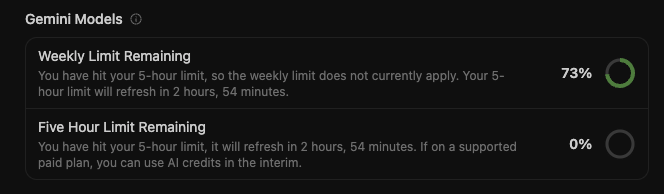
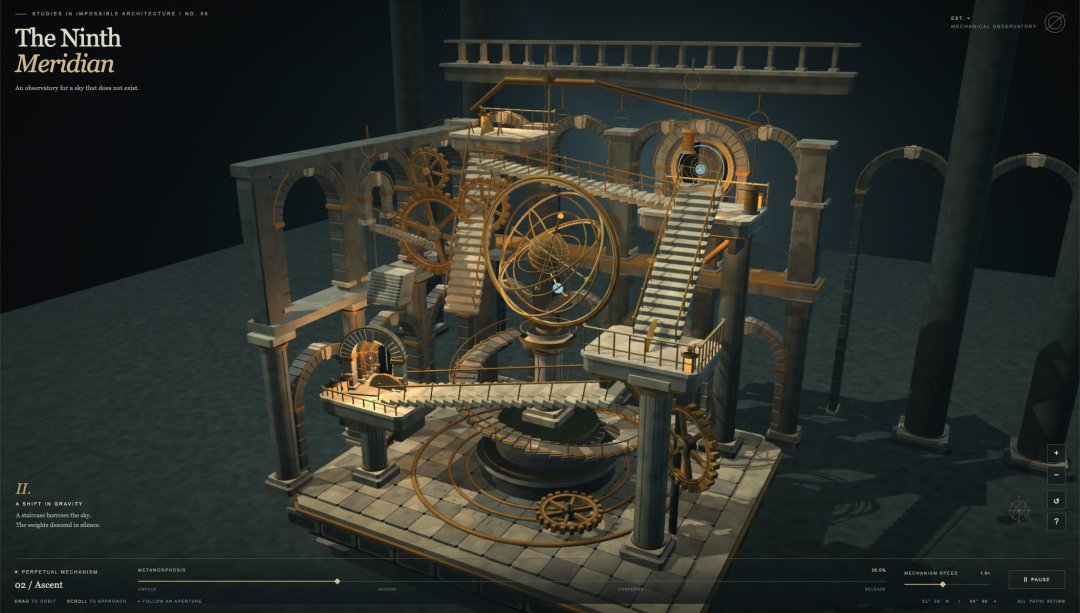
Running fewer than 10 single-agent tasks (5 frontend tests, 3 writing tests, 1 reverse-engineering test) completely exhausted the 5-hour quota on a $100 Ultra account and burned 27% of the weekly allowance. In frontend 3D rendering, GPT-6 Astra's geometric precision and lighting completely outclass Argon.
5. Final Verdict & My $850/Month AI Subscription Stack
- ChatGPT Pro ($100/mo): Best all-around daily driver; GPT-6.1 Sol excels at PR automation, bug fixing, and network/hardware tuning.
- Claude Max ($250/mo): Undisputed king for product building, UI aesthetics, and motion design with Claude Opus 5.5 (~5x the effective quota endurance of Codex).
- X Ultra ($200/mo, $100 first month): 50x quota multiplier and Grok Bot powered by Claude Opus 5.5 under the hood.
- Suno Pro ($8/mo) & LibTV ($210/mo): Dedicated audio and video production tools.